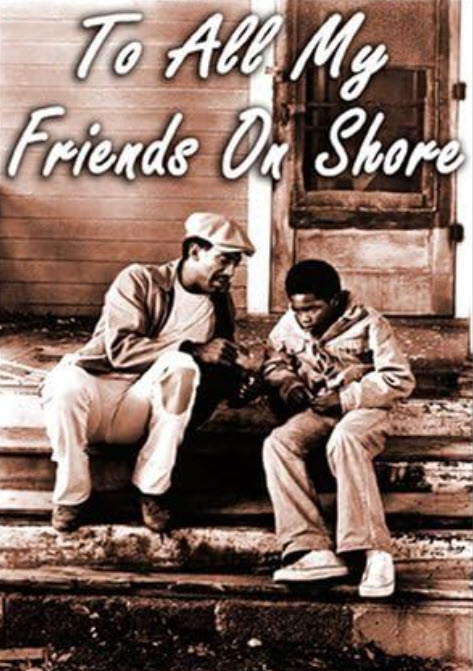
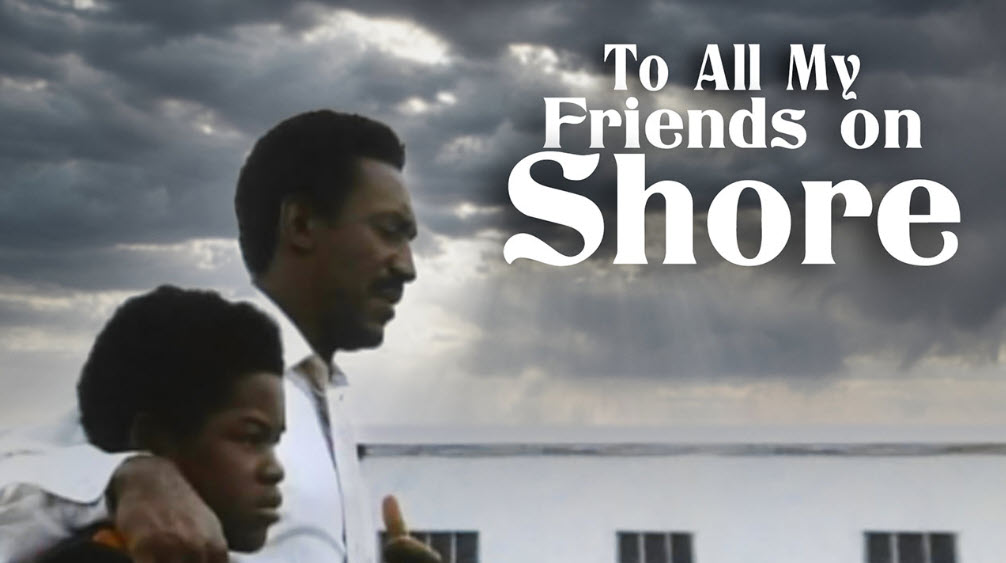
Release Date:2/25/1972; CBS Genre:Drama / TV Movie Rating: NR Running Time:70 mins. Director:Gilbert Cates Studio(s):Jamel Productions Inc., Jemmin Inc.
Cast: Bill Cosby (Blue). Gloria Foster (Serena), Dennis Hines (Vandy), Teddy Thompson (Tempo), Ray Mason (Doctor), Dennis Tate (Dr. Fogson).
This slideshow requires JavaScript.
Story:Blue is an airport redcap struggling to support his family. He takes on several odd jobs so he can save enough money to buy a house so they can move out of the projects. His wife Serena would rather he work less and spend more time with his young son, Vandy. Blue’s single-minded determination to get his family out of the ghetto has cut him off from them. Only when Vandy is diagnosed with sickle cell anemia does Blue realize what he should spend his time on – being with his family. Bill Cosby wrote, produced, scored and starred in the film. Sources: tcm.com, rottentomatoes.com. Photos source: daaracarchive.org.
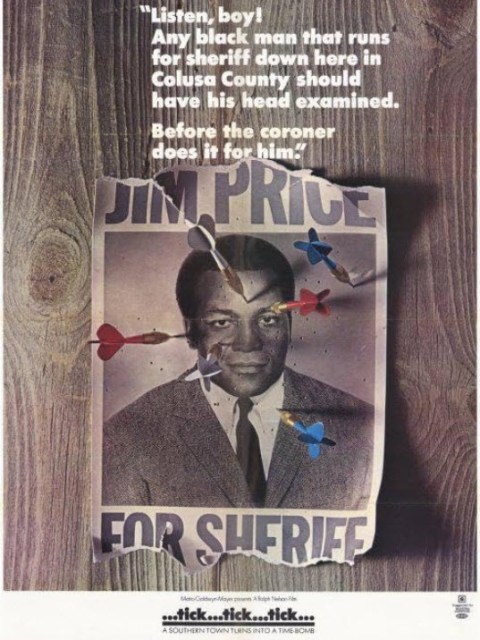
Release Date: 1/9/70 Genre: G Rating: Drama Director: Ralph Nelson Studio(s):MGM Running Time: 100 mins. Cast: Jim Brown (Jim Price), George Kennedy (John Little), Fredric March (Mayor Jeff Parks), Don Stroud (Bengy Springer), Janet MacLachlan (Mary Price), Richard Elkins (Bradford Wilkes), Bob Random (John Braddock), Bernie Casey (George Harley), Karl Swenson (Braddock, Sr.), Dub Taylor (Junior).
Spoilers Ahead
Story:Jim Price is elected the first black sheriff of Colusa County, Mississippi, with the help of northern organizers. A hotbed of racial prejudice, Colusa has a local chapter of the Ku Klux Klan. Retiring incumbent John Little, though he believes he was fairly defeated, offers Price no help on the new sheriff’s first day. Price is greeted only by Mayor Parks, a local patriarch who admonishes Price to consult him before appealing for outside help in solving problems. Price’s first arrest, on a charge of manslaughter, is John Braddock, the son of an influential white. Driving while drunk, Braddock caused the death of a child in an automobile accident.
That night Price’s deputy Bradford Wilkes is beaten by a group led by Little’s former deputy Bengy Springer, who had vowed to kill Price. Price next arrests a black man George Harley for raping a teenaged girl, and in doing so he risks alienating the black community that unanimously elected him. Braddock, Sr., arrives in Colusa and angrily demands that Price release his son. Braddock threatens to take the boy by force, whereupon Little arrives and Braddock departs. Little’s conscience gets the better of him and he agrees to become Price’s new deputy. Price, knowing that Braddock, Sr. will return with a mob, makes an unsuccessful request of the mayor to call in Federal troops.
As the Braddock mob approaches Colusa, Price and Little enter Junior’s Place, a bar for whites only, to look for deputies. Failing to recruit any, Price and Little set up a barricade at the edge of town. Just as Braddock’s men approach, however, the whites from Junior’s join the sheriff and disperse the mob. Source: tcm.com. Photo Sources: IMDB; Wikipedia; psychovision.net.
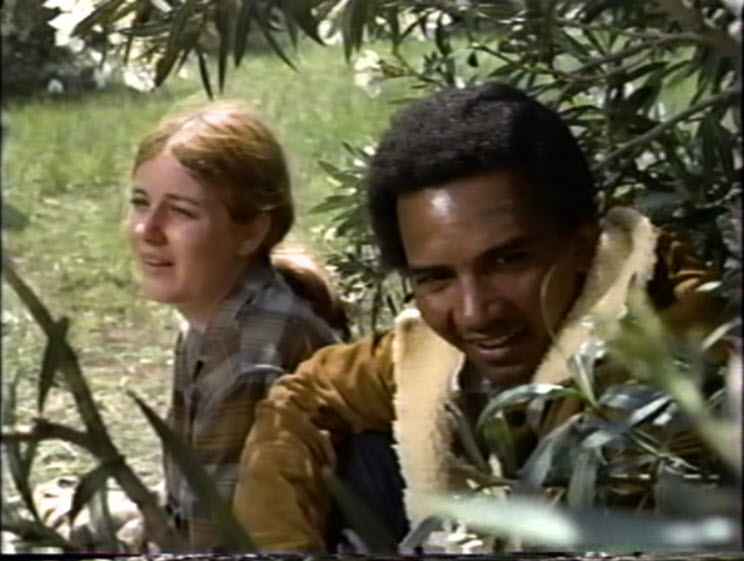
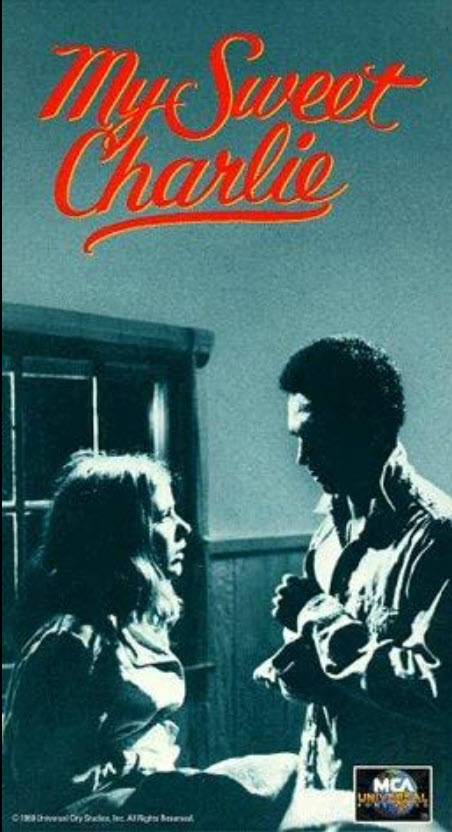
Release Date: 1/20/1970 (original TV airing); NBC Genre:Drama Rating: G Running Time:97 mins. Director:Lamont Johnson Studio(s):Bob Banner Associates, Universal Television, National Broadcasting Company (NBC), Universal Pictures. Cast: Al Freeman, Jr. (Charlie Roberts), Patty Duke (Marlene Chambers), Ford Rainey (Treadwell), William Hardy (Mr. Larrabee), Chris Wilson (Mrs. Larrabee), Noble Willingham (Grady), Dave Ward (Sheriff).
Story: Charles Roberts, a black activist lawyer from the North who traveled to rural Texas to participate in a Civil Rights protest, believes he killed a white man albeit in self-defense. Fearing for his life, he flees to a closed summer house on the Gulf Coast. There he finds Marlene Chambers, a southern, white uneducated, prejudiced, unwed pregnant teenager who has taken refuge in the house after being shunned by her father and boyfriend for her pregnancy and cast out of her home. Forced by circumstance to stay there together, the two express mutual hostilities, confront prejudices (racial, regional, class and sexual), and eventually develop appreciation, and respect for one another. When Marlene goes into labor Charlie hurries to the nearby town for supplies and help. He tries to act like a deferential southern Negro toward Treadwell, the prejudiced owner of a small country store, but is offended and allows his northern accent to come out. Treadwell starts a fight, Charlie runs away but Treadwell catches up with him, pulls a gun, and kills him.
Details: This made-for-TV drama movie was based on the novel and play of the same name by David Westheimer. The play opened at Broadway’s Longacre Theatre with Bonnie Bedelia (Die Hard, Die Hard 2) and Louis Gossett, Jr. (Roots, An Officer and a Gentlemen) in the leading roles. Sources: every70smovieblogspot.com, AFI catalog, tcm.com, hornsectionblogspot.com. Photo Sources: modcinema.com, hornsectionblogspot.com, daaracarchive.org.
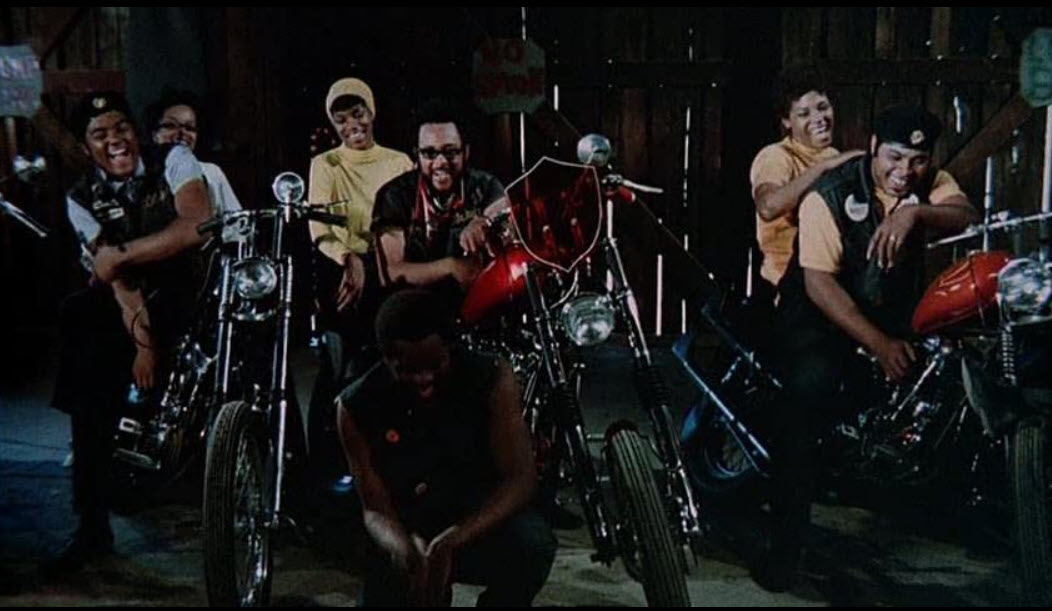
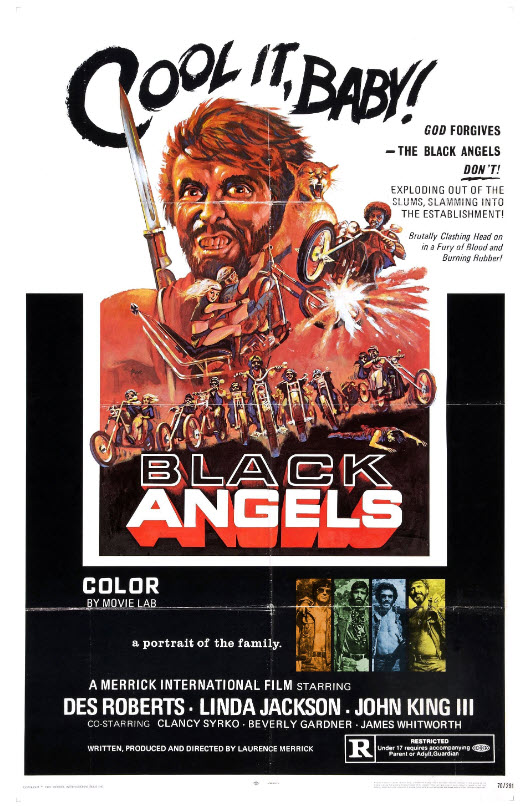
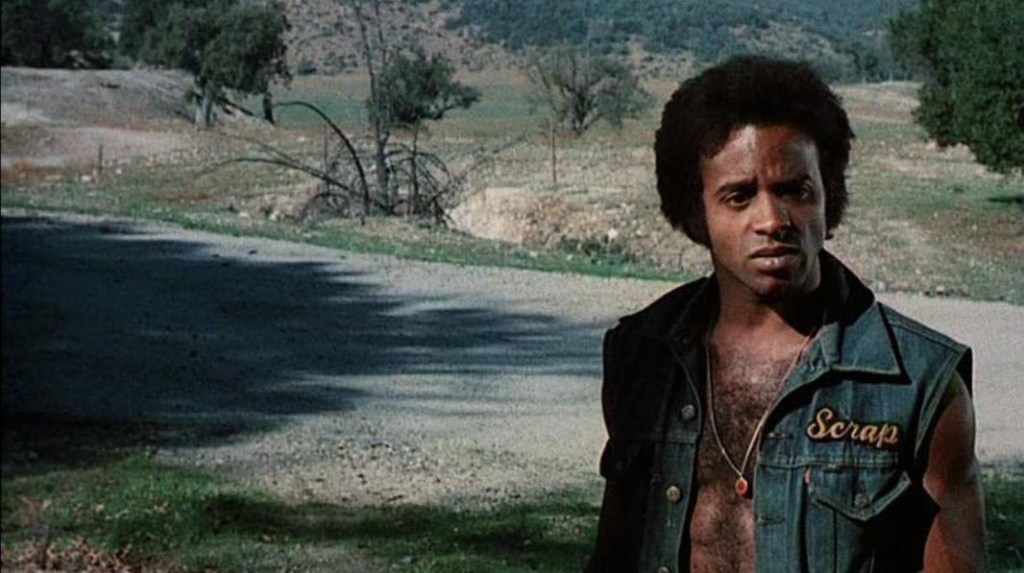
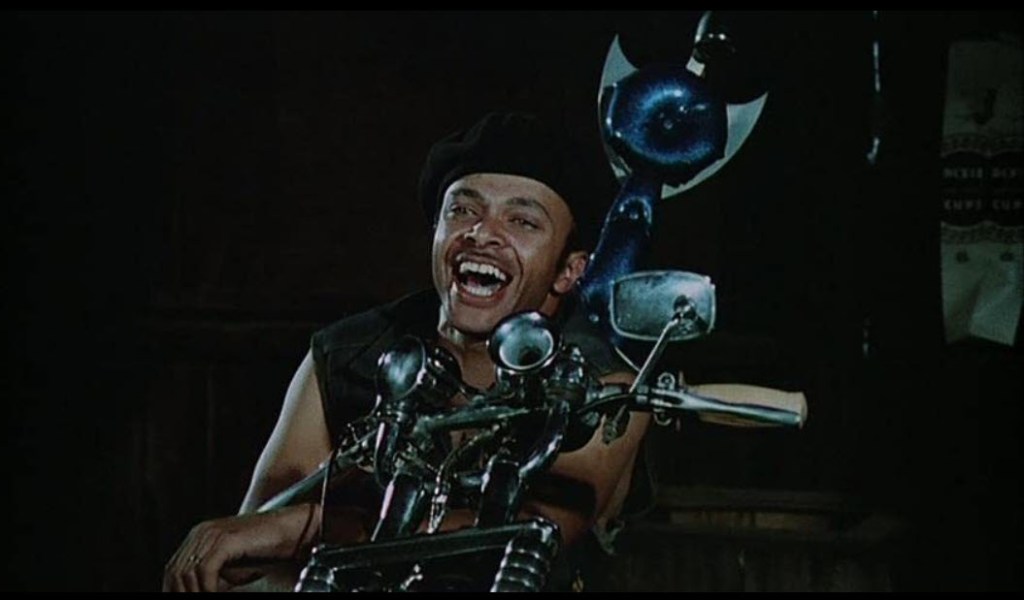
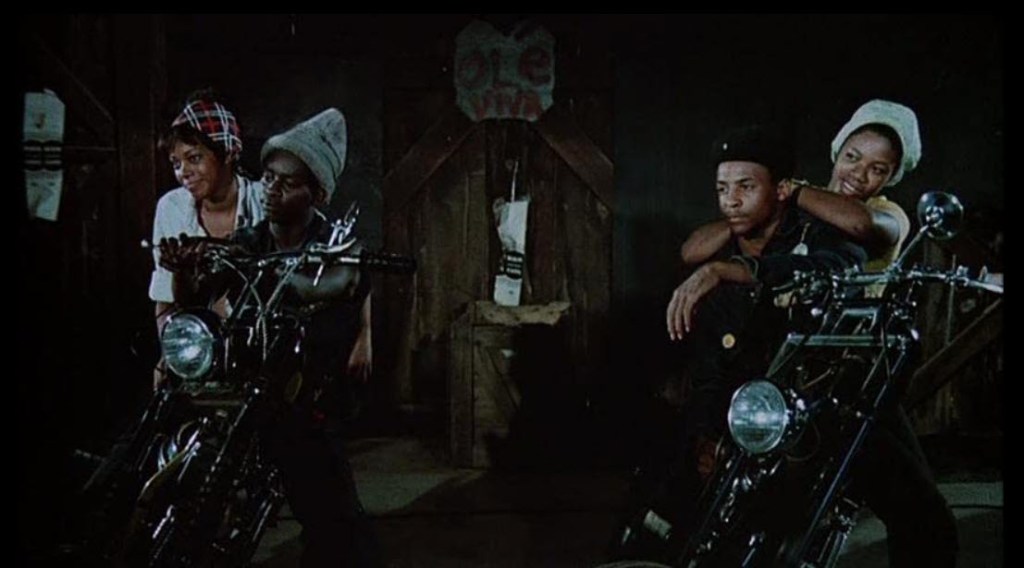
Release Date: October 14, 1970 Genre:Drama Rating: R Running Time: 87 mins. Director:Laurence Merrick Studio(s): Merrick International Pictures Cast: Bobby Johnson, Des Roberts, John King III, Linda Jackson
Story: For years, two motorcycle gangs–the white Serpents and the black Choppers–have been locked in a fierce rivalry, united only by their mutual hatred for a local police officer, Lieutenant Harper, who would like to see the two groups destroy each other. When a newly-initiated Chopper is killed in a fight with Chainer, the leader of the Serpents, Harper’s wish moves closer to becoming a reality. After the Serpents accept new biker Johnny Reb into their ranks, they ride into town to mete out punishment to a renegade member. There Chainer is ambushed by four Choppers, but Johnny Red mysteriously appears and saves his life. Returning to their hideout, the gang launches a wild party, which Johnny Reb further enlivens by passing out illegal pills. As the gang eventually becomes drowsy and vulnerable from the pills’ aftereffects, one of the cyclists, Frenchy, discovers that Johnny Reb is actually a black Chopper passing for white. Before Frenchy can warn the others, however, Johnny Reb stabs him to death and then signals the Choppers to attack. The two evenly matched gangs massacre each other while Lieutenant Harper happily observes the bloodbath from a distant hilltop. Source: tcm.com; Photo Source: IMDB.
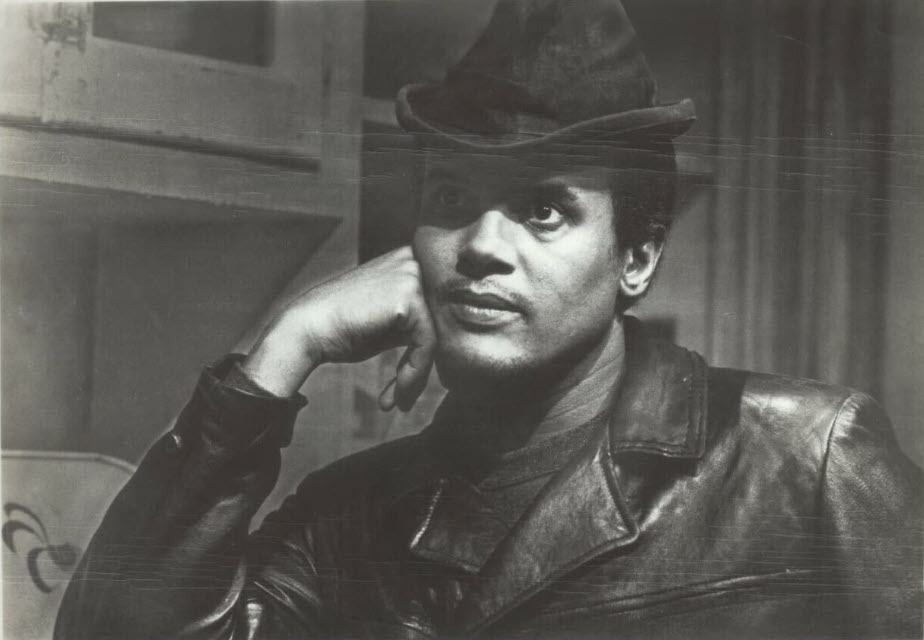
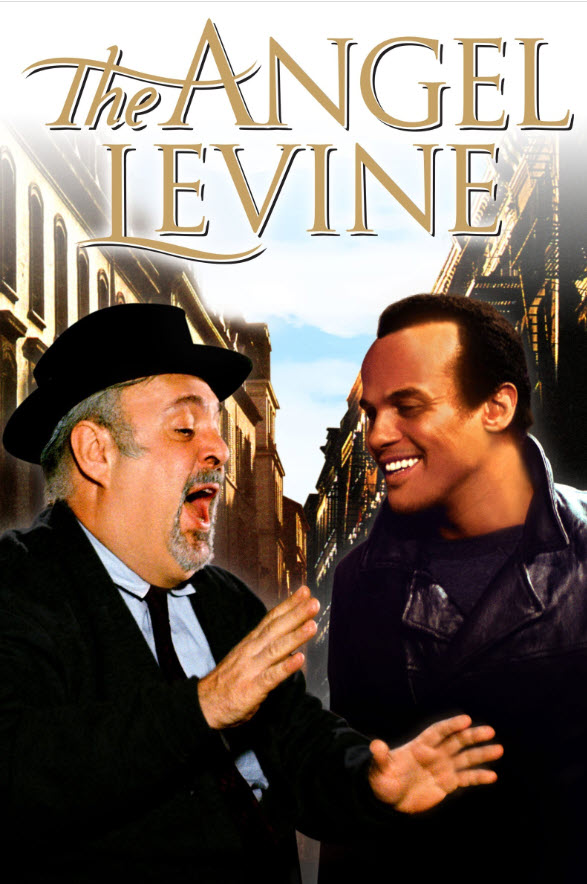
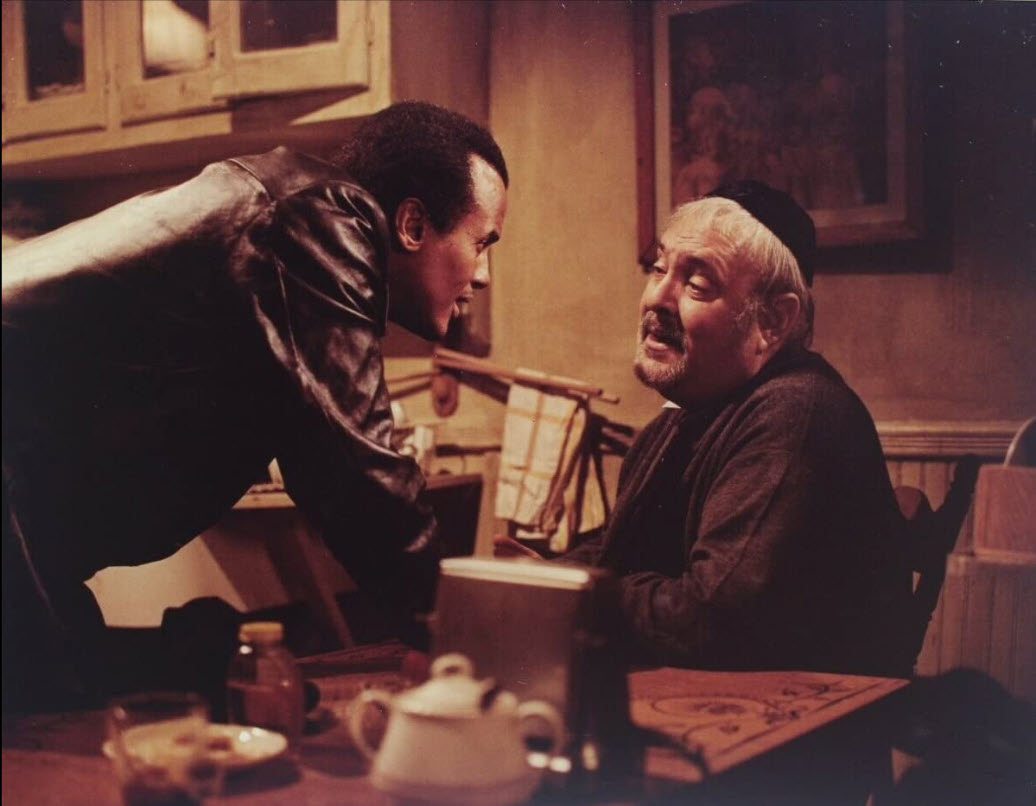
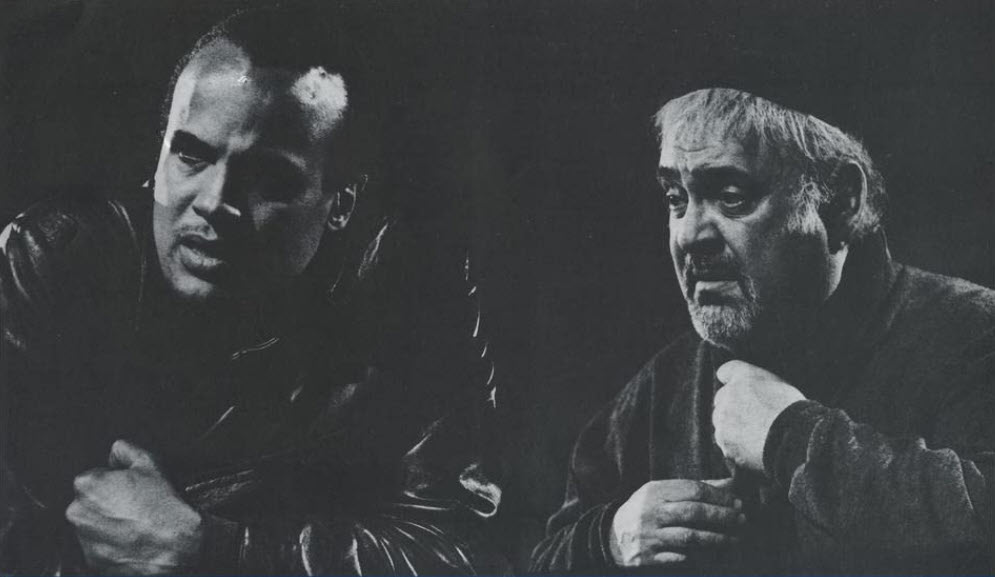
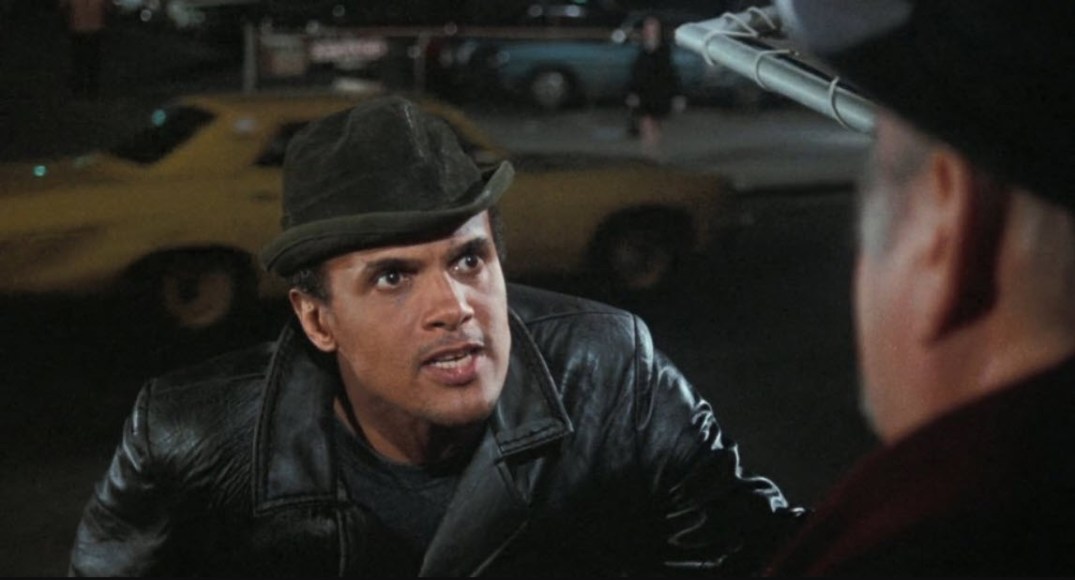
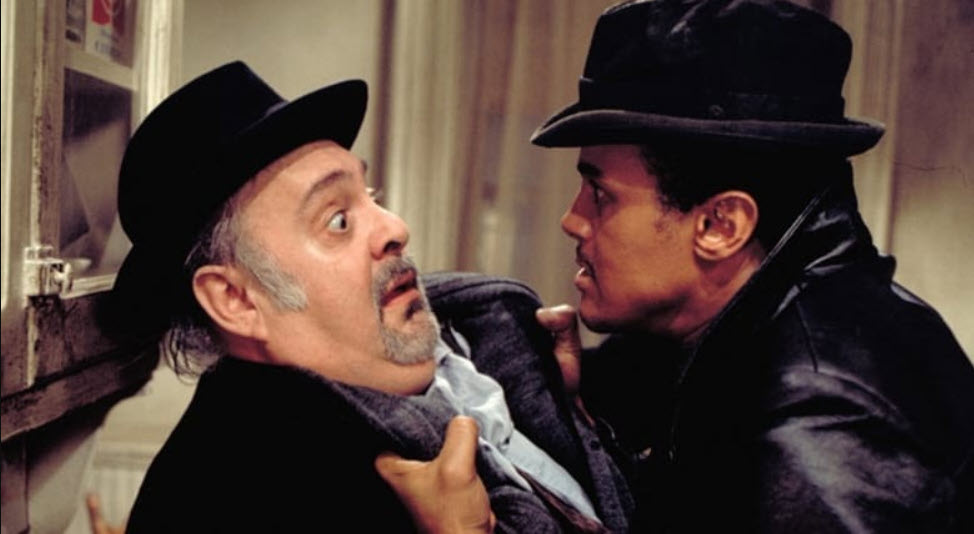
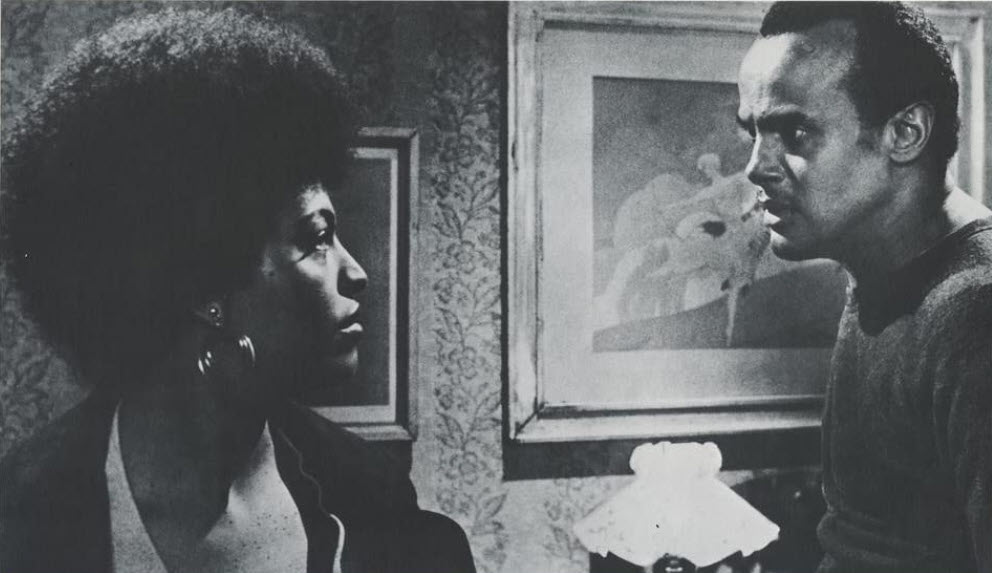
Release Date: July 28, 1970 Genre:Drama Rating: PG-13 Running Time: 106 minutes Director: Ján Kadár Studio(s): Belafonte Enterprises, United Artists
Cast: Harry Belafonte (Alexander Levine), Zero Mostel (Morris Mishkin), Gloria Foster (Sally), Ida Kaminska (Fanny Mishkin), Milo O’Shea (Dr. Arnold Berg).
Story: Morris Mishkin, an impoverished Jewish tailor, is beset by difficulties: a backache prevents him from working; his wife, Fanny, is suffering from heart disease; and his daughter has run away with an Italian. Reduced to his last few dollars because of delays in the welfare system, Morris goes to the grocery store for a few meager provisions. On the way, he sees a black man steal a fur coat and yells for the police, but the thief dashes across the street and is killed when he is hit by a car. Morris returns home to find Fanny’s condition worse, and he castigates God for his continued suffering. He then walks into the kitchen and sees the black thief, who claims to be a Jewish angel named Alexander Levine. Levine explains that he must perform a miracle within 24 hours in order to be confirmed as an angel, but Morris is skeptical. Despite an immediate improvement in Fanny’s health, Morris refuses to attribute the miracle to God’s mercy. Eventually Levine’s 24 hours expire, and he leaves the tailor, who still disbelieves. Fanny soon becomes worse, and Morris, now ready to believe in Levine, searches for him in the streets of Harlem, but all he finds is a black feather in a synagogue.
Notes: Based on a story by Pulitzer Prize-winning novelist Bernard Malamud. It was brought to the screen by the late actor-singer-activist Harry Belafonte, who produced the film as his return to movies after more than ten years (his previous film had been Odds Against Tomorrow released in 1959). Source: tcm.com; Photo Sources: IMDB; imcdb.com; civetmovies.blogspot.com.
 Release Date: 2/25/1972; CBS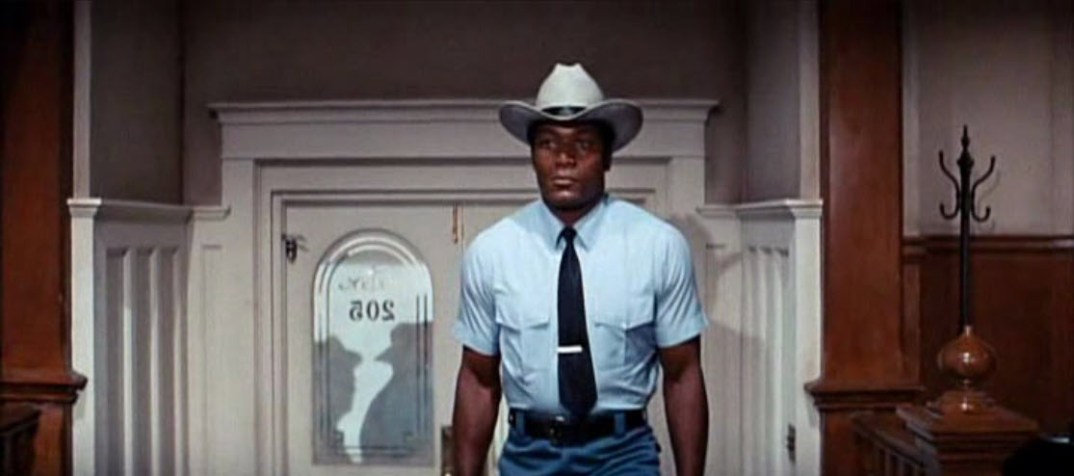


 Release Date:


 Release Date: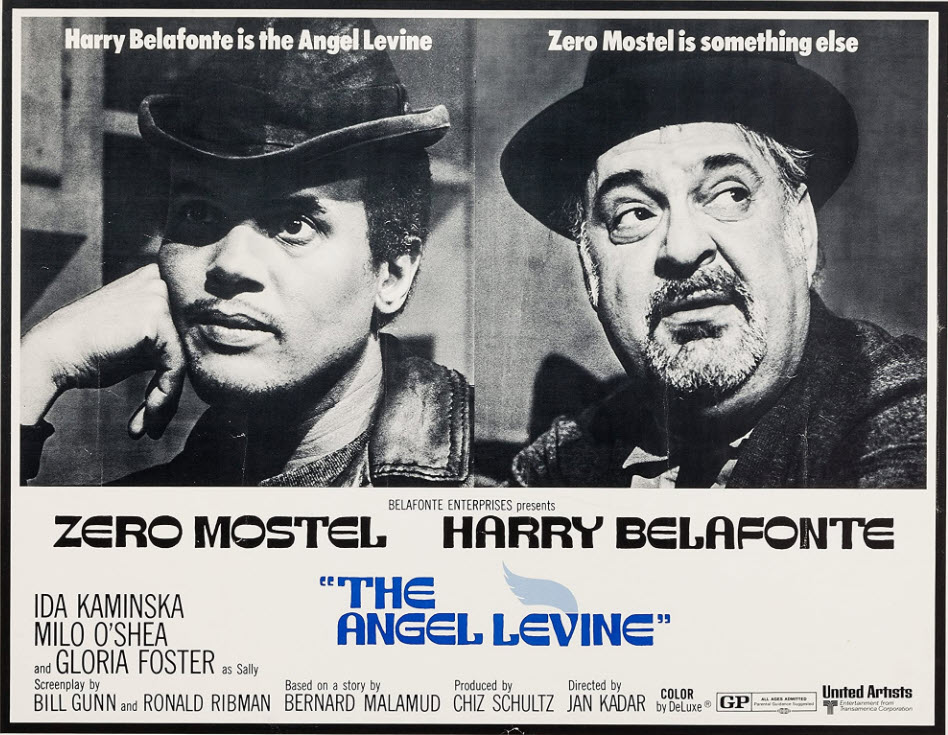
 Black Cinema Connection