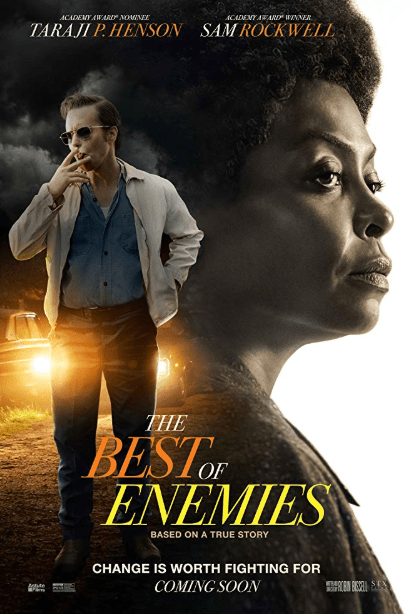
29 Days Of Black History – Day 23: The Best of Enemies

Release Date:  4/5/19
Genre:  Drama/Biography
Rating:  PG-13
Director:  Robin Bissell
Studio(s):   Astute Films, Material Pictures, STXfilms
Running Time:   133 mins.
Cast:  Taraji P. Henson, Sam Rockwell, Babou Ceesay, Anne Heche, Wes Bentley, Bruce McGill, John Gallagher, Jr., Nick Searcy, Sope Aluko.
Story:  Based on the book The Best of Enemies: Race and Redemption in the New South by Osha Gray Davidson, which focuses on the rivalry between civil rights activist Ann Atwater and Ku Klux Klan leader C. P. Ellis.

1971: at Durham, in North Carolina, Ann Atwater tries to get better housing conditions for poor black people, and is ignored by the all white judge panel. C.P. is the president of the KKK, and is shown as a loving family man.  Ann’s daughter’s school catches on fire (whether by accident or arson is unclear), and C.P. is afraid that the black children will come to the white schools. Bill Riddick sets up a meeting with the both of them, to discuss segregation and other issues.

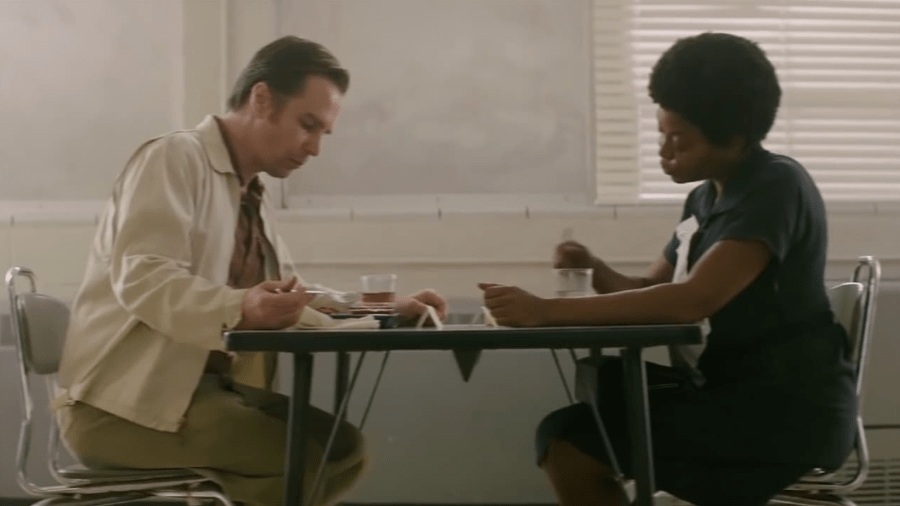
At first, they both refuse since they hate each other, but then they are convinced. C.P. refuses to sit with Bill and Ann, since they are black and he is white.  They agree to pick some people randomly from the group to vote on the issues at the end of the meeting sessions. C.P tries to talk to these selected to vote, but is mostly rebuffed.  Bill makes the blacks and whites in their group sit next to each other in the cafeteria and eat. He makes C.P and Ann sit together alone. They eat in tense silence, then Ann asks C.P. if he has a boy in Murdock. C.P. hotly says that he won’t talk about his boy. Murdock is a facility that takes care of disabled boys, and his son has Down Syndrome.

C.P. is called to Murdock, and he rushes over. His disabled son, Larry, has been put in the same room with another disabled boy. The other boy is screaming, upsetting Larry. C.P. demands that his son be placed in a room of his own, but the nurses tell him that he can’t afford it. Later, Ann visits Larry and asks a favor from Bernadette, who works there to put Larry in his own room.

Bill takes Ann, C.P., and the rest of their group to visit the black school that was burned. C.P. is shocked by damage. C.P.’s wife, Mary, is overjoyed with Ann’s help, and goes to visit her to thank her. Ann asks her if C.P. has always been racist, and Mary says yes.  The night before the final vote, C.P.’s KKK troublemaking friends threaten the selected voters to vote for segregation. C.P. finds out about this and is dismayed. Ann also finds about it and screams at C.P., calling him a coward.  During the voting, all the issues pass, coming down to the final issue of desegregation. One by one, the voters vote. Ann votes for it, and C.P., surprising everyone, does the same, realizing the KKK is hateful. Also, he makes a speech and rips up his KKK membership card, much to the fury of his KKK friends. They threaten him and try to set the gas station that he owns on fire but C.P. puts it out. Now that the white community won’t buy his gas anymore, his station is going out of business. Ann and Bill visit him with smiles and they bring in the black community to buy from him instead.

The film reveals that the real life Ann and C.P. went around to different cities together, to talk about their experiences and remained friends to the end of C.P.’s life, with Ann giving the eulogy at his funeral.  Source:  Wikipedia; IMDB.

Trailer:
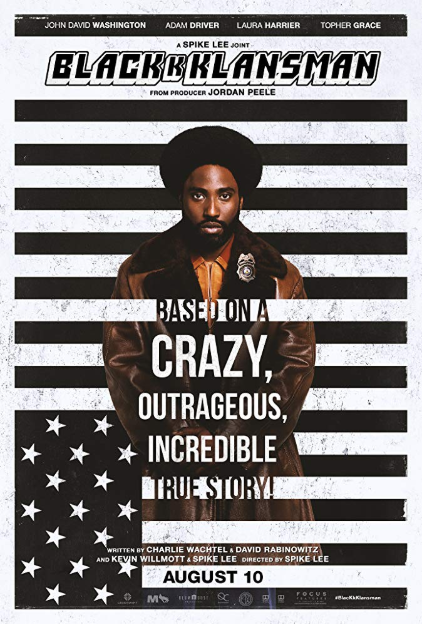
29 Days Of Black History – Day 22: BlacKkKlansman

Tagline: Infiltrate Hate

Release Date:  8/10/18
Genre:  Drama/Biography
Rating:  R
Director:   Spike Lee
Studio(s):   Blumhouse Productions, Monkeypaw Productions, Perfect World Pictures,
QC Entertainment, Focus Features
Running time:  135 mins.

Cast:  John David Washington, Adam Driver, Topher Grace, Laura Harrier, Ryan Eggold, Paul Walter Hauser, Corey Hawkins, Harry Belafonte, Robert John Burke.

Story:  The film is based on the 2014 memoir Black Klansman by Ron Stallworth.  Set in the late-1970s in Colorado Springs, the plot follows the first African-American detective in the city’s police department as he sets out to infiltrate and expose the local chapter of the Ku Klux Klan.

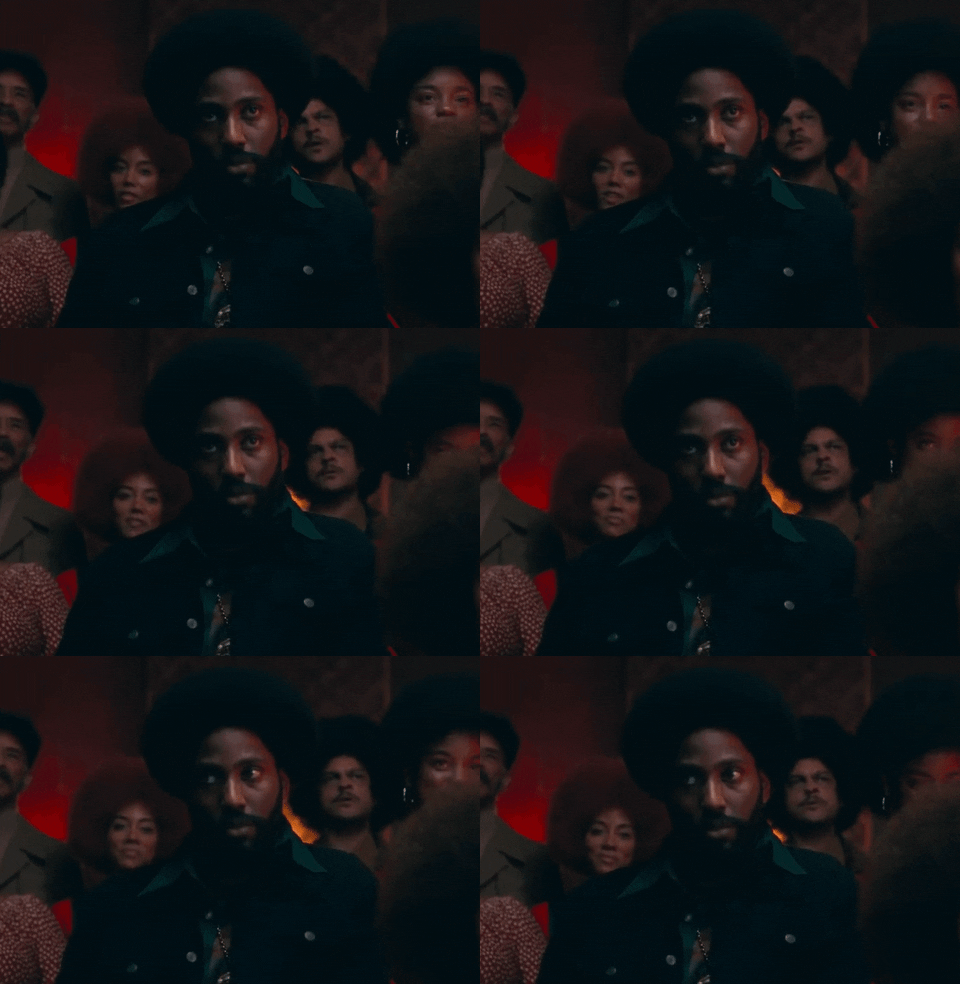
In the late 1970s, Ron Stallworth is hired as the first black officer in the Colorado Springs Police Department. Assigned to work in the records room, he faces racial discrimination from his coworkers. After he requests a transfer to undercover work, he is assigned to infiltrate a local rally where national civil rights leader Kwame Ture (a.k.a. Stokely Carmichael) gives a speech. At the rally, Stallworth meets Patrice Dumas, president of the “Black Student Union” at Colorado College. While she takes Ture to his hotel, Patrice is stopped by a racist patrolman, who threatens Ture and gropes Patrice.

Later, Stallworth is reassigned to the intelligence division.  After reading about a local division of the Ku Klux Klan in the newspaper, he calls the organization, pretending to be white, and speaks with the president. Stallworth recruits his Jewish coworker, Flip Zimmerman, to pose as Stallworth in order to meet the Klan members. Zimmerman meets the president, Walter Breachway, Felix Kendrickson, and Ivanhoe, who cryptically refers to an upcoming attack.

Calling Klan headquarters in Louisiana to expedite his membership, Stallworth begins regular phone conversations with Grand Wizard David Duke. Kendrickson suspects Zimmerman of being Jewish and tries to make him take a polygraph test at gunpoint, but Stallworth breaks the Kendricksons’ kitchen window as a distraction. Stallworth begins dating Patrice, but does not tell her that he is a police officer.

Duke visits Colorado Springs for Stallworth’s induction into the Klan. Over the real Stallworth’s protests, he is assigned to a protection detail for Duke. Once Zimmerman is initiated, masquerading as Stallworth, Felix’s wife Connie leaves the ceremony to place a bomb at a civil rights rally. Stallworth realizes her intentions and alerts local police officers. When Connie notices a heavy police presence at the rally, she puts Felix’s backup plan into action and plants the bomb under Patrice’s car. Stallworth tackles her as she tries to flee, but uniformed officers detain and beat him despite his protests that he is working undercover.

The bomb maker, recognizes Zimmerman from a prior arrest. He, Felix and Ivanhoe arrive and trigger the bomb while Ron is being detained. Not realizing where Connie hid it, they detonate it while standing next to Patrice’s car and are killed in the explosion. Zimmerman arrives and frees Stallworth, and Connie is arrested.

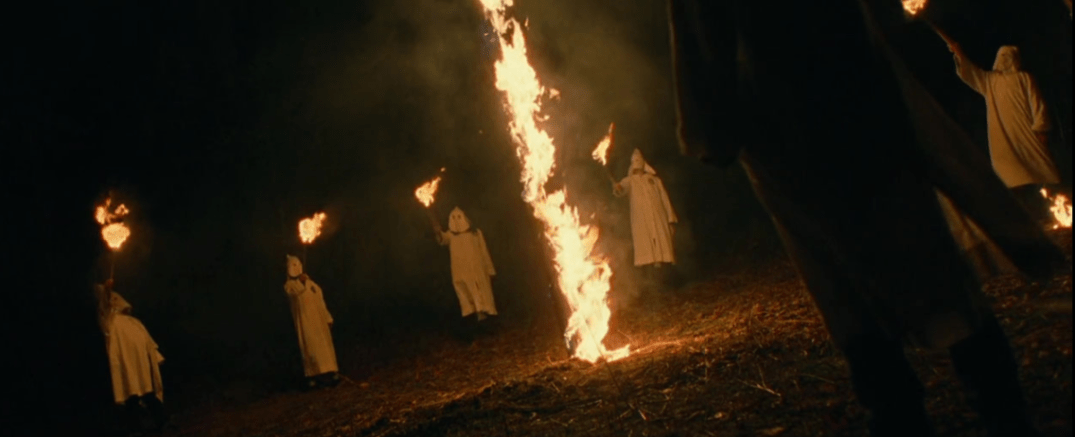
Police Chief Bridges congratulates the team for their success, but orders them to end their investigation and destroy the records. Stallworth receives a call from Duke, and he reveals that he is black before hanging up. While Patrice and Stallworth discuss their future, they are interrupted by a knock on the door. Through the window in the hallway, they see a flaming cross on a hillside surrounded by Klan members.  Source:  Wikipedia; IMDB; Giphy.com.

Trailer:

29 Days Of Black History – Day 20: Detroit


Release Date:  8/4/17
Genre:   Drama/Based on Actual Events
Rating:  R
Director:  Kathryn Bigelow
Studio(s):  Annapurna Pictures, First Light Production, Page 1
Running Time:  143 mins.

Cast:  John Boyega (Melvin Dismukes), Will Poulter (David Senak), Algee Smith (Larry Reed), Jacob Latimore (Fred Temple), Jason Mitchell (Carl Cooper), Hannah Murray (Julie Ann Hysell), Kaitlyn Dever (Karen Malloy), Jack Reynor (Ronald August), Ben O’Toole (Robert Paille), Anthony Mackie (Karl Greene), Nathan Davis, Jr. (Aubrey Pollard, Jr.), Peyton Alex Smith (Lee Forsythe), Malcolm David Kelley (Michael Clark), Joseph David-Jones (Morris), John Krasinski (Norman Lippitt), Laz Alonso (John Conyers), Ephraim Sykes (Jimmy), Leon Thomas, III (Darryl), Gbenga Akinnagbe (Aubrey Pollard, Sr.), Chris Chalk (Officer Frank), Jeremy Strong (Attorney Lang), Zurin Villanueva (Martha Reeves), Tyler James Williams (Leon), Karen Pittman (Mrs. Dismukes), Samira Wiley (Vanessa).

Details:  Based on the Algiers Motel incident during Detroit’s 1967 12th Street Riot, the film’s release commemorated the 50th anniversary of the event.

Story:   On Sunday, July 23, 1967, the Detroit Police Department stage a raid on an unlicensed club during a celebration for returning black veterans from the Vietnam War. While suspects are being arrested, a mob forms and starts throwing rocks at the officers before looting nearby stores and starting fires, which begins the 12th Street Riot. With the authorities unable to maintain order, the Army National Guard and Army paratroopers are called in to provide assistance. On the second day of rioting, two cops pursue a fleeing looter, one of them shoots and kills the man, but is allowed to remain on duty until his superiors can decide what to do.

The Dramatics, a professional R&B group arrive in Detroit hoping to score a recording contract. Seconds before their scheduled performance at a music hall, the police shut down the venue and order them to leave the city. En route, their bus is attacked by rioters and the group subsequently splits up, with lead singer Larry Reed and his bodyguard Fred Temple renting a room at the local Algiers Motel for the night. They meet two white girls who introduce them to their friends Carl Cooper, Aubrey Pollard, Jr., Michael Clark and Lee Forsythe. Carl Cooper and another friend stage a prank using a starter pistol, upsetting the girls who move to the room of Karl Greene, a Vietnam War veteran, while Larry Reed and Fred Temple return to their own room.

Melvin Dismukes, a private security guard, is assigned to protect a grocery store from looters and ingratiates himself with the Guardsmen. Carl decides to fire several blanks from his pistol in the direction of the troops to frighten them, but they mistake it for a sniper attack and determine that it came from the Algiers due to the pistol’s muzzle flash. Led by David Senak, the Michigan State Police, National Guard, and Detroit Police arrive at the motel to investigate. Entering the building, David Senak kills Carl Cooper when he tries to escape and plants a knife next to his body as he bleeds out and dies.

The police round up everyone in the hotel and line them against the wall, demanding to know who the sniper was. Despite not finding a weapon, David Senak terrorizes and interrogates the occupants of the hotel. Unwilling to get involved, most of the state police and National Guard leave.  Senak orders several suspects to be moved to different rooms and subjected to mock executions in order to terrify the others into confessing. One officer kills Aubrey Pollard, as he did not realize that the executions were supposed to be fake.  Fearing arrest, Senak finally permits them to leave, but only if they swear to keep silent. Karl Greene and Larry Reed agree, but Temple is shot in the chest by the cops after he persists in telling them that he sees a body.

As the riots die down, Dismukes, while working his other job in a factory, is arrested and charged with murder after one of the white girls identifies him as being present at the Algiers that night. His fellow officers are questioned as well and when everyone except David Senak confesses, they are also charged. The judge ultimately refuses to accept any of the confessions as evidence, and without a solid case, the all-white jury acquits Dismukes and his co-defendants of all charges. Dismukes confronts three officers but finds himself powerless to get any justice for the victims.  Source(s):  IMDB; Wikipedia.

Trailer:

29 Days Of Black History – Day 19: Loving

Release Date
11/4/16

Genre 
Drama/Biography

Rating
PG-13

Director
 Jeff Nichols

Studio(s) 
Raindog Films, Big Beach Films, Focus Features

Running Time
123 mins

Cast 
Joel Edgerton as Richard Loving
Ruth Negga as Mildred Loving
Nick Kroll as Bernie Cohen
Michael Shannon as Grey Villet
Will Dalton as Virgil
Terri Abney as Garnet
Alano Miller as Raymond
Marton Csokas as Sheriff Brooks
Sharon Blackwood as Lola Loving
Christopher Mann as Theoliver
Winter-Lee Holland as Musiel Byrd-Jeter
Jon Bass as Phil Hirschkop

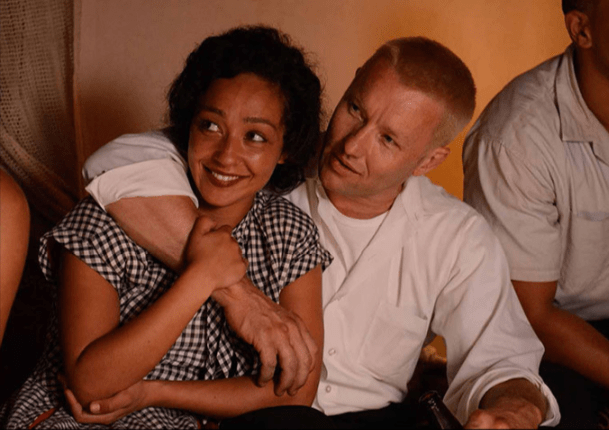
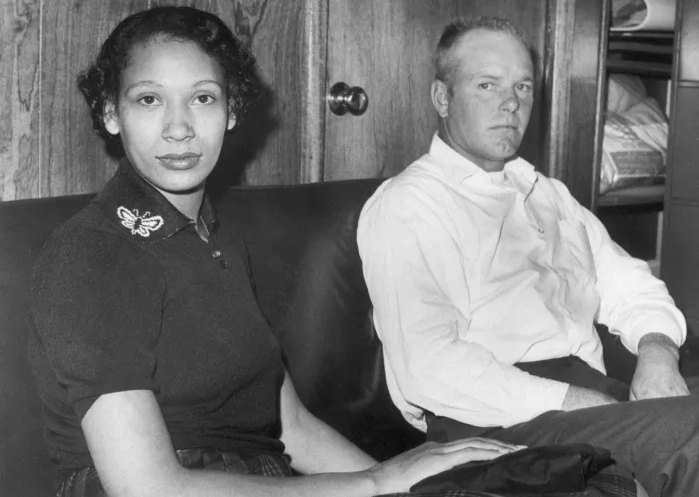
Details:  Film tells the story of Richard and Mildred Loving, the plaintiffs in the 1967 U.S. Supreme Court (the Warren Court) decision Loving v. Virginia, which invalidated state laws prohibiting interracial marriage.

Richard and Mildred Loving

Story:   In 1958, Richard Loving, a white construction worker in Caroline County, Virginia, falls in love with a local black woman, Mildred Jeter.  Once Mildred discovers that she is pregnant, they decide to marry, but knowing that interracial marriage violates Virginia’s anti-miscegenation laws, they drive to Washington, D.C. to tie the knot.  Richard plans to build a house for Mildred less than a mile from her family home.

Soon afterward, Mildred’s home is raided. The Sheriff tells Richard that their marriage license has no validity in Virginia and they are both arrested.  The couple plead guilty to breaking the anti-miscegenation law and are sentenced to one year in prison. However, the judge suspends the sentence, on condition that they not return to Virginia together for at least 25 years. The Lovings move to Washington but briefly return to Caroline County so their first child, Sidney, can be delivered by Richard’s mother, who is a midwife. Arrested again, they are cleared when their lawyer informs the judge that he erroneously advised them they could return.

Mildred and Richard have two other children together but eventually Mildred grows frustrated by being away from the country.  Her frustration grows when she watches the March on Washington and she writes to Attorney General Robert F. Kennedy for help. Kennedy refers them to the American Civil Liberties Union. Lawyer Bernard S. Cohen takes the case and confers with constitutional law expert Phil Hirschkop. They conclude that the Lovings’ case has a good chance of going all the way to the Supreme Court and could lead to the overturning of similar anti-miscegenation laws across the nation.

After a minor auto accident involving one of their children, the Lovings decide to slip back into Virginia while their case moves through the courts. Their case gains national attention, and is profiled in Life magazine.  The state contends that people of different races were never intended to live together, and goes as far as to suggest the Lovings’ children are bastards. The state Supreme Court refuses to set aside the Lovings’ conviction. Undeterred, Cohen and Hirschkop appeal to the federal Supreme Court.  Before going to Washington, Cohen asks Richard if he has a message for the justices. Richard replies, “Tell the judge I love my wife.”

Several weeks later, the Supreme Court unanimously holds that laws prohibiting interracial marriage are unconstitutional. The film ends with the Lovings back in Caroline County, building their dream house which Richard began designing at the opening of the film. Over a wide shot showing family and friends at work, text informs the viewer that Richard died, a victim of a car accident, seven years later, and that Mildred, who never remarried, continued to live in the house Richard built for her until her death in 2008. Source:  Wikipedia; IMDB; Biography.

Trailer:

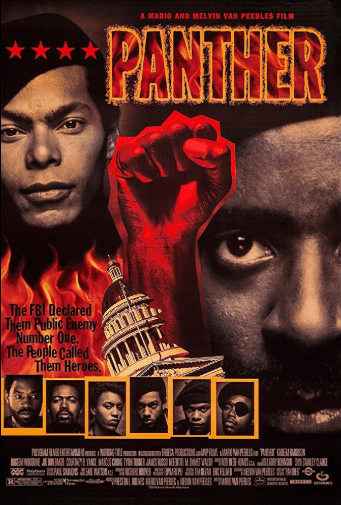
29 Days Of Black History – Day 17: Panther

Release Date:   5/3/95
Genre:  Drama
Rating:  R
Director:  Mario Van Peebles
Studio(s):  Gramercy Pictures, MVP Films, Polygram Filmed Entertainment, Tribeca Productions, Working Title Films.
Running Time:  124 mins.

Cast:  Kadeem Hardison as Judge, Wesley Jonathan as Bobby Hutton. Bokeem Woodbine as Tyrone, Joe Don Baker as Brimmer, M. Emmet Walsh as Dorsett, Courtney B. Vance as Bobby Seale, Tyrin Turner as Cy, Marcus Chong as Huey P. Newton, Anthony Griffith as Eldridge Cleaver, Chris Rock as Yuck Mouth, Mario Van Peebles as Stokely Carmichael, Chris Tucker as Bodyguard, Bobby Brown as Rose, Angela Bassett as Betty Shabazz, Jenifer Lewis as Rita, Dick Gregory as Reverend Slocum, James LeGros as Bob Avakian, Kool Moe Dee as Jamaal, Roger Guenveur Smith as Pruitt, Richard Dysart as J. Edgar Hoover, Michael Wincott as Tynan, Melvin Van Peebles as Old Jail Bird.

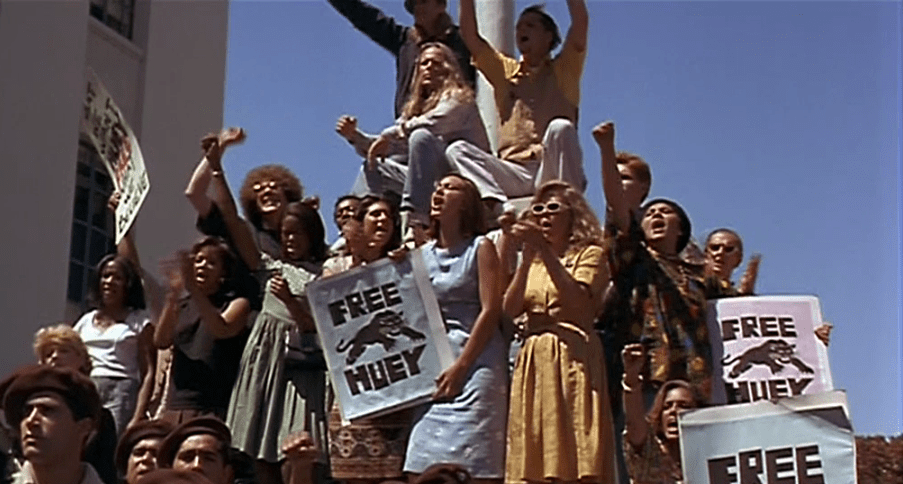
Story:   The People called them Heroes. The FBI called them Public Enemy Number One.  This semi-fictionalized account of the origins of the Black Panthers is set in Oakland California during the late 1960s, a time of tension but also a time for change.  The Black Panther movement for Self Defense is formed in response to the harassment and violence being suffered by the black community at the hands of the police.  Judge, a Vietnam veteran, returns home to where the Black Panthers, led by Huey Newton and Bobby Seale, have begun policing the police and monitoring their activities. Judge’s good friend Cy introduces him to Huey and the Black Panther credo which forever changes Judge’s life. Taken into Huey’s confidence, and pressured by the police to act as their informant, Judge raises the suspicions and animosity of fellow Panther Tyrone. The ensuing internal struggle is further exacerbated by the sudden overabundance of heroin available in the ghettos of Oakland, a solution tailored by the FBI in association with organized crime, to “neutralize” the black community and its leaders.

Details:  Panther is a fictionalized version of the rise and fall of a black radical movement that captured the imagination of its time, creating an armed, militant self-defense group that was an alternative to the nonviolent philosophy of Martin Luther King.  The group, which was active from 1966 until 1982, grew famous as the civil rights movement of the early 1960s was losing momentum after the assassination of King.  Their message was clear, White America could no longer count on pacifist blacks to patiently hold nonviolent marches.  News photos of Black Panthers, armed with rifles, patrolling the streets of Oakland or entering the California State Assembly, were among the key images of the time.

In the beginning the group’s core practice was its armed citizen’s patrols to challenge police brutality and they were involved in many fatal firefights with the police.  But the Panthers also instituted a variety of community social programs including Free Breakfast for Children and community health clinics for the education and treatment of diseases.  The Panthers began to feel the pressure of the FBI as its chief, J. Edgar Hoover, could not believe young blacks were capable of running such an organization, and described the party as the greatest threat to the internal security of the country.  He developed an extensive counterintelligence program designed to undermine Panther leadership, incriminate and assassinate party members, and to discredit, criminalize and drain the organization’s resources and manpower.  Soon the whole enterprise became deadly and dangerous.  The Party’s membership which had reached a peak in 1970 with offices in 68 cities and thousands of members began to dwindle throughout the 1970s and by 1980 had less than 30 members. Source(s): tcm.com; Rogerebert.com; Amazon; Google; Wikipedia; IMDB; Daarac.org.

Trailer:

29 Days of Black History – Day 15: Betty & Coretta

Release Date:  2/2/13; Lifetime
Genre:  Drama/Biography
Rating:  TV-14
Director:  Yves Simoneau
Studio(s):  Sanitsky Company, Lifetime Movie Network
Running Time:  88 mins.

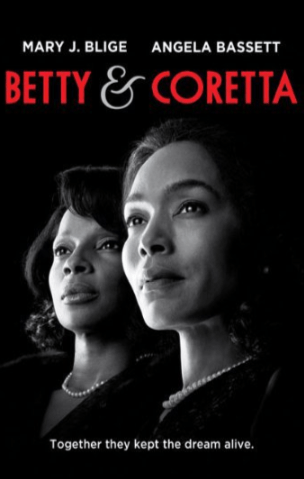
Cast:  Mary J. Blige (Dr. Betty Shabazz), Angela Bassett (Coretta Scott King), Ruby Dee (Narrator), Gloria Reuben (Myrlie Evers-Williams), Malik Yoba (Martin Luther King, Jr.), Tyler Hynes (Mike Fitzpatrick), Benz Antoine (Ralph Abernathy), Cherise Boothe (Toni Wallace), Nicki Whitely (Attalah), Tristan D. Lalla (Jesse), Lindsay Owen Pierre (Malcolm X), Alex C. Askew (Louis Farrakhan).

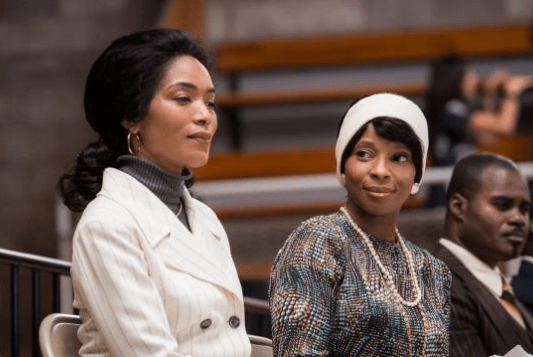
Story Focusing on the extraordinary women behind the two men who would change history, Betty & Coretta tells the stories of Coretta Scott King, wife of Dr. Martin Luther King, Jr. and Dr. Betty Shabazz, wife of Malcolm X.  When their husbands are tragically assassinated, these two women not only inherit the mantle of the civil rights movement in America, but also find themselves single mothers who have to find a way to raise and support their children on their own.  While many are familiar with the stories of Malcolm X and MLK, few know the stories of their devoted wives and the friendship that formed between the women after the assassinations of their husbands.

The movie picks up right before the assassinations of Malcolm (February 21, 1965) and Martin (April 4, 1968), and opens with Ruby Dee describing an era of racism, war, and poverty in America. Throughout the film Dee shares facts about the deaths of Dr. King and Malcolm X, the Black National Political Convention, where Coretta and Betty first meet, as well as the lives and deaths of both phenomenal women.

Mary J. Blige portrays a pregnant Betty Shabazz, who along with her four daughters watches as her husband is gunned down just as he takes the stage to deliver what would become his last message. After the assassination, Betty delivered twin girls, making her a single mother with six small children. With the help of friends and those in her community, Betty cared for her family and earned a doctorate degree in high-education administration. She became an associate professor at New York’s Medgar Evers College. Shabazz spent the rest of her life working as a university administrator and fundraiser, before dying on June 23, 1997 as a result of injuries sustained by a fire her 10-year-old grandson, Malcolm set in her home.

Angela Bassett plays widow, Coretta Scott King, who raises four children while remaining a leading participant in the Civil Rights Movement. She goes from being her husband’s motivator and partner in the movement to being a justice advocate to the world. In addition to lobbying for the national King Holiday, she became president, chair, and CEO of The King Center in Atlanta, GA. At the end of the movie, Ruby Dee notes that Mrs. King died in 2006, nine years after Dr. Shabazz, from ovarian cancer.

The movie spans three decades and weaves together the lives of these two civil rights activists.  It demonstrates how they were each powerful, strong, faithful, and devoted leaders in their own rights.

Details:  A corporate executive at A&E Network confirmed that the Shabazz and King families were not consulted for the film and some of the heirs were not happy with it.  Lifetime attempted to add credibility by featuring actress, Ruby Dee, as narrator, who was a dear friend of the Shabazz family.  Sources: Lifetime; Urban Faith; Essence; Commonsense.org; Variety; Shadow & Act; Moviestillsdb.com.

Trailer: