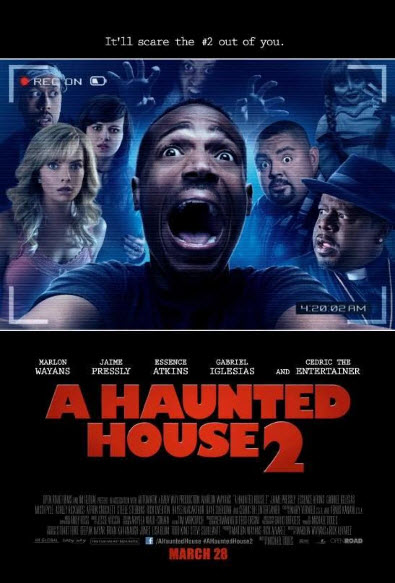
 Release Date: April 18, 2014
Genre: Comedy/Horror
Rating: Not Available
Studio: Open Road Films
Director: Mike Tidde
Cast: Marlon Wayans ( Malcolm)
Jaime Pressly
Essence Atkins (Kisha)
Affion Crockett (Ray-Ray)
Dave Sheridan (Bob)
Gabriel Iglesias
Story: After exorcising the demons of his ex, is starting fresh with his new girlfriend and her two children. After moving into their dream home, Malcolm is once again plagued by bizarre paranormal events. (Synopsis taken from comingsoon.net).
The Scar Of Shame
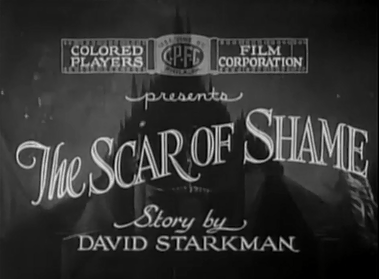
DETAILS
Year of Release: 1927
Genre: Drama
Rating: N/A
Runtime: 68 mins.
Black & White
Silent
Studio: Colored Players Film Corporation
Producer: David Starkman
Director: Frank Perugini
CAST
Harry Henderson (Alvin Hillyard)
Norman Johnstone (Eddie Blake)
Ann Kennedy (Lucretia Green)
Lucia Lynn Moses (Louise Howard)
William E. Pettus (Spike Howard)
Lawrence Chenault (Ralph Hathaway)
Pearl McCormick (Alice Hathaway)
FOREWARD: Environment, surroundings, childhood training and companions often is the deciding factor in our lives It shapes our destinies and guides our ambitions. If early in life some knowing, loving hand lights the lamp of knowledge and with tender care keeps it burning, then our course will run true ’til the end of our useful time on this earth, but if that lamp should fail through lack of loving hands to tend its hungry flame then will come sorrow and SHAME!
SYNOPSIS:
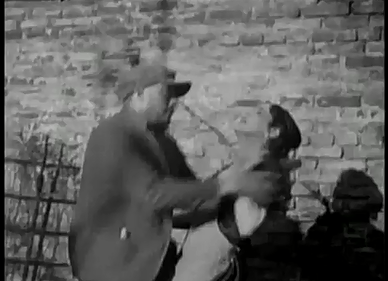 One afternoon at Mrs. Lucretia Green’s boardinghouse, Alvin Hillyard, a struggling young composer, witnesses a drunken man abusing a young woman in the tenement yard next door. He saves the girl, Louise Howard, then carries her to the boardinghouse, where Mrs. Green comforts her. Mrs. Green offers Louise a room in exchange for helping around the house, hoping to keep her safe from her violent, drunkard stepfather Spike. Meanwhile, Eddie Blake, a saloon owner and another one of Mrs. Green’s boarders, encourages Spike to drink and then tries to drag Louise back to her father as he wants to hire the girl, to whom he is attracted, as an entertainer in his seedy club. Alvin once again intervenes, and Mrs. Green tells Eddie to pack his bags while Alvin vows to teach the lout how to have respect for “our” women.
La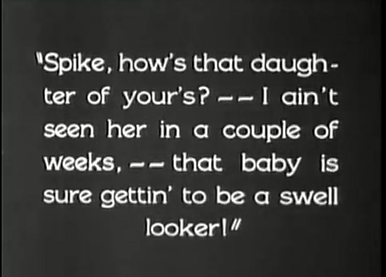 ter, at a saloon, Spike and Eddie discuss Louise, and Spike tells Eddie to leave the girl alone, blaming his own violence on the alcohol that Eddie has given him. Eddie proceeds to push alcohol on the susceptible Spike, and after he has become thoroughly inebriated, he goes to Louise’s room and tries to grab her. Alvin rescues Louise once again and then decides that he will marry her so that she will finally be safe. Three months later, Spike, in a state of alcohol withdrawal, begs Eddie for a drink, and Eddie says he will serve him only if he helps kidnap Louise and set up a cabaret in another town, where with her looks and his brains they will make a killing. The pair send a fake telegram calling Alvin away to his sick mother’s bedside. As Alvin packs to leave, Louise offers to accompany him, but Alvin confesses that he has never told his class-conscious mother about their marriage.
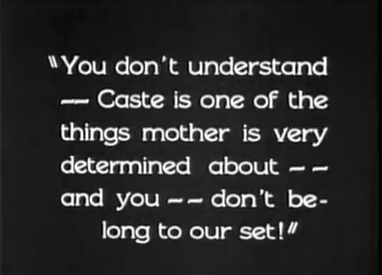 Alvin leaves as Spike watches the house, and Louise, distraught, ruins a photo of Alvin’s mother and then discovers and tears up letters in which the matron mentions her hopes that Alvin will marry a young woman of their own class. Her final acts of defiance are to remove her wedding ring and tear up her marriage license. Eddie enters Louise’s room and asks her to join him in a business deal in another town. Louise agrees, provided their relationship remains strictly business. Alvin discovers the trick played upon him once he arrives at his mother’s home. He returns to the boardinghouse but having lost his house key, breaks into his and Louise’s room through a window.
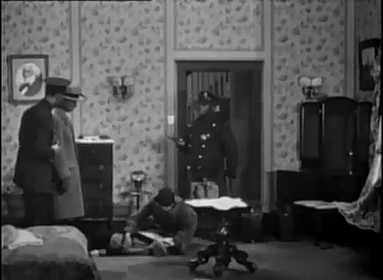
 Finding Eddie with Louise, Alvin pulls a gun on the pair. The two men fire their guns, and when the police arrive, they find Louise unconscious and wounded.
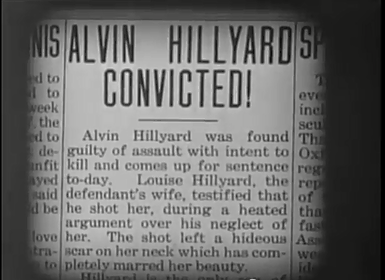
Alvin is convicted of assault based on Louise’s testimony, and the girl is left with a disfiguring scar on her neck. Two years later, Alvin escapes from prison and becomes a successful music teacher under the name “Arthur Jones” in the same city where Louise and Eddie have set up the chic gambling club, Club Lido.
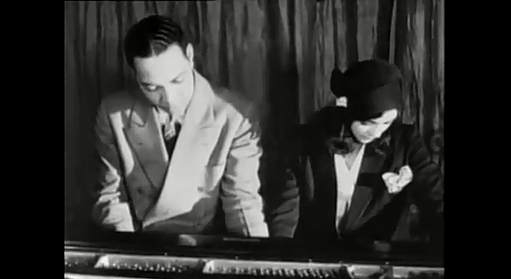 Alvin begins to fall in love with his star music pupil, Alice Hathaway, but does not declare his feelings because of his past. One day, her father, Ralph Hathaway, a wealthy lawyer, receives a call from Louise inviting him to come to a “whoopie” party at the club, of which Hathaway is the sponsor and protector. When a letter is left for Hathaway, Alice, now engaged to Alvin, asks her fiancé to bring it down to the club. Alvin is shocked when he is introduced to Louise.
 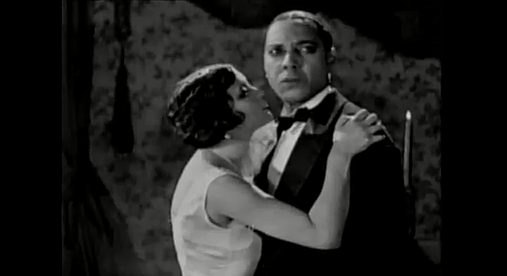 Louise blackmails Alvin into dancing with her in front of Hathaway, and then later into coming to visit her at her home. When he arrives, she tries to seduce him, then confesses that she has always loved him. Alvin rejects her and leaves. Distraught and hopeless, Louise writes a letter to Hathaway, which she asks her maid to deliver. Then she begs God’s forgiveness and drinks poison.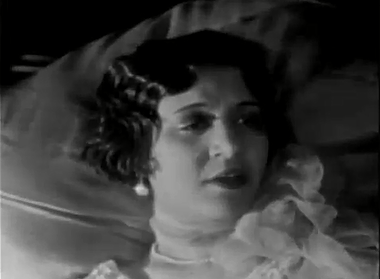
The maid calls Hathaway to come to Louise’s side as she is dying. In the meantime, Alvin, having confessed all to Alice, tries to comfort her. Hathaway arrives with Louise’s letter and Alvin finally learns the truth, that it was Eddie who had actually shot Louise that night.
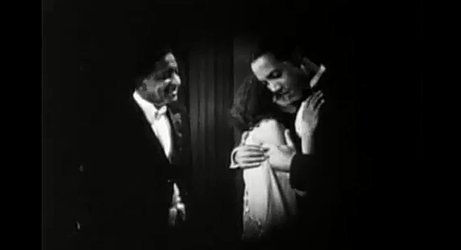
Alice and her future husband, now exonerated, embrace.
NOTES
Scar of Shame was a statement on the class and color caste system that existed within the African-American community.
Sources: Turner Classic Movies; A Separate Cinema: Fifty Years of Black Cast Posters.
Within Our Gates
DETAILS
Year of Release: 1920
Genre: Drama
Rating: N/A
Runtime: 79 mins.
Black & White
Silent
Studio: Micheaux Film Co.
Producer: Oscar Micheaux
Director: Oscar Micheaux
CAST
Evelyn Preer (Sylvia Landry)
Flo Clements (Alma Prichard)
James D. Ruffin (Conrad Drebert)
Jack Chenault (Larry Prichard)
William Smith (Philip Gentry, a detective)
Charles D. Lucas (Dr. V. Vivian)
Bernice Ladd (Mrs. Geraldine Stratton)
William Starks (Jasper Landry)
Ralph Johnson (Philip Griddlestone)
E. G. Tatum (Efrem)
Grant Edwards (Emil)
SYNOPSIS
Sylvia Landry, a young black woman from the South, visits her Northern cousin, divorcee Alma Prichard. Sylvia’s fiancé, Conrad Drebert, writes to her from Brazil, where he is working, to tell her that he will send a telegram with the date of his arrival. When the telegram arrives, Alma, who is in love with Conrad, intercepts and destroys it. When Conrad arrives, Alma sets up Sylvia to be seen with another man.
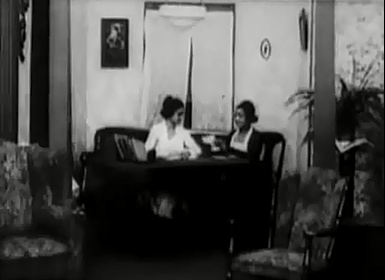
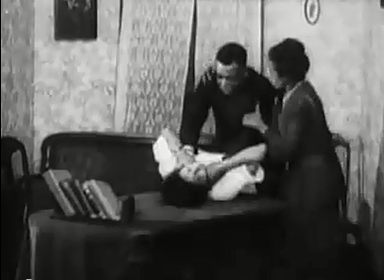
Enraged, Conrad tries to strangle her, but she is saved by Alma. Conrad storms out and breaks their engagement, much to Alma’s satisfaction. Saddened by the breakup, Sylvia leaves town and takes a job at a school for poor black children in the southern town of Piney Woods, that is run by Reverend Wilson Jacobs and his sister Constance. When money troubles hit the establishment, however, Sylvia decides to go to Boston to find a rich benefactor. One day, depressed that she has not met any rich people to take an interest in the school’s plight, Sylvia saves a little boy from being struck by the car of rich philanthropist Elena Warwick, and is herself injured. Mrs. Warwick visits her in the hospital and Sylvia tells her that the school must find $5,000 in the next ten days or it will close.
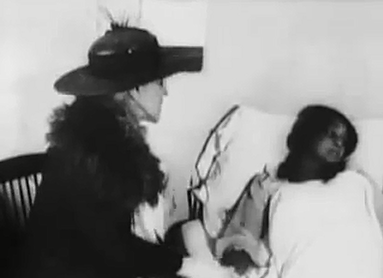
Mrs. Warwick is set to give the school the money until she speaks with her friend, Mrs. Geraldine Stratton, who convinces the naïve Mrs. Warwick that educating blacks is a mistake, and that they are more suited to being field hands and lumberjacks. She suggests giving the money to Old Ned, a black preacher whose fiery sermons encourage blacks to remain “pure” and untainted by education, culture and politics.
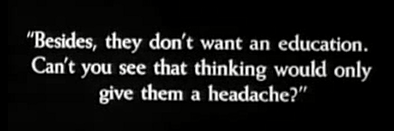
When Sylvia returns to collect the school’s money from Mrs. Warwick, she is refused, but later, Mrs. Warwick changes her mind and sends the school fifty-thousand dollars.thousand dollars. Sylvia returns to Piney Woods, where Jacobs proposes. Sylvia refuses the offer, however, as she has fallen in love with Doctor V. Vivian, a young Boston man deeply committed to improving blacks’ social conditions.
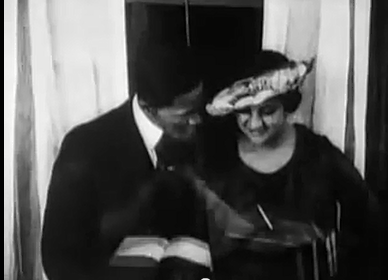
Meanwhile, Larry, Alma’s stepbrother, a notorious gangster, flees police after killing another gambler in a card game. He escapes to Piney Woods and plans to swindle the poor blacks in the region by selling them stolen goods. Larry eventually encounters Sylvia, with whom he was once in love, and tells her that he will reveal her past to the school’s administrators if she does not steal the school’s money for him.
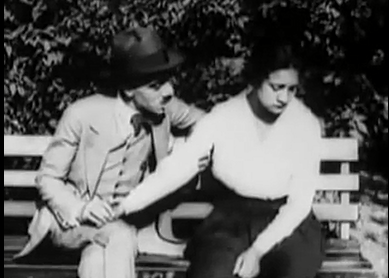 Distraught, Sylvia returns to Boston. Larry, meanwhile, has also gone back North and is shot while trying to rob a bank. When Dr. Vivian goes to the Prichards’ to tend Larry’s wounds, he meets Alma, who tells him about Sylvia’s past.
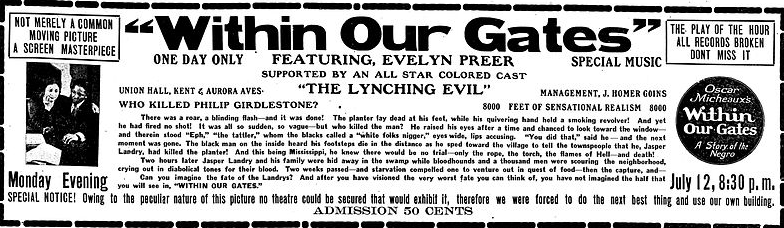
Flashback: Sylvia was adopted by the Landrys, a family of poor black southerners. When she was a young girl, the Landrys sent Sylvia to school, and the educated girl eventually discovered that her father’s landlord and employer, Philip Griddlestone, owed him $625.00. Armed with his daughter’s calculations, Mr. Landry goes to see Griddlestone, who rudely dismisses him. At that moment, a white laborer whom Griddlestone had earlier swindled, enters the room and shoots Griddlestone. Efrem, Griddlestone’s gossipy, meddlesome servant, screams through the town’s streets that Mr. Landry murdered his employer. A lynch mob is formed and the Landrys run away, taking refuge in the swamps. The manhunt continues for a week, and, frustrated that the Landrys had eluded them, the mob attacks and kills the traitorous Efrem, who had been gloating about how much the whites loved him. Mr. and Mrs. Landry and their young son Emil are captured. The parents are hanged and burned at the stake, but Emil escapes. Meanwhile, the real killer is accidentally shot by the mob. Griddlestone’s brother, Armand, follows Sylvia back to the home of her parents’ friends. Armand attacks Sylvia and tries to rape her, but sees a scar on her breast and suddenly realizes that Sylvia is his own daughter from his union with a black woman. Armand then pays for the girl’s education but never tells Sylvia that he is her father.
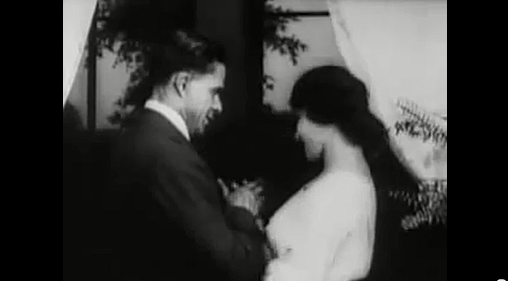
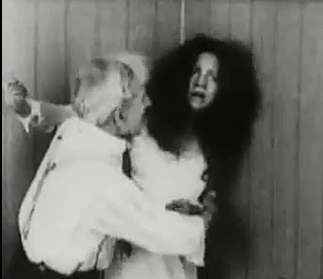 In the present, Dr. Vivian finds a distraught Sylvia and tells her that they must remember that their people fought in Cuba, Mexico and France for the freedom of their great country. Confident that once married Sylvia will be an excellent wife and a confirmed patriot, Dr. Vivian is not disappointed.
NOTES
Within Our Gates was Oscar Micheaux’s earliest surviving directorial effort.
Within Our Gates stirred up considerable controversy during its original release because it contained scenes of lynching and racial conflict. At first the film, which eventually had its premiere in Chicago, was rejected by the Chicago Board of Movie Censors who were afraid the movie could possibly inspire a race riot. However, a second screening of the film by the press, Chicago politicians, and prominent members of the Black community convinced the Censors to grant the film a permit since it addressed horrendous conditions that needed reform. Not everyone agreed with this assessment, however, and some of the most vigorous protesters against the film were black activists. By June 1920, the film was edited down, with much of its controversial material removed.
Sources: Turner Classic Movies
Watch the movie below
History of Black Cinema
Films featuring Black performers and images have evolved from those which reflected the notions of Whites to those which fully explore African-American issues and themes. Early movies created during the beginning of the 20th century typically portrayed African-Americans in insulting stereotypes or utilized Whites in blackface instead of Black actors. Blackface involved White actors covering their faces with black make-up and drawing on exaggerated lips to complete the parody. This technique originated in the minstrel shows of the mid-19th century in which African-Americans were portrayed as stupid, lazy, clownish, superstitious, and frivolous. These shows degraded the African-American community and made fun of Blacks by making them look foolish, utilizing stereotypical characters such as Coons, Mammies, Sambos, and Uncle Toms. Such stereotyping and disparaging representations were used to disassociate Blacks and Whites, an established practice in America since the days of slavery.
With the invention of moving pictures, the minstrel tradition of demeaning Blacks for the entertainment of White audiences carried over into the new medium. Black characters were rarely presented in film and when they were they were typically portrayed as the same stereotypical caricatures, never as serious or fully developed individuals.
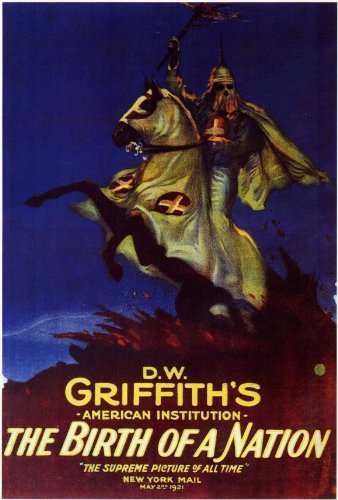
One such movie, was The Birth of A Nation, a 1915 silent film directed by David Wark “D. W.” Griffith. By 1915 Griffith was an established director who developed a repertoire of techniques including crosscutting, intercutting, expressive lighting, camera movement, and the close-up. He grew up hearing stories of the Old South’s power and grandeur and in 1914 began working on his film masterpiece which would later be praised for its technical innovations, epic narrative and imagination, drawing huge crowds around the country and becoming Hollywood’s first true blockbuster. An adaptation of Thomas Dixon’s novel “The Clansman: An Historical Romance of the Ku Klux Klan” BOAN chronicled the rising racial, economic, political and geographic tensions leading up to and through the Civil War, emancipation, Abraham Lincoln’s assassination and the tumultuous southern reconstruction period in American History.
In spite of its innovation as a movie megahit, it was condemned as racist by leaders in the African-American community as well as by White liberals. This film took racial stereotypes to a whole new level. It showed blacks as inferior, maniacal, unintelligent, and brutal, raping and disrespecting good White folk, and generally running amok. The film’s Confederate hero’s response to these insufferable injustices by the newly freed and unruly slaves, was to start the Ku Klux Klan, a righteous organization, portrayed as saviors of the South, who ride in at the end and save the Whites from the savage Negroes.
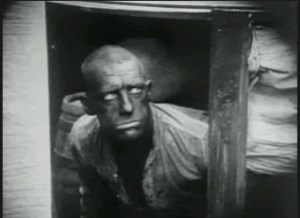
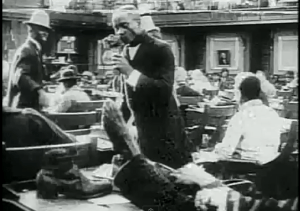
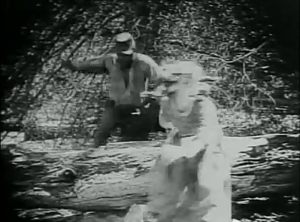
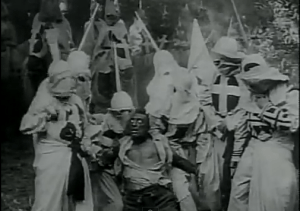
Upon its release, BOAN sparked national protest, drawing the ire of the newly formed NAACP and was the catalyst for riots in several major cities in which it was screened. Even at this early stage in motion picture history, African-Americans saw the potential of film as a set of images and messages that could influence the opinions and behavior of a large number of people as well as the way in which the experiences of African-Americans could be distorted and exaggerated. Yet, despite its racist, exploitative message, its historical inaccuracy, and its’ rejection by entire regions of the country, the 190-minute silent epic was the most profitable film in history for a number of years and well into the “talkie” film era. BOAN gave birth to the lurid and degrading stereotypes that were to endure in African-American movie images for years to come.In an effort to counterbalance such negative portrayals, African-American entrepreneurs ventured into filmmaking. In addition, a handful of independent “Colored” film companies were emerging. These companies were owned by Whites but catered to film audiences in the nearly 400 Black movie theaters, most of which were in the South. But a major problem in producing these films was financing.

Lincoln Picture’s, The Realization of a Negro’s Ambition (1916) and Micheaux’s, The Homesteader (1919), were among the first feature films to present themes in concert with the effort by African-Americans to combat the negative portrayal of their community. Ideologies of racial advancement were based on the predication that Blacks were human beings as well as Americans deserving of equality and social justice. These beliefs emphasized education and morality and were actualized in films through plots that emphasized temperance, religion and social advancement through education.

During the 1920s through the mid-1930’s there was an abundance of Black-owned film studios operating throughout the U.S. Although the films were produced on limited budgets, the popularity of race movies gave birth to a counter cinema with its own stars, a highly organized and tightly run distribution system, and a multitude of exhibition venues including Black owned movie houses like the Howard Theater in Washington, D.C., and the Madame C. J. Walker Theater in Indianapolis. In addition to such theaters, the films were also shown at Black churches and schools, segregated theaters or at midnight and matinee showings in White theaters.
Unfortunately many of the Black independent film companies did not survive the Great Depression nor the invention of expensive sound technology. In the 1930’s and 40’s few of the films made for Black audiences were made by Blacks. Many of the production companies were now owned by White businessmen with White technicians behind the cameras. These companies included the Norman Film Manufacturing Company, Ebony Pictures and The Colored Players Film Corporation. One of the few exceptions was Micheaux, who maintained control of his production company, long after many Black owned companies went bankrupt and disappeared. In spite of this, there were still a multitude of Black producers, directors, screenwriters, actors and actresses who worked on films which were not meant for mainstream movie audiences and as such they had influence on how African-American life was portrayed. During the early period of Race films, the movies focused on themes relative to the Black community such as passing, lynching, religion and criminal behavior. Eventually, the focus of the films changed and plots combined Race and Hollywood styles in which gangster movies, westerns, horrors and musicals portrayed Black concerns.
 Race films, both those produced by Black companies as well as White, continued to remain popular with Black audiences through the mid-50s, as they provided stories which reflected experiences that movie goers could relate to and portrayed characters that contradicted White America’s notions of the place of African-Americans in society. It is estimated that more than 500 race movies were produced and distributed between 1910 and 1948, although fewer than 100 of these exist today due to the use of highly flammable and delicate nitrate film stock and the failure to utilize proper storage methods which led to the loss of many early films.
The significance of these productions to contemporary audiences lies in the fact that they provide a glimpse of how Blacks saw themselves and their world during the era in which they were made. They should not be condemned for their lack of artistic value, due to limited budgets and production quality, but appreciated for their reflections of Black culture by highlighting African-American vernacular, dance, music, fashion, and glamour. It can be said that without the early Black independent film movement, there would be few Black themed films today.
See Race Filmography for a complete listing.
 Black Cinema Connection