Lying Lips

Release Date:  1939
Black & White
Genre:  Drama
Director:  Oscar Micheaux
Studio(s):  Micheaux Film, Sack Amusement Enterprises
Running Time:  80 mins.

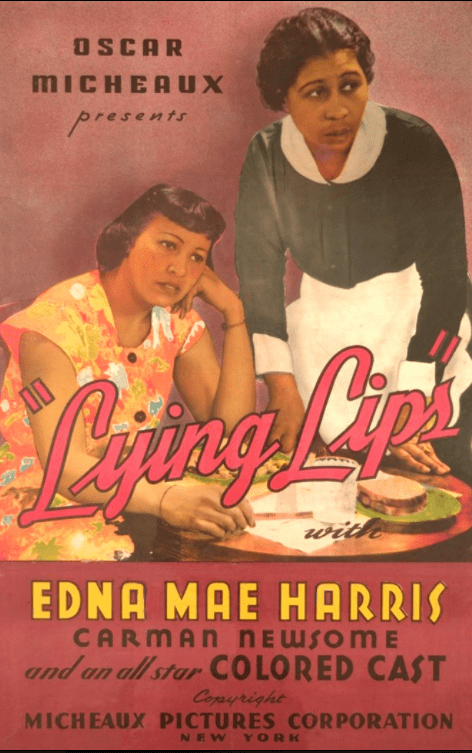
Cast:  Edna Mae Harris (Elsie Bellwood), Carman Newsome (Benjamin Hadnott), Robert Earl Jones (Detective Wanzer), Frances Williams (Elizabeth Green), Cherokee Thornton (John), Slim Thompson (Clyde), Gladys Williams (Aunt Josie), Juano Hernández (Reverend Bryson), Henry ‘Gang’ Gines (Ned Green), Don De Leo (Farina), Charles Latorre (Garotti), Robert Paquin (District Attorney), George Reynolds (Lieutenant of Police), Amanda Randolph (Matron).

Story:  Elsie, a popular nightclub singer, refuses to go out with the customers at the request of the white owner of the club. The owner decides to get Benjamin, the black manager of the club, to talk to Elsie and try to persuade her to cooperate. Ben refuses and quits his job. He tells Elsie about his conversation with the owner and persuades Elsie to stay on because she is popular and can make a lot of money, but he warns her to be careful. Elsie stays, but still refuses to date the customers. Later, the owner hires John and Clyde, Elsie’s uncles (note: other sources state that these are her cousins), to replace Ben as manager.

One evening, after the club closes, Elsie goes home and finds to her horror that her Aunt Josie, who lives with her, has been killed.  The police arrive and question Elsie but do not believe her story, so they arrest her for the murder of her aunt.  John and Clyde testify that they saw Elsie on the night of the murder leaving the club for a short time and later returning. Elizabeth Green, Clyde and John’s sister, tells the police that Elsie bought a large life insurance policy on her aunt, with herself as the beneficiary. With this evidence, Elsie is convicted of the crime and sent to prison.

Ben, who has now become a detective on the police force, and Detective Wanzer, who is a close friend of Elsie’s, do not believe that she is guilty and set out to find the real killer. After some investigation, they learn that Elizabeth Green’s husband, Ned, was actually in love with Aunt Josie. With jealousy as a possible motive, Ben and Wanzer now suspect that Elizabeth and her brothers are connected with the crime.  One night the detectives confront John and accuse him of the murder.  John refuses to confess, so Ben and Wanzer take him to Tolston’s Manor, which is rumored to be haunted. There they threaten to tie him up and leave him at the mercy of the ghosts. Terrified, John tells all.
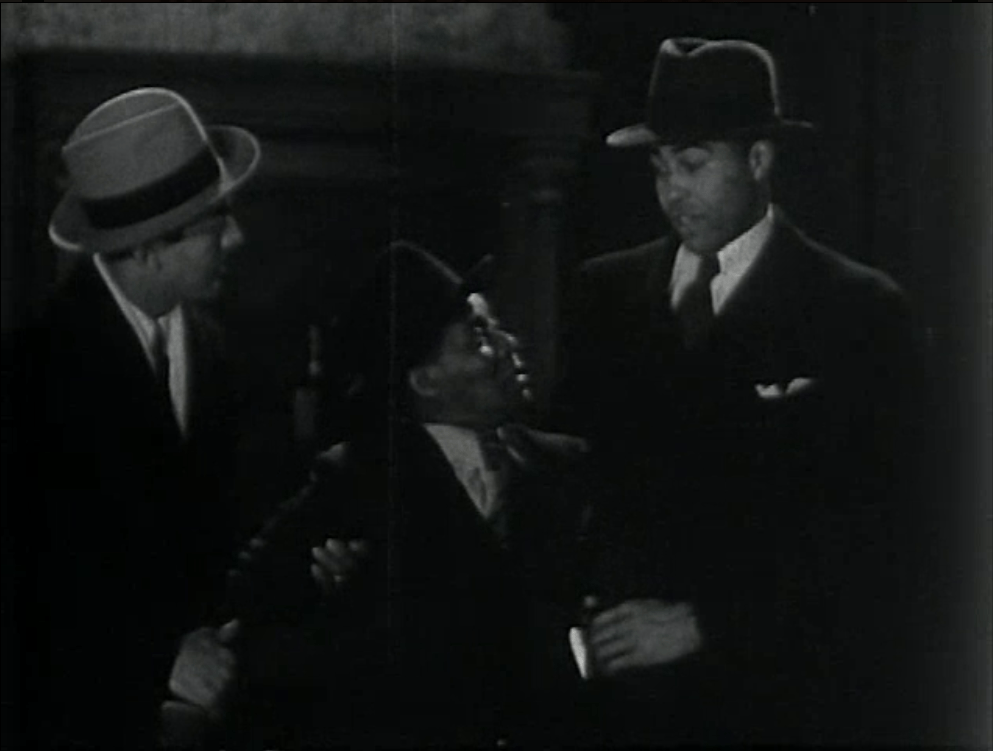
He reveals the story of his sister’s family, and tells them how Ned was tricked into marrying her and that he was in love with Aunt Josie when they lived in the South.  After realizing that his wife had tricked him, Ned ran north, but Elizabeth pursued him, and her two brothers threatened him.  Although he stayed with Elizabeth, he continued to see Aunt Josie and threatened to leave his wife.

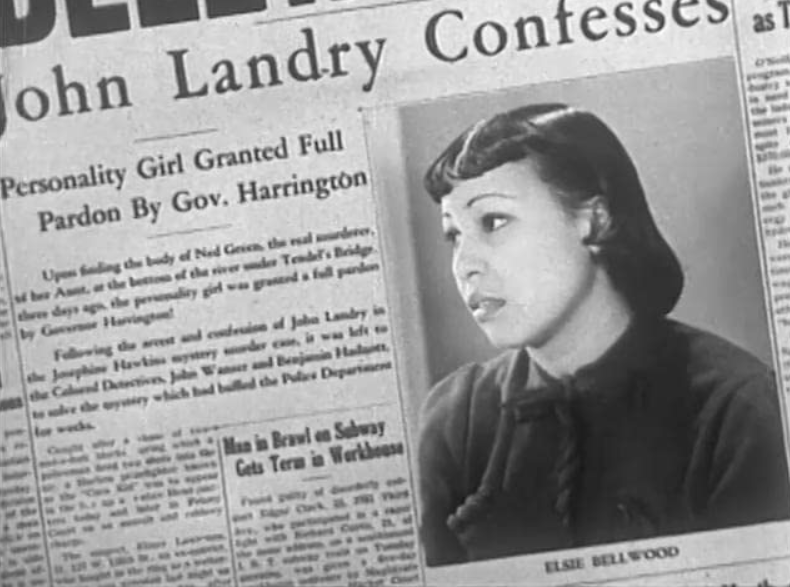
John admits that he and Clyde lied about seeing Elsie leave the club on the night of the murder. Furthermore, he tells them that earlier that night, Elizabeth found a note left by her husband which stated that out of despair, he had decided to kill Aunt Josie and then take his own life. John also relates that it was Elizabeth’s plan to frame Elsie for the crime. The police recover Ned’s body from the river, verifying John’s story. On this new evidence, Elsie is granted a pardon by the Governor and released from prison. Out of deep gratitude and love, Elsie marries Benjamin, who has been in love with her all the time.
Notes:  Lying Lips marked the motion picture debut of actor Robert Earl Jones (1910-2006), a former boxer and stage actor who was credited onscreen as “Earl Jones.” Jones continued to act into the 1990s on stage and television, with occasional film roles, including “Luther Coleman” in the 1973 film The Sting.  Jones was the father of noted stage, film and television actor James Earl Jones.

Tolston’s Manor was also featured in another Micheaux film entitled The Ghost of Tolston’s Manor which was released in either 1923 or 1924.  The Ghost of Tolston’s Manor, also known as The Son of Satan starred Andrew Bishop and Lawrence Chenault and depicted the experiences of an ordinary black person going to a haunted house to stay all night as the result of an argument.  No print of the film is known to exist and it is presumed to be lost.

Sources:   tcm.com; Wikipedia; IMDB.  Photo Sources:  IMDB; daarac.org.

Movie:

The Duke Is Tops

Release Date:  9/1/1938
Black & White
Genre:  Drama/Musical
Directors:   William Nolte, Ralph Cooper (uncredited)
Studio(s):   Million Dollar Productions, Million Dollar Productions, Norman Distributing Company
Running Time:  72 mins.

Cast:  Ralph Cooper (Duke Davis), Lena Horne (Ethel Andrews), Laurence Criner (Doc Dorando), Monte Hawley (George Marshall), Neva Peoples (Ella), Vernon McCallum (Mason), Edward Thompson (Ferdie Fenton), Johnny Taylor (Dippy, ‘Prince Alakazoo’), Ray Martin (Joe), Guernsey Morrow (Ed Lake), Charlie Hawkins (Sam, the Stage Manager).

Details:  A producer’s romance with his star ends when the latter is offered a better job in New York.

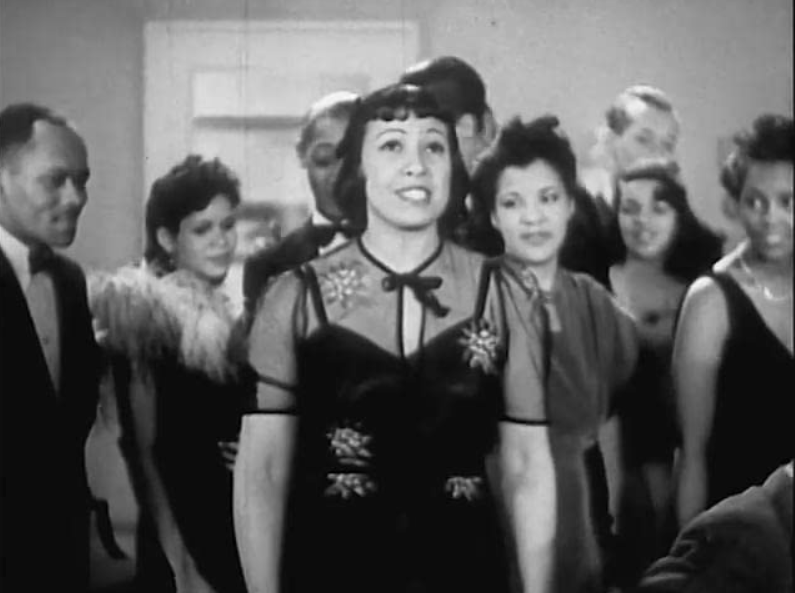
Story:   Duke Davis, singer Ethel Andrew’s sweetheart, manager, and producer, finds himself in a dilemma when George Marshall, a New York booking agent, offers Ethel an opportunity to leave the show “Sepia Scandals,” which is touring small towns, for New York City. Because Marshall has stipulated that Ethel must go without Duke, Duke anguishes over whether to encourage her departure, but he eventually consents to it when Marshall promises to launch her career.  Ethel initially rejects Marshall’s offer when she realizes that she will be separated from Duke, but when Duke tells her that he has sold their contract for a personal profit, she is heartbroken and changes her mind. Later, Ethel’s friend Ella discovers that Duke, knowing that Ethel would never leave him willingly, intentionally angered her in order to force her to do what he thought was best for her. Ella agrees to keep his good motives a secret from Ethel.

While Ethel’s New York stint gets off to a successful start, Duke finds himself destitute and desperately seeks backing for his vaudeville show from booking agent Ed Lake. Lake, however, says that vaudeville is dead and rejects Duke’s proposal. Although Duke later convinces Mr. Mason to produce his new show, the show is a failure and Duke winds up working as a barker for Doc Dorando’s traveling medicine show. Duke injects some much-needed showmanship into Dorando’s pitch and, along with Dippy, an unemployed property man, they go on the road with their product, “Doc Dorando’s Universal Elixir.”

A year passes then one day, while listening to the radio, Duke hears that a show in which Ethel was appearing has flopped and he rushes to New York to be with her. Ella tells Ethel the truth about Duke, and when Duke arrives in New York, he meets with Ferdie Fenton, producer and club owner, who has been blamed for rushing Ethel’s career and causing her failure. Duke soon secures permission from Fenton to create a new show and he and Ethel appear on stage together, reunited at last.

Notes:  The Duke Is Tops marked the film debut of Lena Horne, then just 20 years old, who had yet to develop the smooth, classy style she would distinguish herself with in her later films. A Variety reviewer called her “a rather inept actress, but something to look at and hear.” A modern source claims that Lena Horne replaced Nina Mae McKinney as the female lead in the middle of filming when McKinney became ill. Modern sources also note that the film was shot on a shoestring budget in ten days, and that Horne’s husband refused to let her attend the NAACP charity premiere of the film in Pittsburgh, PA because she was never paid for her work in the picture. 

The Duke Is Tops was re-released in 1944 as The Bronze Venus, with Lena Horne’s name appearing above the title.  Sources:  tcm.com; IMDB; Wikipedia; Photo Sources:  Daarac.org; entertainmenttime.com; moviesfortheblind.com.

Movie:

The Green Pastures

Release Date:  8/1/1936
Black & White
Genre:  Drama/Inspirational
Director(S):  Marc Connelly, William Keighley
Studio(s):   Warner Bros.
Running Time:  93 mins.

Cast:  Rex Ingram, Oscar Polk, Eddie ‘Rochester’ Anderson, Frank H. Wilson, George Reed, Abraham Gleaves , Edna Mae Harris, James Fuller.

Details:   The Green Pastures depicts stories from the Bible as visualized by black characters.  The story, set in a small black church in the deep South, relates incidents from the Bible — seen in a series of vignettes — as a preacher teaches his Sunday school class.  Based on Roark Bradford’s 1928 novel, “Ol’ Man Adam an’ His Chillun'” and the 1930 play of the same name by Marc Connelly.

Synopsis One fine Sunday in the Louisiana delta, a black preacher, Mr. Deshee, tells Bible stories to his Sunday school class. In order to help the children, visualize God and heaven, he describes them in terms of a Southern fish fry:  De Lawd looks exactly like their preacher, and except for their wings, the angels look exactly like members of the congregation. De Lawd creates too much firmament one day, so he creates the sun and earth to drain it away. After realizing what good farmland he has made, De Lawd creates Adam and Eve to live on it. Sadly, De Lawd is disappointed by Adam and Eve’s descendants. After punishing Cain for Abel’s murder, De Lawd leaves the Earth alone for a while, but the next time he returns, he again finds a wicked world. Because he believes that a small-town preacher, named Noah is an exception, De Lawd orders him to build an ark and then sends the rains down to destroy the rest of humanity.

Soon, however, things have gotten bad again and De Lawd decides that man does not have enough to do, so he gives Abraham’s descendants the land of Canaan and sends Moses to lead them out of Egypt. Moses and Aaron secure the release of the Hebrew slaves only after confounding the Egyptian pharaoh with their magic tricks and killing his son. The Israelites reach the promised land, but De Lawd gets so disgusted with his children that he renounces them. Not even a delegation of angels can convince him to take them back. Yet a soft voice from Earth reaches De Lawd, and he realizes that mercy can be earned through suffering. De Lawd then wonders if this means that even God must suffer, and his question is answered by the life of Jesus Christ. Sunday school is over, and the children file out into the countryside that looks so much like heaven.

Notes:  The Green Pastures was one of only six feature films in the Hollywood Studio era to feature an all-black cast, though elements of it were criticized by civil rights activists.  A review of the film in The Spectator gave the film a generally good review but stated that one may feel uneasy at the film’s “humor” and the depiction of “the negro mind”.  The review went on to say that the result is occasionally patronizing, too often quaint, and at the close of the film definitely false.  Despite criticisms about its racial stereotyping, The Green Pastures proved to be an enormously popular film. It remained the highest-grossing all-black-cast film until the release of Carmen Jones in 1954.  Source(s):  youtube; tcm.com; Wikipedia.  Photo Sources:  Daarac.org; IMDB.

Movie clip:

Carib’s Gold

Release Date:  9/30/1956
Black & White
Genre:  Drama
Director:  Harold Young
Studio(s):  Splendora International, Onyx Pictures
Running Time:  71 mins./62 mins.

Cast/Role: 
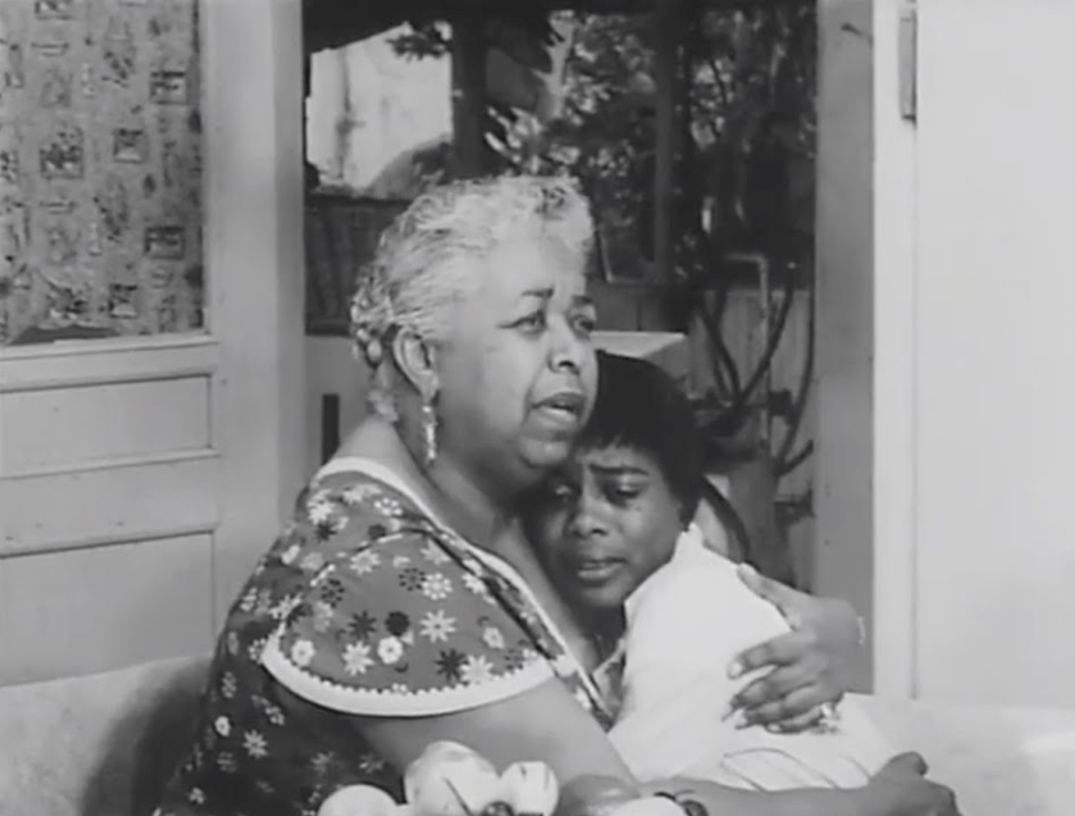
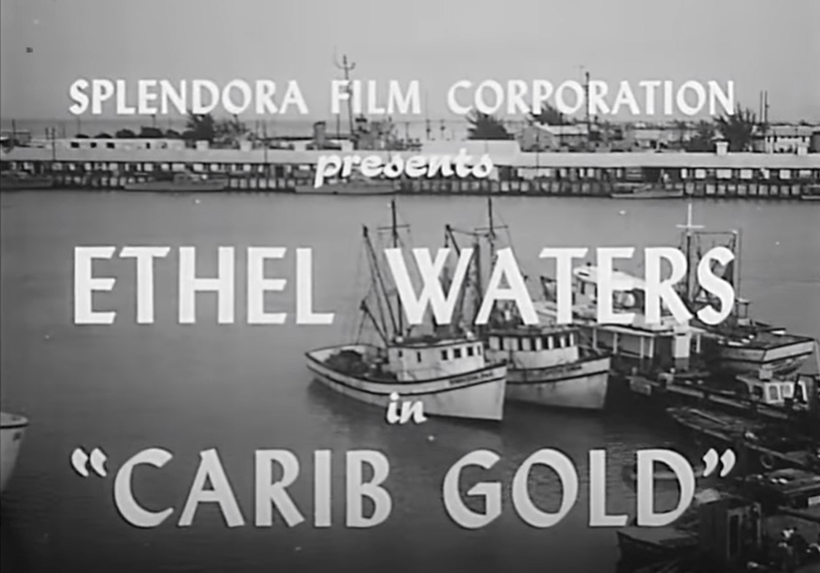
Ethel Waters as “Mom” Ryan: Ryan’s mother, owner of Duffy’s bar and restaurant.
Coley Wallace as Ryan: a diver who discovers sunken treasure.
Peter Dawson as Neely: skipper of the shrimping boat, the Capt. Geech.
Richard Ward as Lechock: a diver hired to help salvage the shipwreck, but who steals some of the treasure and murders Barb.
Cecil Cunningham as Barb: Mate/deckhand on the Capt. Geech.
William T. Hill as Cap: Owner & manager of the Capt. Geech.
Cicely Tyson as Dottie: Barb’s wife.
George Renna as Bartender.
Diana Sands as Bar Girl.
Henry Hayward as Willie: a deckhand on the Capt. Geech.
Ruth Sawyer as Baby: Ryan’s wife.
Geoffrey Holder as Voodoo Dancer.

Synopsis:  When Ryan, a sailor on a shrimp boat fishing off the Florida Keys, finds a sunken treasure of gold while diving to repair some nets, the demeanor of the boat’s crew changes. A diver hired to help salvage the wreck kills a crew member, then escapes with part of the treasure and is pursued through the Keys by the harbor police. After hijacking a car, the killer continues his escape, but when he hears a radio news broadcast report that a roadblock has been set up to prevent his going to the mainland, he returns to Key West. Ryan tracks the killer by searching the local bars. He  eventually finds the killer and turns him over to the police.

Notes:  Carib Gold was filmed almost entirely in Key West, Florida, with locally-cast musicians and extras. It is most notable for its largely African-American cast headlined by Ethel Waters, and was the feature-film debut of actresses Cicely Tyson and Diana Sands. It also marked the debut of dancer-actor Geoffrey Holder.  According to the LA Mirror-News review, Holder performed a voodoo dance in the film.

The film premiered on Sunday, September 30, 1956, exclusively at the Strand and Monroe Theaters on Duval Street in Key West. The film’s premiere was segregated, with the Strand screening the film for whites and the Monroe screening it for blacks. Following its premiere, the film had a very short run, being shown in both theaters for only two more days.  No national release date for the picture has been located.

According to documents in the Department of Defense [DOD] Collection the footage was shot for the Navy Diving School in Washington, D.C. for “a series of navy productions concerning diving equipment and procedures.”  Permission was granted to the production company to look at the requested footage and copy portions of it at the company’s expense. Although reviews of the film mention the inclusion of extensive underwater footage, it has not been determined if those sequences consisted partially or exclusively of the Navy footage.  Modern sources state that the underwater sequences, were shot at the then newly constructed Miami Seaquarium.

Thought lost for decades, the film is now in the public domain and was digitized in early 2012 and released online for free public viewing by Southern Methodist University.  Sources: tcm.com; Wikipedia; youtube.com.  Photo Sources:  moma.org; youtube.

Movie: