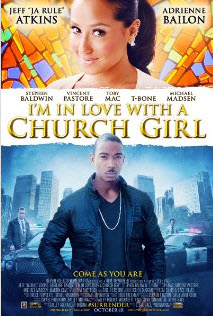
 Release Date: 1/14/14 (DVD); 10/18/13 (theatrical, limited)
Genre: Drama/Romance/Inspirational
Rating: PG
Running Time: 118 mins.
Studio: High Top Releasing/Reverence Gospel Media
Director: Steve Race
Cast: Jeff ‘Ja Rule’ Atkins (Miles Montego), Adrienne Bailon (Vanessa Leon), Michael Madsen (Frank Harris), Stephen Baldwin (Jason McDaniels), Martin Kove (Terry Edgemond), Vincent Pastore (Nicholas Halston).
Story: Cars. Good looks. Mansions. Money. Women. Miles Montego has it all. Including a past. He was king of the streets as a high-level drug trafficker, and although he has tried to move on, the DEA isn’t convinced. Miles is still rolling with his old friends and colleagues, and the feds are certain he has not fully retired from his criminal past. When Miles meets Vanessa Leon, a woman who is different than every other woman he’s met, he is drawn to her beauty and her faith. She is a “church girl” in every sense of the word. Increasingly, he is torn between a life that he knows and a love that he feels. As Vanessa experiences his lavish lifestyle, mobster-type friends, gun play, and encounters with past women, Vanessa must reconcile her faith in God and her growing love for Miles. Both are tested to their last ounce of faith and strength in God and each other. God continues to chip away at Miles through struggles from his past, having to live up to his reputation, feelings of unworthiness, the death of his mother, federal charges, his friends being indicted, the strain on his relationship with Vanessa, almost losing her in a near-fatal car accident, and finally the spiritual breakdown that brings him on his knees to face God one-on-one. (Synopsis taken from I’minlovewithachurchgirl.com)
Tag: Drama
Lee Daniels’ The Butler
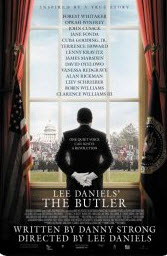 Release Date: 1/14/14 (DVD); 8/16/13 (theatrical)
Genre: Drama/Biography
Rating: PG-13
Running Time: 132 mins.
Studio: The Weinstein Company
Director: Lee Daniels
Forest Whitaker (Cecil Gaines)
Oprah Winfrey (Gloria Gaines)
Mariah Carey (Hattie Pearl)
John Cusack (Richard Nixon)
Jane Fonda (Nancy Reagan)
Cuba Gooding, Jr. (Carter Wilson)
Terrence Howard (Howard)
Lenny Kravitz (James Holloway) John F. Kennedy (James Marsden)
Story: The story of a White House butler who served seven American presidents over three decades. The film traces the dramatic changes that swept American society during this time, from the civil rights movement to Vietnam and beyond, and how those changes affected this man’s life and family. (Synopsis taken from The Weinstein Co., official site).
Fruitvale Station
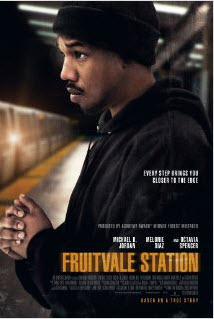 Release Date: 1/14/14 (DVD); 7/12/13 (theatrical)
Genre: Drama/Biography
Rating: R
Running Time: 85 mins.
Studio: The Weinstein Company
Director: Ryan Coogler
Cast: Michael B. Jordan (Oscar Grant)
Melonie Diaz (Sophina)
Octavia Spencer (Wanda)
Kevin Durand (Officer Caruso)
Chad Michael Murray (Officer Ingram)
Story: Winner of both the Grand Jury Prize for dramatic feature and the Audience Award for U.S. dramatic film at the 2013 Sundance Film Festival. True story of Oscar, a 22 year-old Bay Area resident who wakes up on the morning of December 31, 2008 and feels something in the air. Not sure what it is, he takes it as a sign to get a head start on his resolutions: being a better son to his mother, whose birthday falls on New Year’s Eve, being a better partner to his girlfriend, who he hasn’t been completely honest with as of late, and being a better father to T, their beautiful 4 year-old daughter. He starts out well, but as the day goes on, he realizes that change is not going to come easy. He crosses paths with friends, family, and strangers, each exchange showing that there is much more to Oscar than meets the eye. But it would be his final encounter of the day, with police officers at the Fruitvale BART station, that would shake the Bay Area to its very core, and cause the entire nation to be witnesses to the story of Oscar Grant. (Synopsis taken from official Facebook site).
Trailer
The Scar Of Shame
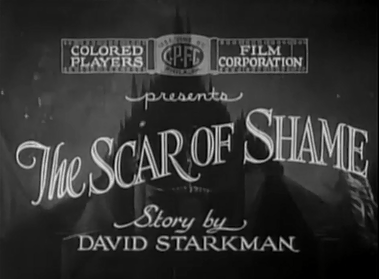
DETAILS
Year of Release: 1927
Genre: Drama
Rating: N/A
Runtime: 68 mins.
Black & White
Silent
Studio: Colored Players Film Corporation
Producer: David Starkman
Director: Frank Perugini
CAST
Harry Henderson (Alvin Hillyard)
Norman Johnstone (Eddie Blake)
Ann Kennedy (Lucretia Green)
Lucia Lynn Moses (Louise Howard)
William E. Pettus (Spike Howard)
Lawrence Chenault (Ralph Hathaway)
Pearl McCormick (Alice Hathaway)
FOREWARD: Environment, surroundings, childhood training and companions often is the deciding factor in our lives It shapes our destinies and guides our ambitions. If early in life some knowing, loving hand lights the lamp of knowledge and with tender care keeps it burning, then our course will run true ’til the end of our useful time on this earth, but if that lamp should fail through lack of loving hands to tend its hungry flame then will come sorrow and SHAME!
SYNOPSIS:
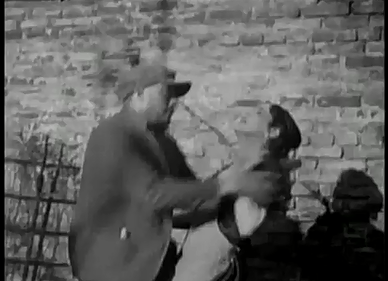 One afternoon at Mrs. Lucretia Green’s boardinghouse, Alvin Hillyard, a struggling young composer, witnesses a drunken man abusing a young woman in the tenement yard next door. He saves the girl, Louise Howard, then carries her to the boardinghouse, where Mrs. Green comforts her. Mrs. Green offers Louise a room in exchange for helping around the house, hoping to keep her safe from her violent, drunkard stepfather Spike. Meanwhile, Eddie Blake, a saloon owner and another one of Mrs. Green’s boarders, encourages Spike to drink and then tries to drag Louise back to her father as he wants to hire the girl, to whom he is attracted, as an entertainer in his seedy club. Alvin once again intervenes, and Mrs. Green tells Eddie to pack his bags while Alvin vows to teach the lout how to have respect for “our” women.
La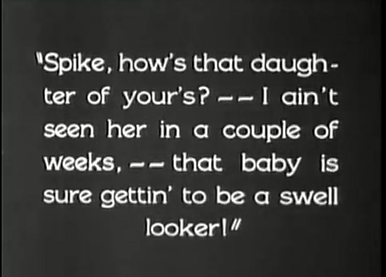 ter, at a saloon, Spike and Eddie discuss Louise, and Spike tells Eddie to leave the girl alone, blaming his own violence on the alcohol that Eddie has given him. Eddie proceeds to push alcohol on the susceptible Spike, and after he has become thoroughly inebriated, he goes to Louise’s room and tries to grab her. Alvin rescues Louise once again and then decides that he will marry her so that she will finally be safe. Three months later, Spike, in a state of alcohol withdrawal, begs Eddie for a drink, and Eddie says he will serve him only if he helps kidnap Louise and set up a cabaret in another town, where with her looks and his brains they will make a killing. The pair send a fake telegram calling Alvin away to his sick mother’s bedside. As Alvin packs to leave, Louise offers to accompany him, but Alvin confesses that he has never told his class-conscious mother about their marriage.
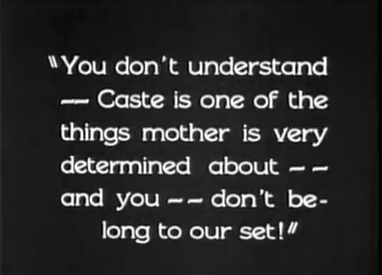 Alvin leaves as Spike watches the house, and Louise, distraught, ruins a photo of Alvin’s mother and then discovers and tears up letters in which the matron mentions her hopes that Alvin will marry a young woman of their own class. Her final acts of defiance are to remove her wedding ring and tear up her marriage license. Eddie enters Louise’s room and asks her to join him in a business deal in another town. Louise agrees, provided their relationship remains strictly business. Alvin discovers the trick played upon him once he arrives at his mother’s home. He returns to the boardinghouse but having lost his house key, breaks into his and Louise’s room through a window.
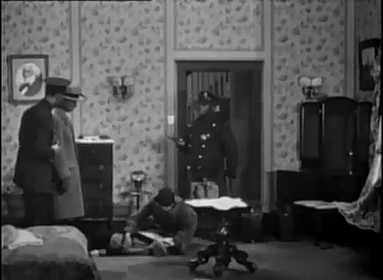
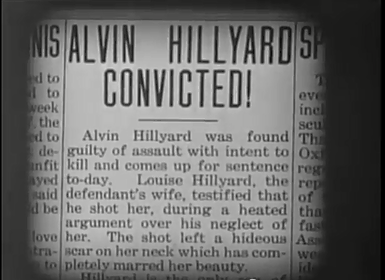 Finding Eddie with Louise, Alvin pulls a gun on the pair. The two men fire their guns, and when the police arrive, they find Louise unconscious and wounded.
Alvin is convicted of assault based on Louise’s testimony, and the girl is left with a disfiguring scar on her neck. Two years later, Alvin escapes from prison and becomes a successful music teacher under the name “Arthur Jones” in the same city where Louise and Eddie have set up the chic gambling club, Club Lido.
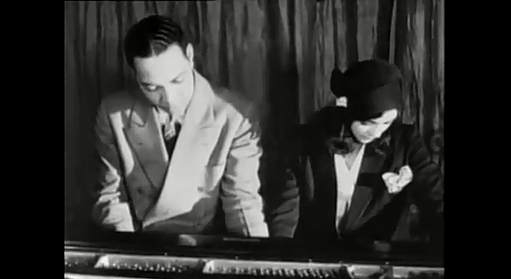 Alvin begins to fall in love with his star music pupil, Alice Hathaway, but does not declare his feelings because of his past. One day, her father, Ralph Hathaway, a wealthy lawyer, receives a call from Louise inviting him to come to a “whoopie” party at the club, of which Hathaway is the sponsor and protector. When a letter is left for Hathaway, Alice, now engaged to Alvin, asks her fiancé to bring it down to the club. Alvin is shocked when he is introduced to Louise.
 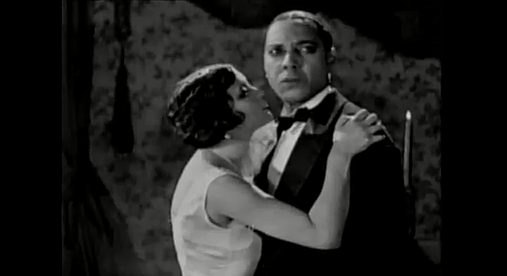 Louise blackmails Alvin into dancing with her in front of Hathaway, and then later into coming to visit her at her home. When he arrives, she tries to seduce him, then confesses that she has always loved him. Alvin rejects her and leaves. Distraught and hopeless, Louise writes a letter to Hathaway, which she asks her maid to deliver. Then she begs God’s forgiveness and drinks poison.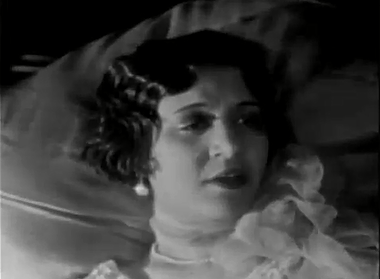
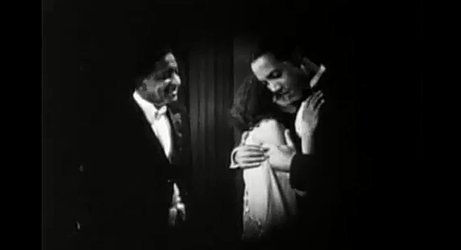
The maid calls Hathaway to come to Louise’s side as she is dying. In the meantime, Alvin, having confessed all to Alice, tries to comfort her. Hathaway arrives with Louise’s letter and Alvin finally learns the truth, that it was Eddie who had actually shot Louise that night.
Alice and her future husband, now exonerated, embrace.
NOTES
Scar of Shame was a statement on the class and color caste system that existed within the African-American community.
Sources: Turner Classic Movies; A Separate Cinema: Fifty Years of Black Cast Posters.
Within Our Gates
DETAILS
Year of Release: 1920
Genre: Drama
Rating: N/A
Runtime: 79 mins.
Black & White
Silent
Studio: Micheaux Film Co.
Producer: Oscar Micheaux
Director: Oscar Micheaux
CAST
Evelyn Preer (Sylvia Landry)
Flo Clements (Alma Prichard)
James D. Ruffin (Conrad Drebert)
Jack Chenault (Larry Prichard)
William Smith (Philip Gentry, a detective)
Charles D. Lucas (Dr. V. Vivian)
Bernice Ladd (Mrs. Geraldine Stratton)
William Starks (Jasper Landry)
Ralph Johnson (Philip Griddlestone)
E. G. Tatum (Efrem)
Grant Edwards (Emil)
SYNOPSIS
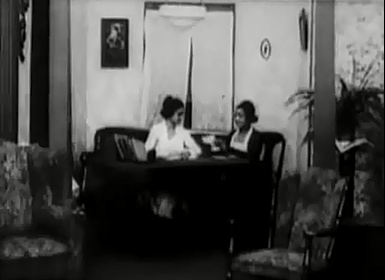
Sylvia Landry, a young black woman from the South, visits her Northern cousin, divorcee Alma Prichard. Sylvia’s fiancé, Conrad Drebert, writes to her from Brazil, where he is working, to tell her that he will send a telegram with the date of his arrival. When the telegram arrives, Alma, who is in love with Conrad, intercepts and destroys it. When Conrad arrives, Alma sets up Sylvia to be seen with another man.
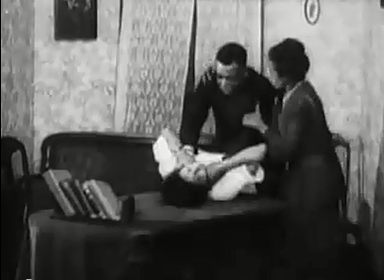
Enraged, Conrad tries to strangle her, but she is saved by Alma. Conrad storms out and breaks their engagement, much to Alma’s satisfaction. Saddened by the breakup, Sylvia leaves town and takes a job at a school for poor black children in the southern town of Piney Woods, that is run by Reverend Wilson Jacobs and his sister Constance. When money troubles hit the establishment, however, Sylvia decides to go to Boston to find a rich benefactor. One day, depressed that she has not met any rich people to take an interest in the school’s plight, Sylvia saves a little boy from being struck by the car of rich philanthropist Elena Warwick, and is herself injured. Mrs. Warwick visits her in the hospital and Sylvia tells her that the school must find $5,000 in the next ten days or it will close.
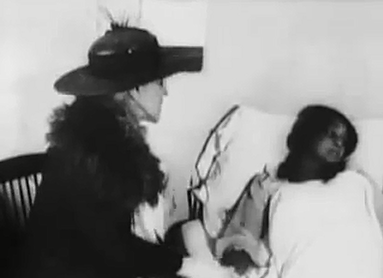
Mrs. Warwick is set to give the school the money until she speaks with her friend, Mrs. Geraldine Stratton, who convinces the naïve Mrs. Warwick that educating blacks is a mistake, and that they are more suited to being field hands and lumberjacks. She suggests giving the money to Old Ned, a black preacher whose fiery sermons encourage blacks to remain “pure” and untainted by education, culture and politics.
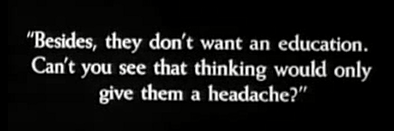
When Sylvia returns to collect the school’s money from Mrs. Warwick, she is refused, but later, Mrs. Warwick changes her mind and sends the school fifty-thousand dollars.thousand dollars. Sylvia returns to Piney Woods, where Jacobs proposes. Sylvia refuses the offer, however, as she has fallen in love with Doctor V. Vivian, a young Boston man deeply committed to improving blacks’ social conditions.
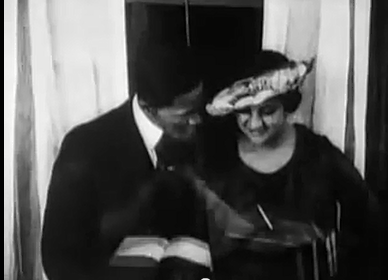
Meanwhile, Larry, Alma’s stepbrother, a notorious gangster, flees police after killing another gambler in a card game. He escapes to Piney Woods and plans to swindle the poor blacks in the region by selling them stolen goods. Larry eventually encounters Sylvia, with whom he was once in love, and tells her that he will reveal her past to the school’s administrators if she does not steal the school’s money for him.
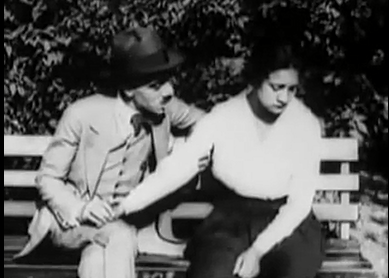 Distraught, Sylvia returns to Boston. Larry, meanwhile, has also gone back North and is shot while trying to rob a bank. When Dr. Vivian goes to the Prichards’ to tend Larry’s wounds, he meets Alma, who tells him about Sylvia’s past.
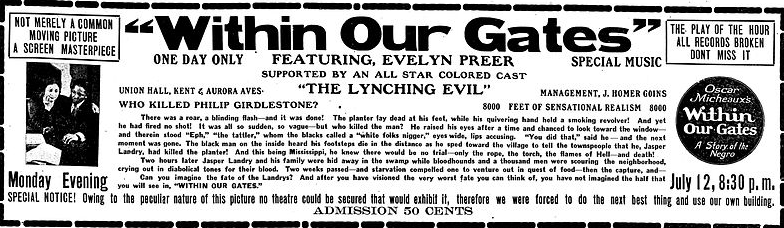
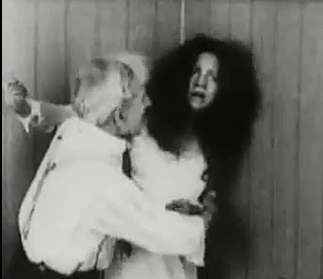
Flashback: Sylvia was adopted by the Landrys, a family of poor black southerners. When she was a young girl, the Landrys sent Sylvia to school, and the educated girl eventually discovered that her father’s landlord and employer, Philip Griddlestone, owed him $625.00. Armed with his daughter’s calculations, Mr. Landry goes to see Griddlestone, who rudely dismisses him. At that moment, a white laborer whom Griddlestone had earlier swindled, enters the room and shoots Griddlestone. Efrem, Griddlestone’s gossipy, meddlesome servant, screams through the town’s streets that Mr. Landry murdered his employer. A lynch mob is formed and the Landrys run away, taking refuge in the swamps. The manhunt continues for a week, and, frustrated that the Landrys had eluded them, the mob attacks and kills the traitorous Efrem, who had been gloating about how much the whites loved him. Mr. and Mrs. Landry and their young son Emil are captured. The parents are hanged and burned at the stake, but Emil escapes. Meanwhile, the real killer is accidentally shot by the mob. Griddlestone’s brother, Armand, follows Sylvia back to the home of her parents’ friends. Armand attacks Sylvia and tries to rape her, but sees a scar on her breast and suddenly realizes that Sylvia is his own daughter from his union with a black woman. Armand then pays for the girl’s education but never tells Sylvia that he is her father.
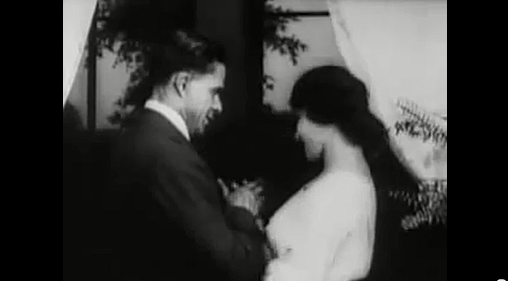
 In the present, Dr. Vivian finds a distraught Sylvia and tells her that they must remember that their people fought in Cuba, Mexico and France for the freedom of their great country. Confident that once married Sylvia will be an excellent wife and a confirmed patriot, Dr. Vivian is not disappointed.
NOTES
Within Our Gates was Oscar Micheaux’s earliest surviving directorial effort.
Within Our Gates stirred up considerable controversy during its original release because it contained scenes of lynching and racial conflict. At first the film, which eventually had its premiere in Chicago, was rejected by the Chicago Board of Movie Censors who were afraid the movie could possibly inspire a race riot. However, a second screening of the film by the press, Chicago politicians, and prominent members of the Black community convinced the Censors to grant the film a permit since it addressed horrendous conditions that needed reform. Not everyone agreed with this assessment, however, and some of the most vigorous protesters against the film were black activists. By June 1920, the film was edited down, with much of its controversial material removed.
Sources: Turner Classic Movies
Watch the movie below
 Black Cinema Connection