29 Days Of Black History – Day 8: Imitation of Life

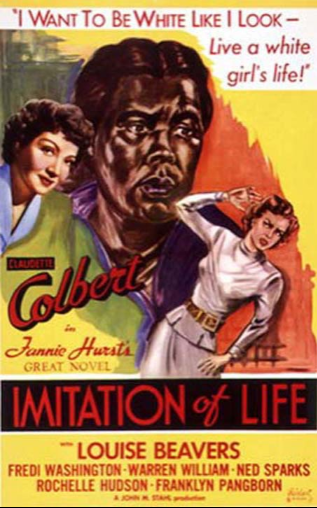
Release Date:  11/26/34
Genre:   Drama
Rating:  N/A
Black & White
Director:  John M. Stahl
Studio(s):  Universal Pictures, Realart Pictures Inc.
Running Time:  111 mins.

Cast:  Louise Beavers (Delilah Johnson), Fredi Washington (Peola Johnson, age 19), Claudette Colbert (Beatrice ‘Bea’ Pullman), Warren William (Steve Archer), Rochelle Hudson (Jessie Pullman, age 18), Ned Sparks (Elmer Smith), Dorothy Black (Peola Johnson, age 9), Juanita Quigley (Baby Jessie Pullman, age 3), Peola (Sebie Hendricks, age 4), Marilyn Knowlden (Jessie Pullman, age 8), Dorothy Black (Peola Johnson, Age 10).
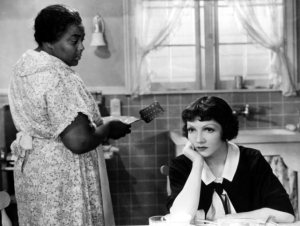
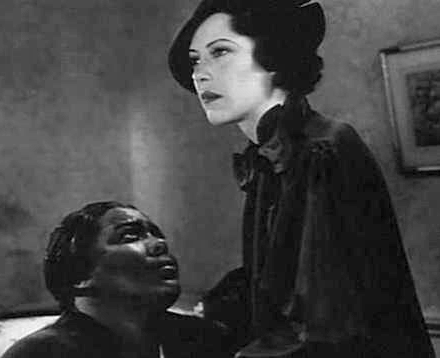
Story:  White widow Bea Pullman and her two-year-old daughter Jessie are having a rough morning. Jessie doesn’t want to go to the day nursery but she must because her mother is trying to continue her husband’s business, selling heavy cans of maple syrup door to door, and making very little money. Black housekeeper Delilah Johnson is also having a bad morning. She misread an advertisement and came to the wrong house—Bea’s.  Delilah explains that no one wants a housekeeper with a child, and introduces her daughter Peola, whose fair complexion hides her African American ancestry. Bea can’t begin to afford help, so Delilah offers to keep house in exchange for room and board. The four quickly become a family. They all particularly enjoy Delilah’s pancakes, made from a secret family recipe.
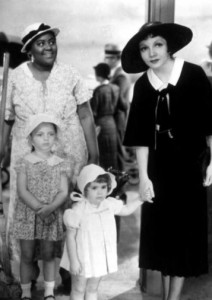
Bea uses her business wiles to get a storefront and living quarters on the boardwalk refurbished on credit, and they open a pancake restaurant where Delilah and Bea cook in the front window.  Five years later, they are debt-free. The little girls are good friends, but one day Jessie calls Peola black. Peola runs into the apartment declaring that she is not black, won’t be black, and that it is her mother who makes her black. Cradling her weeping daughter, Delilah tells Bea that this is simply the truth, and Peola has to learn to live with it. Peola’s father, a light-skinned African American, had the same struggle, and it broke him. Delilah receives another blow when she finds out that Peola has been “passing” at school.

One day, a hungry passerby, offers Bea a two-word idea in exchange for a meal: “Box it.” Bea hires him, and they set up the hugely successful Delilah’s Pancake Flour business. Delilah refuses to sign the Incorporation papers, and when Bea tells her that she can now afford her own home, Delilah is crushed. She does not want to break up the family. So the two friends continue to live together, and Bea puts Delilah’s share in the bank.
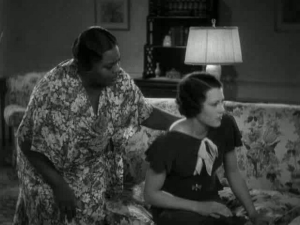
Ten years pass. Both women are wealthy and share a mansion in New York City. Delilah  becomes a mainstay of the African-American community, supporting many lodges and charitable organizations and her church.  She tries to give Peola every advantage, including sending her to a fine Negro college in the South, but Peola runs away.

Meanwhile, Elmer arranges for Bea to meet a handsome ichthyologist, Stephen Archer.  They hit it off immediately and plan to marry. Then eighteen-year-old Jessie comes home on college vacation, and during the five days it takes for Bea and Delilah to find Peola, she falls in love with Stephen.
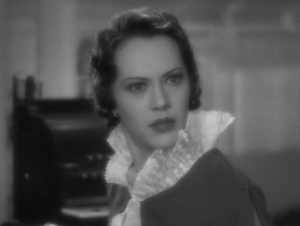
Peola has taken a job in a segregated restaurant in Virginia. When her mother and Bea find her, she denies Delilah. Delilah can give her everything that money can buy, but she can’t change who she is.  Peola finally tells her mother that she is going away, never to return, so she can pass as a white woman—and if they meet on the street, her mother must not speak to her. Delilah is heartbroken and takes to her bed, murmuring Peola’s name and forgiving her before eventually dying of a broken heart.
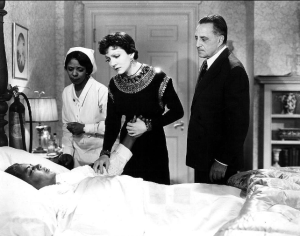
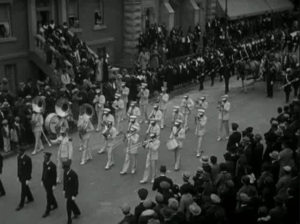
Delilah has the grand funeral she always wanted, with marching bands, a horse-drawn white silk hearse, and all the lodges processing in a slow march. The coffin is carried from the church to the hearse through the saber arch of an honor guard, and a remorseful, sobbing Peola rushes to embrace it, begging her dead mother to forgive her. Bea and Jessie gather her into their arms and take her into the car with them.  Peola decides to return to college. Bea asks Stephen to wait, promising to come to him after Jessie is over her infatuation. At the end, Bea starts to tell Jessie about the day they met Delilah.
Details:  The screenplay was based on Fannie Hurst’s 1933 novel of the same name.  The film was originally released by Universal Pictures on November 26, 1934, and later re-issued in 1936. A 1959 remake with the same title was directed by Douglas Sirk.  In 2005, Imitation of Life was selected for preservation in the United States National Film Registry, being deemed “culturally, historically, or aesthetically significant”. It was also named by Time in 2007 as one of “The 25 Most Important Films on Race”.

Universal had difficulty receiving approval from the censors at the Hays Office for the original script they submitted for Imitation of Life.  The elements of miscegenation in the story, were objected to, which the Office stated, “not only violates the Production Code but is very dangerous from the standpoint both of industry and public policy.”  The project was rejected as, “Hurst’s novel dealing with a partly colored girl who wants to pass as white violates the clause covering miscegenation in spirit, if not in fact!” The Production Code Administration’s (PCA) censors had difficulty “negotiating how boundaries of racial difference should be cinematically constructed to be seen, and believed, on the screen.” Their concern was the character of Peola, in whose person miscegenation was represented by a young woman considered black, but with sufficient white ancestry to pass as white and the desire to do so. Susan Courtney says that the PCA participated in “Hollywood’s ongoing desire to remake interracial desire, a historical fact, as always already having been a taboo.”  They also objected to some language in the script, and a scene where a black young man is nearly lynched for approaching a white woman whom he believed had invited his attention.  Ultimately the ending of the film differed from the novel. While Peola leaves the area never to return in the latter, in the former she returns, going to her mother’s funeral and showing remorse.  Source(s):  Wikipedia; IMDB; Themotionpictures.net; Ferdyonfilms.com.

Trailer:

29 Days Of Black History – Day 7: Daughters Of The Dust


Release Date:  Original Release Date: December 27, 1991
Genre:   Drama
Rating:  NR
Running Time:  112 mins.
Director:  Julie Dash
Studio:  American Playhouse, Geechee Girls, WMG Film, Kino International

Cast:
Cora Lee Day as Nana Peazant
Matriarch of the Peazant family, determined to stay on the island

Adisa Anderson as Eli Peazant
Nana’s grandson, torn between traveling north and staying on the island

Alva Rogers as Eula Peazant
Eli’s wife, who was raped by a white man and is now pregnant

Kay-Lynn Warren as Unborn Child
The spirit of Eula’s unborn child, who is Eli’s daughter, narrates much of the film
and magically appears as a young girl in some scenes before her birth

Kaycee Moore as Haagar Peazant
Nana’s strong-willed granddaughter-in-law, who is leading the migration north

Cheryl Lynn Bruce as Viola Peazant
One of Nana’s granddaughters, she has already moved to Philadelphia
and has become a fervent Christian

Tommy Hicks as Mr. Snead
A photographer from Philadelphia, engaged by Viola to document
the family’s life on the island before they leave it for the North

Bahni Turpin as Iona Peazant
Haagar’s daughter, in love with St. Julian, a Native American who will not leave the island

Cochise Anderson as St. Julien Lastchild

Barbara-O as Yellow Mary
Another of Nana’s granddaughters, she returns from the city for a final visit to the island,
along with her lover, Trula

Trula Hoosier as Trula
Yellow Mary’s young lover

Umar Abdurrahman as Bilal Muhammad
A practicing Muslim, and a pillar of the island community

Cornell Royal as “Daddy Mac” Peazan
Patriarch of the family

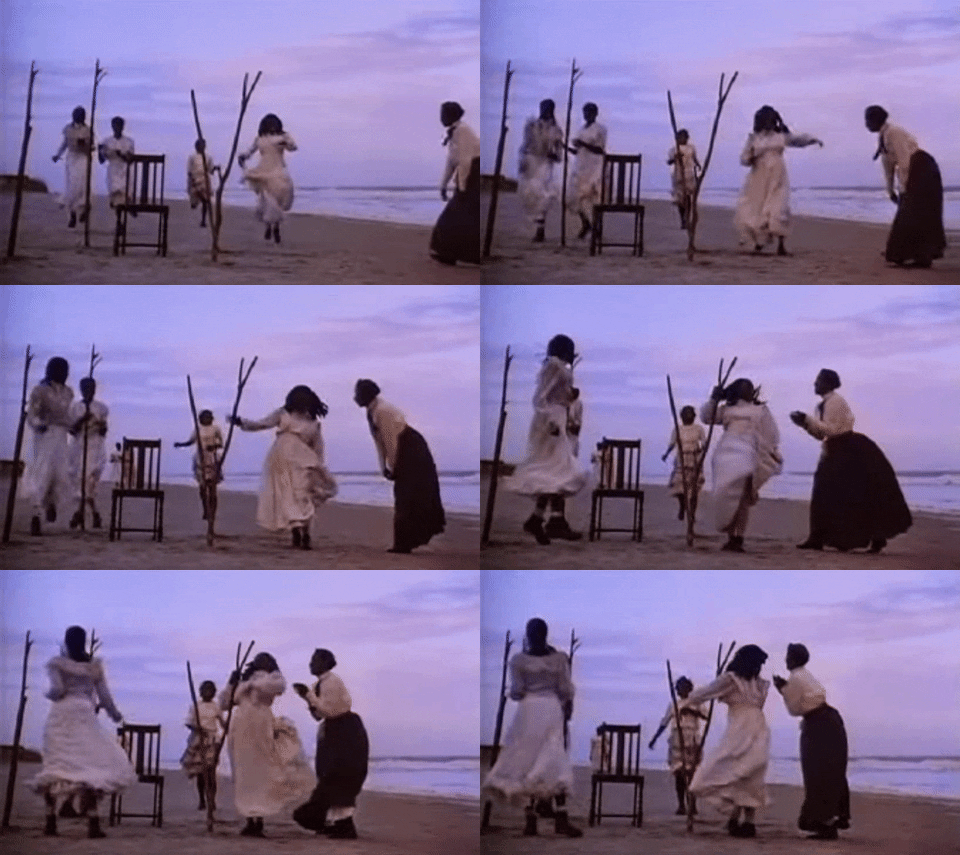
Details:  First feature film directed by an African-American woman distributed theatrically in the United States.  The movie is set in 1902 and tells the story of three generations of Gullah (also known as Geechee) women in the Peazant family on Saint Helena Island as they prepare to migrate to the North on the mainland.  Filmed on St. Helena Island in South Carolina, Daughters of the Dust gained critical praise for its lush visuals, Gullah dialogue and non-linear storytelling. The film is known for being the first by an African American woman to gain a general theatrical release.

Story:  Daughters of the Dust is set in 1902 and revolves around members of the Peazant family, Gullah islanders who live at Ibo Landing on St. Simons Island, off the Georgia coast.  Their ancestors were brought there as enslaved people centuries ago and the islanders developed a language—known as Gullah or Sea Island Creole English—and a culture that was creolized from West Africans of Ibo, Yoruba, Kikongo, Mende, and Twi origin and the cultures and languages of the British Isles, with the common variety of English.  Developed in their relative isolation of large plantations on the islands, the enslaved peoples’ unique culture and language have endured over time.

Narrated by the Unborn Child, the future daughter of Eli and Eula, whose voice is influenced by accounts of her ancestors, the film presents poetic visual images and circular narrative structures to represent the past, present and future for the Gullah, the majority of whom are about to embark for the mainland and a more modern way of life. The old ways are represented by community matriarch Nana Peazant, who practices African and Caribbean spiritual rituals and who says of the Unborn Child, “We are two people in one body. The last of the old and the first of the new.”

Contrasting cousins, Viola, a devout Christian, and Yellow Mary, a free spirit who has brought her lover, Trula, from the city, arrive at the island by canoe from their homes on the mainland for a last dinner with their family. Yellow Mary plans to leave for Nova Scotia after her visit. Mr. Snead, a mainland photographer, accompanies Viola and takes portraits of the islanders before they leave their way of life forever. Intertwined with these narratives is the marital rift between Eli and his wife Eula, who is about to give birth after being raped by a white man on the mainland. Eli struggles with the fact that the unborn child may not be his.

Several other family members’ stories unfold between these narratives. They include Haagar, a cousin who finds the old spiritual beliefs and provincialism of the island backwards, and is impatient to leave for a more modern society with its educational and economic opportunities. Her daughter Iona longs to be with her secret lover St. Julien Lastchild, a Native American, who will not leave the island.

While the women prepare a traditional meal for the feast at the beach, the men gather nearby in groups to talk. The children and teenagers practice religious rites and have a Bible-study session with Viola. Bilal Muhammad leads a Muslim prayer. Nana evokes the spirits of the family’s ancestors who worked on the island’s indigo plantations. Eula and Eli reveal the history and folklore of the slave uprising and mass suicide at Igbo Landing. The Peazant family members make their final decisions to leave the island for a new beginning, or stay behind and maintain their way of life.  Source:  Wikipedia; IMDB; listart; Giphy.com.

Trailer:

29 Days Of Black History – Day 6: The Autobiography of Miss Jane Pittman

Release Date:  1/31/74
Genre:  Drama/Historical
Rating:  TV-PG
Director:  John Korty
Studio(s):   Tomorrow Entertainment, CBS
Running Time:  110 mins.

Cast:  Cicely Tyson (Jane Pittman), Richard Dysart (Master Bryant), Odetta (Big Laura), Michael Murphy (Quentin Lerner), Rod Perry (Joe Pittman), Arnold Wilkerson (Jimmy), Will Hare (Albert Cluveau).

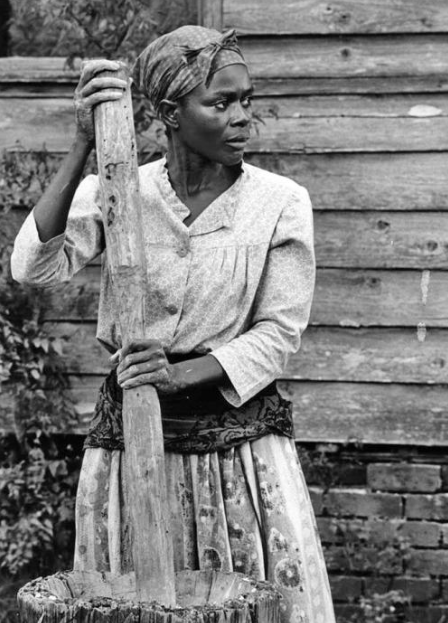
Details:  The Autobiography of Miss Jane Pittman is a made for television film based on the novel of the same name by Ernest J. Gaines. The film was broadcast on CBS on January 31, 1974.  In this fictionalized biography, Cicely Tyson stars as the 110-year-old Jane Pittman, who recounts the events of her life as they relate to a century of racism in America. Born into slavery in the 1860s, Jane lives through the Civil War and into the civil rights movement.  Ernest J. Gaines wrote the book in 1971 and meant for it to be an archetypal “life” encompassing the black experience in America. Winner of nine Emmy Awards, including Outstanding Drama of the 1973 – 1974 season, The Autobiography of Miss Jane Pittman was one of the most acclaimed television movies of all time.

Story:   Jane Pittman is celebrating her 110th birthday in 1962. She lives in the old slave quarters on a plantation outside Baton Rouge, Louisiana. When Quentin Lerner, a reporter from the East, comes to interview her, she obliges with the story of her life.

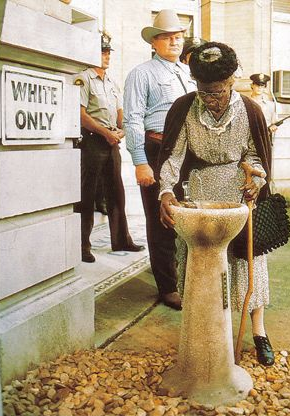
Jane recalls her experiences as a slave girl during the Civil War; her re-naming experience one year before the Emancipation Proclamation; her abortive trek to freedom in Ohio; her years working as a field hand; her brief period of happiness as the wife of Joe Pittman, a black cowboy; her sorrow over the murder of Ned, a schoolteacher who tried to establish a school for blacks in the early 1900s; and her mixed feelings about black activism in the civil rights movement.


Jane endures the misery and hardships that come her way repeatedly over the years. Her story reveals the persistence of racial prejudice, evident in the acts of murderous violence that take away loved ones and the patronizing attitudes of the whites she serves most of her life.  Her autobiography is a chronicle of quiet heroism ant that is why on the day when she makes her final and conclusive stand for freedom, her act has all the emotional force and telling impact of a century of preparation.  Source(s):  Wikipedia; spiritualityandpractice.com; Fandor; Rotten Tomatoes; Daarac.org; IMDB; Culvercitycrossroads.com.

Movie:

29 Days Of Black History – Day 5: Glory

Release Date:  2/16/1990
Genre:   Drama/Historical/Based On Actual Events
Rating:  R
Director:   Edward Zwick
Studio(s):   TriStar Pictures, Freddie Fields Productions, Columbia TriStar Home Entertainment
Running Time:  122 mins.

Cast:  Denzel Washington (Private Silas Trip), Morgan Freeman (Sergeant Major John Rawlins), Andre Braugher (Corporal Thomas Searles), Cary Elwes (Major Cabot Forbes), Matthew Broderick (Colonel Robert Gould Shaw), Jihmi Kennedy (Private Jupiter Sharts), Cliff De Young (Colonel James Montgomery), Alan North (Governor John Albion Andrew), John Finn (Sergeant Major Mulcahy), RonReaco Lee (Mute Drummer Boy), Donovan Leitch (Captain Charles Fessenden Morse), Bob Gunton (General Charles Garrison Harker), Jay O. Sanders (General George Crockett Strong), Raymond St. Jacques (Frederick Douglass), Richard Riehle  (Quartermaster, JD Cullum), Christian Baskous (Edward L. Pierce), Peter Michael Goetz (Francis Shaw).

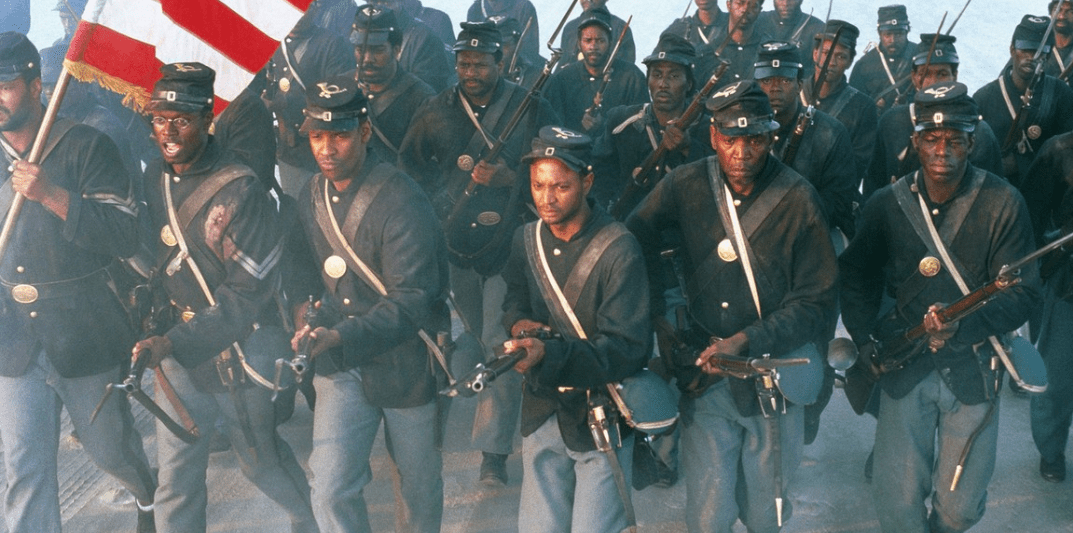
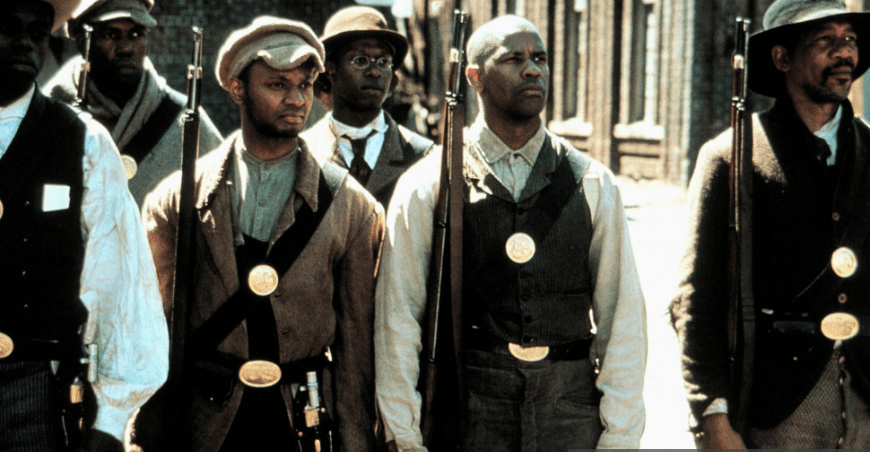
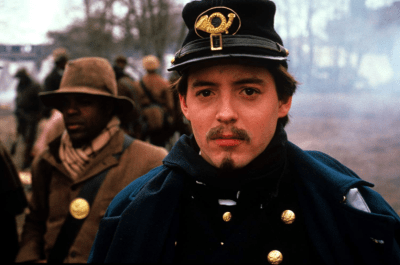
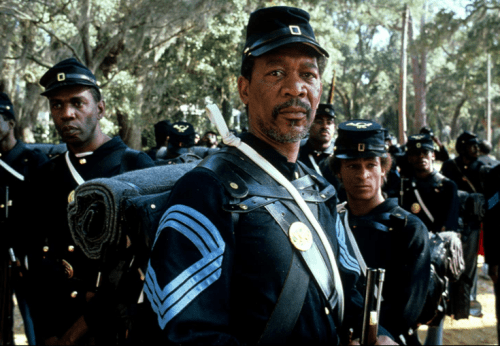
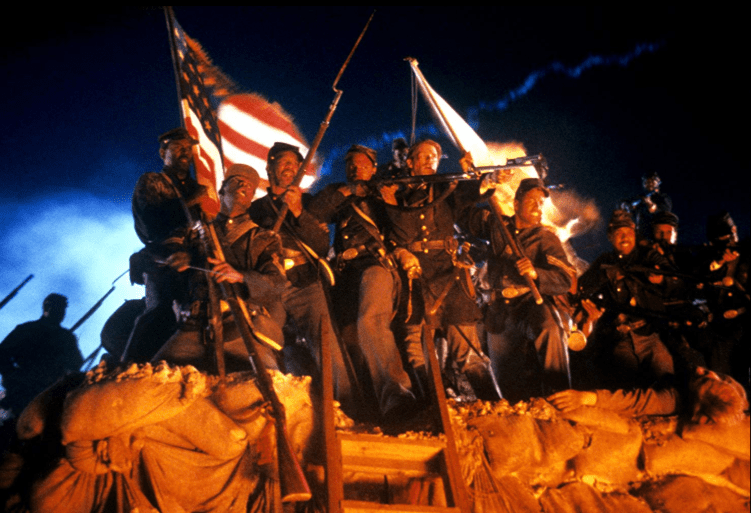
Details:  Film about the 54th Massachusetts Infantry Regiment, the Union Army’s second African-American regiment in the American Civil War.   It stars Matthew Broderick as Colonel Robert Gould Shaw, the regiment’s commanding officer, and Denzel Washington, Cary Elwes, and Morgan Freeman as fictional members of the 54th.  The screenplay was based on the books Lay This Laurel by Lincoln Kirstein and One Gallant Rush by Peter Burchard, as well as the personal letters of Shaw. The film depicts the soldiers of the 54th from the formation of their regiment to their heroic actions at the Second Battle of Fort Wagner.

Story  During the American Civil War, Captain Robert Shaw, injured at Antietam, is sent home to Boston on medical leave. Shaw accepts a promotion to command the 54th Massachusetts Infantry Regiment, one of the first all-black regiments in the Union Army. He asks his friend, Cabot Forbes, to serve as his second in command, with the rank of major. Their first volunteer is another friend, Thomas Searles, a bookish, free African-American.  Other recruits include John Rawlins, Jupiter Sharts, Silas Trip, and a mute teenage drummer boy.

The men learn that, in response to the Emancipation Proclamation, the Confederacy has issued an order that all black soldiers will be returned to slavery.  Black soldiers found in a Union uniform will be executed as well as their white officers.  The soldiers are offered, but turn down, a chance to take an honorable discharge. They undergo rigorous training from Sergeant-Major Mulcahy, which Shaw realizes is needed to prepare them for the upcoming challenges the regiment will face.

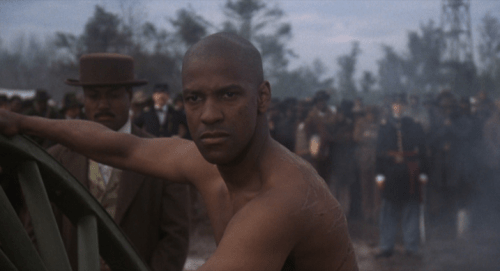
Trip goes AWOL but is later caught. Shaw orders that he be flogged in front of the regiment.  He then learns that Trip left to find shoes because his men are being denied such basic supplies. Shaw confronts the base’s racist quartermaster on the soldier’s behalf.  He also supports his men in a pay dispute in which the Federal government decrees that black soldiers will only be paid $10, not the $13 per month which white soldiers receive.  When the men begin tearing up their pay vouchers in protest of this unequal treatment, Shaw tears up his own voucher in support of his men. In recognition of his regimental leadership, Rawlins is promoted by Shaw to the rank of Sergeant-Major.

Once the 54th completes its training, they are transferred to the command of General Charles Harker. On the way to South Carolina they are ordered  to sack and burn Darien, Georgia. Shaw initially refuses to obey an unlawful order, but reluctantly agrees under threat of having his command taken away. He continues to lobby his superiors to allow his regiment to join the fight, as their duties to date have involved mostly manual labor. Shaw finally gets the 54th a combat assignment after he blackmails Harker by threatening to report the illegal activities he has discovered. In their first battle at James Island, South Carolina, the 54th successfully defeats a Confederate attack. During the battle, Searles is wounded but saves Trip. Shaw offers Trip the honor of bearing the regimental flag in battle. He declines, not sure that the war will result in a better life for ex-slaves like himself.

Shaw is informed of a major campaign which involves assaulting Morris Island and capturing Fort Wagner.  The only landward approach is a strip of open beach and a charge is certain to result in heavy casualties. Shaw volunteers the 54th to lead the attack. The night before the battle, the black soldiers conduct a religious service. Several make emotional speeches to inspire others. On their way to the battlefield, the 54th is cheered by the same Union troops who had scorned them earlier.

The 54th leads the charge on the fort, suffering serious losses. As night falls, the regiment is pinned down against the walls of the fort. Attempting to encourage his men forward, Shaw is killed by numerous gunshots. Trip, despite his previous assertion that he would not do it, lifts the flag to rally the soldiers to continue, but he too is shot dead. Forbes and Rawlins take charge, and the soldiers break through the fort’s defenses. Seemingly on the brink of victory, Forbes, Rawlins, Searles, Sharts, and the two Color Sergeants are fired upon by Confederate artillery.  The morning after the battle, the beach is littered with the bodies of both black and white Union soldiers.  The Confederate flag is raised over the fort and the dead Union soldiers are buried in a mass communal grave, with Shaw and Trip’s bodies next to each other.  Source:  Wikipedia; IMDB; The Ace Black Blog.

Trailer:

29 Days Of Black History – Day 4: Harriet

a/k/a Freedom Fire


Release Date:   11/1/19
Genre:  Drama/Historical/Biography
Rating:  PG-13
Director:  Kasi Lemmons
Studio(s):  Martin Chase Productions, New Balloon, Perfect World Pictures,
Stay Gold Features, Focus Features
Running Time:   125 mins.

Cast:  Cynthia Erivo (Araminta ‘Minty’ Ross/Harriet Tubman), Leslie Odom, Jr. (William Still), Joe Alwyn (Gideon Brodess), Janelle Monáe (Marie Buchanon), Jennifer Nettles (Eliza Brodess), Vanessa Bell Calloway (Rit Ross), Clarke Peters (Ben Ross), Henry Hunter Hall (Walter), Zackary Momoh (John Tubman), Mitchell Hoog (Vince), Deborah Ayorinde (Rachel Ross), Vondie Curtis-Hall (Reverend Samuel Green), Omar Dorsey (Bigger Long), Tory Kittles (Frederick Douglass), Tim Guinee (Thomas Garrett), Joseph Lee Anderson (Robert Ross), Brian K. Landis (the Marshall), Antonio J. Bell (Henry Ross), Willie Raysor (Abraham), William L. Thomas (U.S. Senator Seward), Nick Basta (Fox).

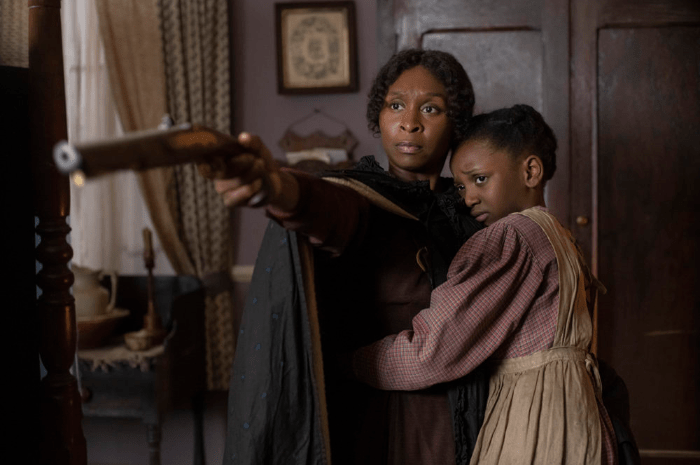
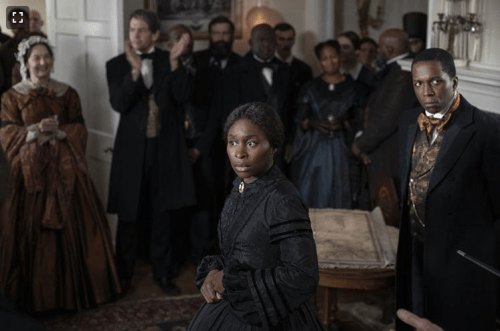
Details:  Based on the story of iconic freedom fighter Harriet Tubman, her escape from slavery and subsequent missions to free dozens of slaves through the Underground Railroad in the face of growing pre-Civil War adversity.

Story:   In 1840s Maryland, a slave state, Araminta ‘Minty’ Ross is newly married to a freedman, John Tubman, but still a slave on the Brodess farm, along with her mother and sister.  Her father, also a freedman, approaches Mr. Brodess about her freedom, as Brodess’s great-grandfather had agreed to free Minty’s mother, Harriet ‘Rit’ Ross, and her family when she turned forty-five years old.  Even though Rit is now fifty-seven, Mr. Brodess insists they will always be slaves, and tears up the letter from a lawyer John had hired.  Brodess’s adult son Gideon mocks Minty for praying for God to take Mr. Brodess, saying God does not care about the prayers of slaves. Mr. Brodess dies shortly afterward, alarming Gideon, who decides to sell Minty as punishment. Minty, who suffers “spells” since being struck in the head as a girl, has a vision of herself escaping to freedom, and decides to run.

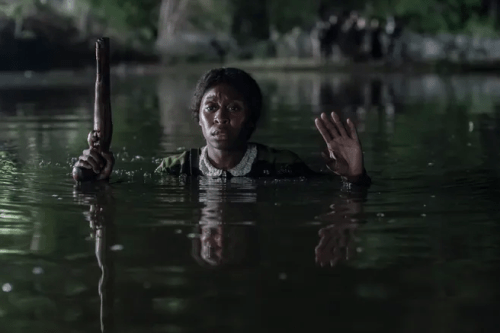
Minty tells John to stay behind, as he would lose his own freedom if caught escaping with her, but make plans to meet up with him later. Gideon pursues her to a bridge over a river, where he promises not to sell her.  She jumps anyway, saying she will live free or die. Minty is presumed drowned but successfully makes it to Philadelphia via the Underground Railroad, assisted by Quakers and other abolitionists. In Philadelphia, she meets Marie Buchanon, the fashionable daughter of a freed slave who was born free and is now a boarding-house proprietor.  She also meets William Still, an abolitionist and writer. William encourages her to take a new name, and she calls herself Harriet after her mother.
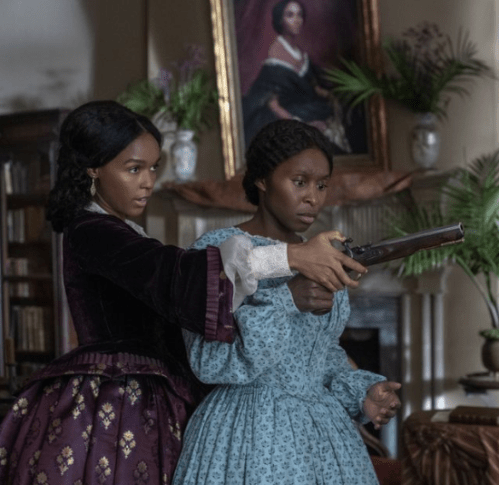
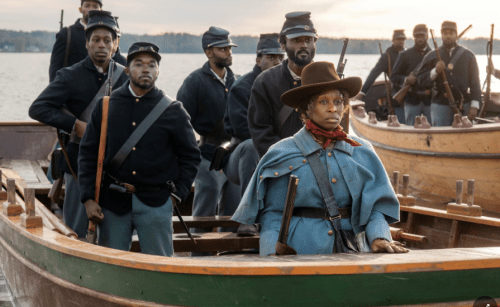
After a few months in Philadelphia and against the advice of Marie and William, Harriet decides to go back for John. She successfully makes it to John’s homestead only to find he has remarried, believing she was dead, and is expecting a baby with his new wife.  Devastated, Harriet decides to free her family, but her sister refuses to leave her two children. Harriet continues to return, guiding dozens of slaves to freedom as a conductor on the Underground Railroad.  Myths grow about the person responsible who becomes known as ‘Moses’.  When the Fugitive Slave Act is passed, the escaped slaves are in jeopardy of being brought back. Gideon is livid when he discovers that Harriet is Moses, especially as his fellow slave owners demand he compensate them for Harriet freeing their slaves. Gideon pursues her to Philadelphia along with the slave hunter Bigger Long, who kills Marie. Harriet flees to Canada.

In Canada, Harriet insists that the Underground Railroad continue. She continues to help runaway slaves flee all the way to Canada, though her sister dies before she can save her. Over time, the Brodess farm falls into financial ruin. Mrs. Brodess vows to catch Harriet, using her sister’s children as bait. But Harriet’s team overwhelms Gideon’s siblings and retrieves the last remaining Brodess slaves. In the final confrontation, Bigger Long winds is shot to death, but Harriet lets Gideon live, telling him of her vision that Gideon’s cause is defeated by the American Civil War.

Epilogue – Harriet personally freed more than 70 slaves on the Underground Railroad and returned as a Union spy during the Civil War, leading 150 black soldiers, who freed over 750 slaves.  Source(s):  Variety; WBUR.org; Oprahmagazine.com; Victoriaadvocate.com; USAtoday; NY Times; Wikipedia.

Trailer:

29 Days Of Black History – Day 3: Amistad


Release Date:  12/25/97
Genre:  Drama/Based on Actual Events/Historical
Rating:  R
Director:  Steven Spielberg
Studio(s):  DreamWorks, Home Box Office (HBO)
Running Time:  154 mins.

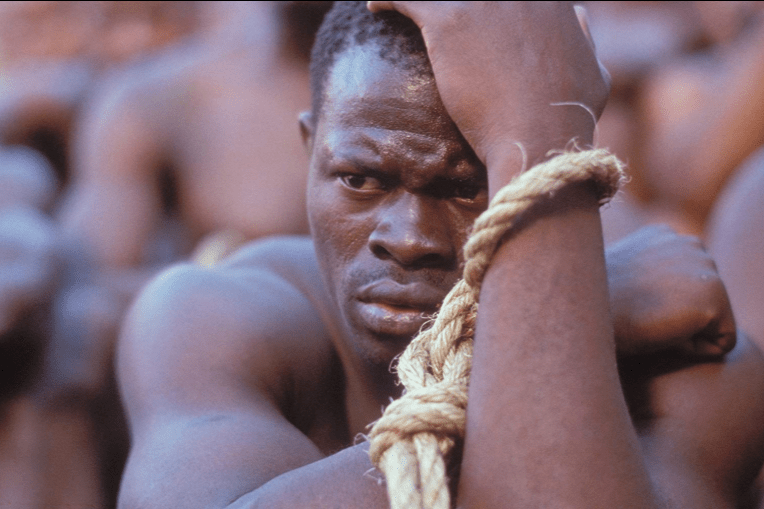
Cast:  Djimon Hounsou (Sengbe Pieh/Joseph Cinqué), Matthew McConaughey (Roger Sherman Baldwin), Anthony Hopkins (John Quincy Adams), Morgan Freeman (Theodore Joadson), Chiwetel Ejiofor (Ens. James Covey), Nigel Hawthorne (President Martin Van Buren), David Paymer (Secretary of State John Forsyth), Pete Postlethwaite (William S. Holabird), Stellan Skarsgård (Lewis Tappan), Razaaq Adoti (Yamba), Abu Bakaar Fofanah (Fala), Anna Paquin (Queen Isabella II of Spain), Tomas Milian (Ángel Calderón de la Barca y Belgrano), , Derrick Ashong (Buakei), Geno Silva (Jose Ruiz), John Ortiz (Pedro Montes), Ralph Brown (Lieutenant Thomas R. Gedney), Darren E. Burrows (Lieutenant Richard W. Meade), Allan Rich (Judge Andrew T. Juttson), Paul Guilfoyle (Attorney) Peter Firth (Captain Fitzgerald), Xander Berkeley (Ledger Hammond), Jeremy Northam (Judge Coglin), Arliss Howard (John C. Calhoun), Austin Pendleton (Professor Josiah Willard Gibbs, Sr.), Pedro Armendáriz, Jr. (General Baldomero Espartero).

Details:   Amistad is a historical drama film based on the true story of the events in 1839 aboard the slave ship La Amistad, during which Mende tribesmen abducted for the slave trade managed to gain control of their captors’ ship off the coast of Cuba, and the international legal battle that followed their capture by the Washington, a U.S. revenue cutter. The case was ultimately resolved by the U.S. Supreme Court in 1841.  Based on the book Mutiny on the Amistad: The Saga of a Slave Revolt and Its Impact on American Abolition, Law, and Diplomacy (1987).

Story:  La Amistad is the name of a slave ship traveling from Cuba to the United States in 1839 and carrying African slaves as its cargo. As the ship is crossing from Cuba to the United States, Cinqué, head of the Africans, leads a mutiny and takes over the ship. The mutineers spare the lives of two Spanish navigators to help them sail the ship back to Africa. Instead, the navigators misdirect the Africans and sail north to the east coast of the United States, where the ship is stopped by the American Navy, and the living Africans imprisoned as runaway slaves.

In an unfamiliar country and not speaking a single word of English, the Africans find themselves in a legal battle. United States Attorney William S. Holabird brings charges of piracy and murder. Secretary of State John Forsyth, on behalf of President Martin Van Buren (who is campaigning for re-election), represents the claim of Queen Isabella II of Spain that the Africans are slaves and are property of Spain based on a treaty.  At the time the Queen was ten years old and living in exile in Rome with her mother Maria Christina of the Two Sicilies while Spain was under the liberal regency of Baldomero Espartero and the government of prime minister Antonio González. Two Naval officers, Thomas R. Gedney, and Richard W. Meade, claim the Africans as salvage while the two Spanish navigators produce proof of purchase. A lawyer named Roger Sherman Baldwin, hired by the abolitionist Lewis Tappan and his black associate Theodore Joadson, decide to defend the Africans.

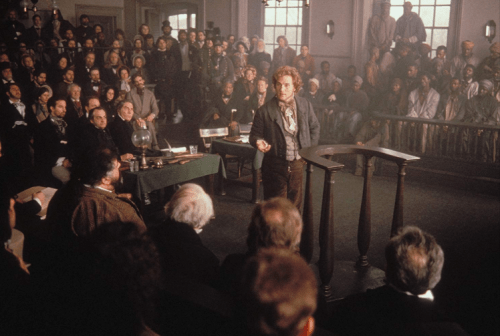
Baldwin argues that the Africans had been captured in Africa to be sold in the Americas illegally. Baldwin proves through documents found hidden aboard La Amistad that the African people were initially cargo belonging to a Portuguese slave ship, the Tecora. Therefore, the Africans were free citizens of another country and not slaves at all. In light of this evidence, the staff of President Van Buren has the judge presiding over the case replaced by Judge Coglin, who is younger and believed to be impressionable and easily influenced. Consequently, seeking to make the case more personal, on the advice of former American president (and lawyer) John Quincy Adams, Baldwin and Joadson find James Covey, a former slave who speaks both Mende and English. Cinque tells his story at trial, how he was kidnapped by slave traders outside his village, and held in the slave fortress of Lomboko, where thousands of captives were held under heavy guard. Cinque and many others were sold to the Tecora, where they were held in the brig of the ship. The captives were beaten and at times, were given so little food that they had to eat the food from each other’s faces. One day, 50 captives were thrown overboard. Later, the ship arrived in Havana, Cuba. Those captives that were not sold at auction were handed over to La Amistad.

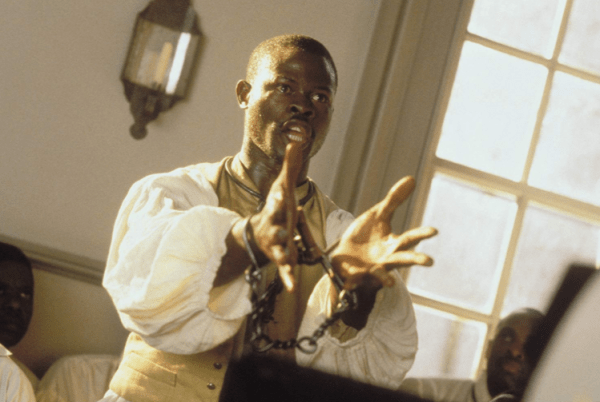
United States Attorney Holabird attacks Cinqué’s tale of being captured and kept in the slave fortress, and especially questions the throwing of precious cargo overboard. Holabird contends that Cinque could have been made a debt slave by his fellow Sierra Leoneans. However, the Royal Navy’s fervent abolitionist Captain Fitzgerald of the West Africa Squadron backs up Cinqué’s account. Baldwin shows from the Tecora’s inventory that the number of African people taken as slaves was reduced by 50.  In the Tecora’s case, they had underestimated the amount of provisions necessary for their journey.  As tension in the courtroom rises, Cinqué stands up from his seat and repeatedly cries, “Give us, us free!”

Judge Coglin rules in favor of the Africans. After pressure from Senator John C. Calhoun of South Carolina on President Van Buren, the case is appealed to the Supreme Court. Despite refusing to help when the case was initially presented, Adams agrees to assist with the case. At the Supreme Court, he makes an impassioned and eloquent plea for their release, and is successful.  Because of the release of the Africans, Van Buren loses his re-election campaign, and tension builds between the North and the South, which eventually culminates in the Civil War.  Source:  Wikipedia; IMDB; Collider.

Trailer: