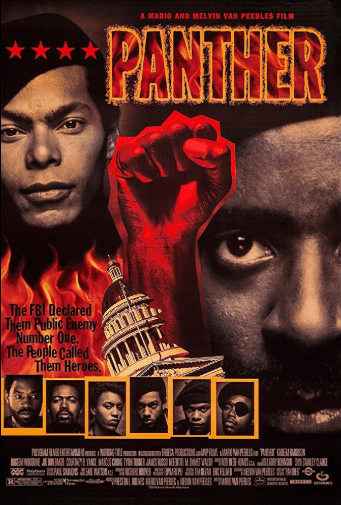
29 Days Of Black History – Day 17: Panther

Release Date:   5/3/95
Genre:  Drama
Rating:  R
Director:  Mario Van Peebles
Studio(s):  Gramercy Pictures, MVP Films, Polygram Filmed Entertainment, Tribeca Productions, Working Title Films.
Running Time:  124 mins.

Cast:  Kadeem Hardison as Judge, Wesley Jonathan as Bobby Hutton. Bokeem Woodbine as Tyrone, Joe Don Baker as Brimmer, M. Emmet Walsh as Dorsett, Courtney B. Vance as Bobby Seale, Tyrin Turner as Cy, Marcus Chong as Huey P. Newton, Anthony Griffith as Eldridge Cleaver, Chris Rock as Yuck Mouth, Mario Van Peebles as Stokely Carmichael, Chris Tucker as Bodyguard, Bobby Brown as Rose, Angela Bassett as Betty Shabazz, Jenifer Lewis as Rita, Dick Gregory as Reverend Slocum, James LeGros as Bob Avakian, Kool Moe Dee as Jamaal, Roger Guenveur Smith as Pruitt, Richard Dysart as J. Edgar Hoover, Michael Wincott as Tynan, Melvin Van Peebles as Old Jail Bird.

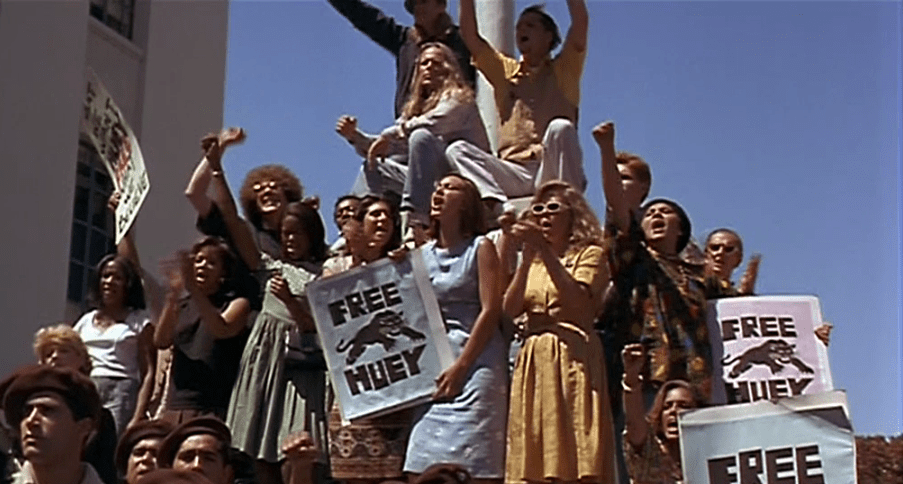
Story:   The People called them Heroes. The FBI called them Public Enemy Number One.  This semi-fictionalized account of the origins of the Black Panthers is set in Oakland California during the late 1960s, a time of tension but also a time for change.  The Black Panther movement for Self Defense is formed in response to the harassment and violence being suffered by the black community at the hands of the police.  Judge, a Vietnam veteran, returns home to where the Black Panthers, led by Huey Newton and Bobby Seale, have begun policing the police and monitoring their activities. Judge’s good friend Cy introduces him to Huey and the Black Panther credo which forever changes Judge’s life. Taken into Huey’s confidence, and pressured by the police to act as their informant, Judge raises the suspicions and animosity of fellow Panther Tyrone. The ensuing internal struggle is further exacerbated by the sudden overabundance of heroin available in the ghettos of Oakland, a solution tailored by the FBI in association with organized crime, to “neutralize” the black community and its leaders.

Details:  Panther is a fictionalized version of the rise and fall of a black radical movement that captured the imagination of its time, creating an armed, militant self-defense group that was an alternative to the nonviolent philosophy of Martin Luther King.  The group, which was active from 1966 until 1982, grew famous as the civil rights movement of the early 1960s was losing momentum after the assassination of King.  Their message was clear, White America could no longer count on pacifist blacks to patiently hold nonviolent marches.  News photos of Black Panthers, armed with rifles, patrolling the streets of Oakland or entering the California State Assembly, were among the key images of the time.

In the beginning the group’s core practice was its armed citizen’s patrols to challenge police brutality and they were involved in many fatal firefights with the police.  But the Panthers also instituted a variety of community social programs including Free Breakfast for Children and community health clinics for the education and treatment of diseases.  The Panthers began to feel the pressure of the FBI as its chief, J. Edgar Hoover, could not believe young blacks were capable of running such an organization, and described the party as the greatest threat to the internal security of the country.  He developed an extensive counterintelligence program designed to undermine Panther leadership, incriminate and assassinate party members, and to discredit, criminalize and drain the organization’s resources and manpower.  Soon the whole enterprise became deadly and dangerous.  The Party’s membership which had reached a peak in 1970 with offices in 68 cities and thousands of members began to dwindle throughout the 1970s and by 1980 had less than 30 members. Source(s): tcm.com; Rogerebert.com; Amazon; Google; Wikipedia; IMDB; Daarac.org.

Trailer:
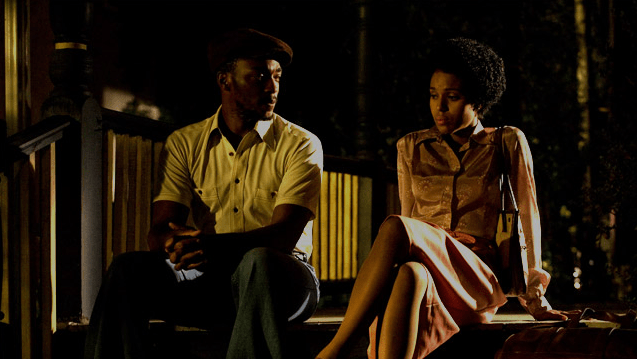
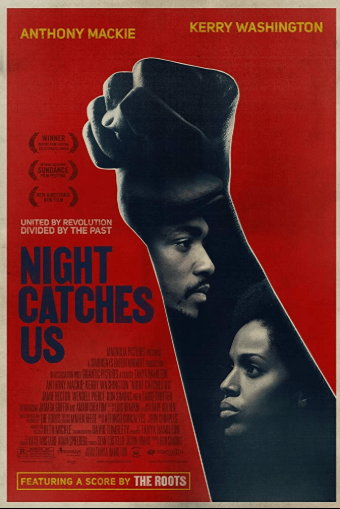
29 Days Of Black History – Day 16: Night Catches Us

Release Date:   1/23/10
Genre:  Drama
Rating:  R
Director:   Tanya Hamilton
Studio(s):  SimonSays Entertainment, Gigantic Pictures, Magnolia Pictures.
Running Time:  90 mins.

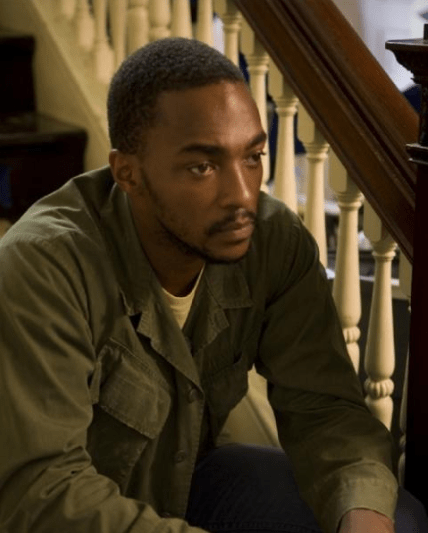
Cast:  Kerry Washington (Patricia), Anthony Mackie (Marcus), Jamie Hector (DoRight Miller), Wendell Pierce (David Gordon), Amari Cheatom (Jimmy Dixon), Tariq Trotter (Bostic Washington), Novella Nelson (Eloise), Thomas Roy (Old Man Harrison), Ron Simons (Carey Ford).

Story:  In 1976 former Black Panther Marcus, returns to his Philadelphia neighborhood to attend his father’s funeral. Marcus has been away for several years, part of the time spent in prison on gun running charges and part spent wandering the country.  Marcus has a reputation for having snitched on a fellow Panther which led to his death when the police tried to arrest him. Marcus’s former friend DoRight, now a local gangster, and Marcus’s brother Bostic, a Black Muslim, are especially displeased by his return.

However, Patricia, the widow of the slain Panther, is more welcoming. She is now a lawyer and lives with her daughter Iris in the same house where her husband was killed. Her younger cousin Jimmy struggles to make a living with odd jobs, and becomes more enamored of the Panthers after being harassed by the police. Increasingly hostile to the police, he becomes involved when some men sent by DoRight shoot out the back window of a police car.

Meanwhile, although no one else can understand it, Patricia grows closer to Marcus and when he is kicked out of his brother’s home she invites him to stay with her, citing that he will be a positive male influence for her daughter. When Iris grows curious about what happened to her father, Patricia tearfully explains how he had murdered a police officer in retaliation for the killing of two Panthers. She explains that the police arrested her and Marcus tells Iris that he told them where her father was in order to save Patricia from going to jail and keep Iris out of the foster care system.

Wanting to hold DoRight responsible for the shooting of the police car, but lacking evidence, police officer David Gordon orders Marcus to plant a gun in DoRight’s bar so they can arrest him. Marcus is reluctant, but Gordon insists, threatening to reveal to the neighborhood that it was actually Patricia who had informed on her husband’s location and that Marcus had taken the heat for her. Marcus goes to DoRight’s bar but refuses to plant the gun.

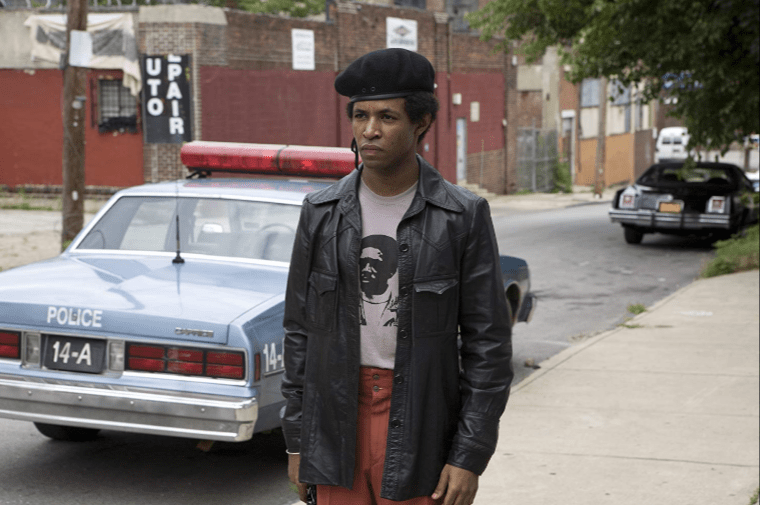
Meanwhile, Jimmy, who has bought a gun and decked himself out in Panther style beret and jacket, approaches the cop who had harassed him earlier, and shoots him. Jimmy flees to his cousin’s house, but when the police show up outside she forces him to leave. Later, the police find Jimmy hiding in a wooded area and shoot him. After this, Marcus asks Patricia to leave Philly with him and put the past behind her. She refuses, and he leaves alone.  Source(s):  Wikipedia; IMDB; Hollywood.com; Listal.com.

Trailer:

29 Days of Black History – Day 15: Betty & Coretta

Release Date:  2/2/13; Lifetime
Genre:  Drama/Biography
Rating:  TV-14
Director:  Yves Simoneau
Studio(s):  Sanitsky Company, Lifetime Movie Network
Running Time:  88 mins.

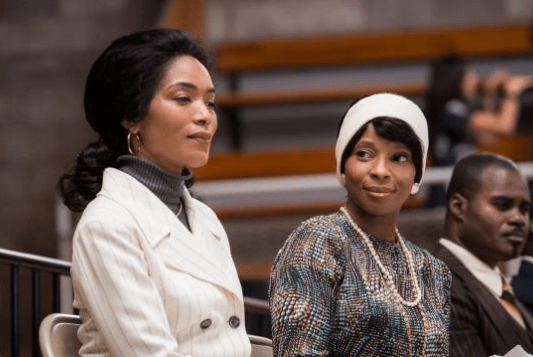
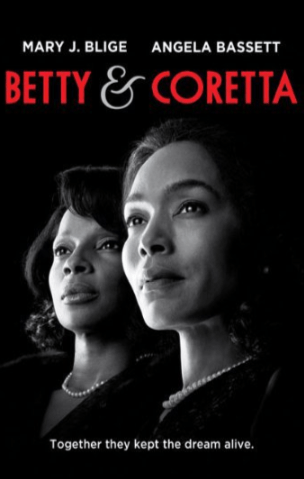
Cast:  Mary J. Blige (Dr. Betty Shabazz), Angela Bassett (Coretta Scott King), Ruby Dee (Narrator), Gloria Reuben (Myrlie Evers-Williams), Malik Yoba (Martin Luther King, Jr.), Tyler Hynes (Mike Fitzpatrick), Benz Antoine (Ralph Abernathy), Cherise Boothe (Toni Wallace), Nicki Whitely (Attalah), Tristan D. Lalla (Jesse), Lindsay Owen Pierre (Malcolm X), Alex C. Askew (Louis Farrakhan).

Story Focusing on the extraordinary women behind the two men who would change history, Betty & Coretta tells the stories of Coretta Scott King, wife of Dr. Martin Luther King, Jr. and Dr. Betty Shabazz, wife of Malcolm X.  When their husbands are tragically assassinated, these two women not only inherit the mantle of the civil rights movement in America, but also find themselves single mothers who have to find a way to raise and support their children on their own.  While many are familiar with the stories of Malcolm X and MLK, few know the stories of their devoted wives and the friendship that formed between the women after the assassinations of their husbands.

The movie picks up right before the assassinations of Malcolm (February 21, 1965) and Martin (April 4, 1968), and opens with Ruby Dee describing an era of racism, war, and poverty in America. Throughout the film Dee shares facts about the deaths of Dr. King and Malcolm X, the Black National Political Convention, where Coretta and Betty first meet, as well as the lives and deaths of both phenomenal women.

Mary J. Blige portrays a pregnant Betty Shabazz, who along with her four daughters watches as her husband is gunned down just as he takes the stage to deliver what would become his last message. After the assassination, Betty delivered twin girls, making her a single mother with six small children. With the help of friends and those in her community, Betty cared for her family and earned a doctorate degree in high-education administration. She became an associate professor at New York’s Medgar Evers College. Shabazz spent the rest of her life working as a university administrator and fundraiser, before dying on June 23, 1997 as a result of injuries sustained by a fire her 10-year-old grandson, Malcolm set in her home.

Angela Bassett plays widow, Coretta Scott King, who raises four children while remaining a leading participant in the Civil Rights Movement. She goes from being her husband’s motivator and partner in the movement to being a justice advocate to the world. In addition to lobbying for the national King Holiday, she became president, chair, and CEO of The King Center in Atlanta, GA. At the end of the movie, Ruby Dee notes that Mrs. King died in 2006, nine years after Dr. Shabazz, from ovarian cancer.

The movie spans three decades and weaves together the lives of these two civil rights activists.  It demonstrates how they were each powerful, strong, faithful, and devoted leaders in their own rights.

Details:  A corporate executive at A&E Network confirmed that the Shabazz and King families were not consulted for the film and some of the heirs were not happy with it.  Lifetime attempted to add credibility by featuring actress, Ruby Dee, as narrator, who was a dear friend of the Shabazz family.  Sources: Lifetime; Urban Faith; Essence; Commonsense.org; Variety; Shadow & Act; Moviestillsdb.com.

Trailer:

29 Days Of Black History – Day 14: A Raisin In The Sun

Release Date:  3/29/61 – New York City premiere
Genre:  Drama
Black & White
Rating:  NR
Director:  Daniel Petrie
Studio(s):  Columbia Pictures
Running Time:  128 mins.

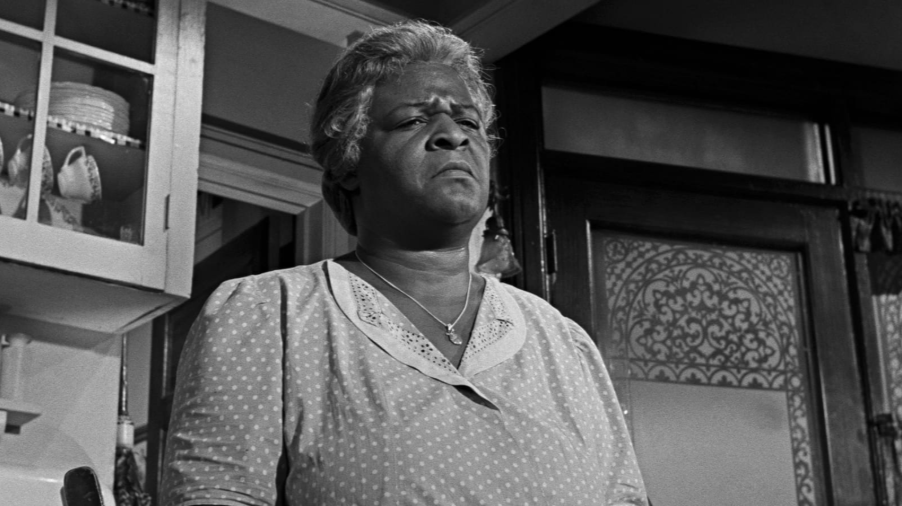
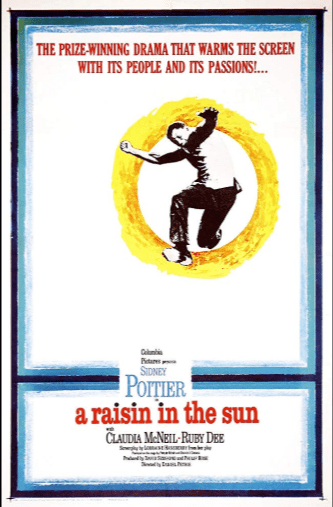
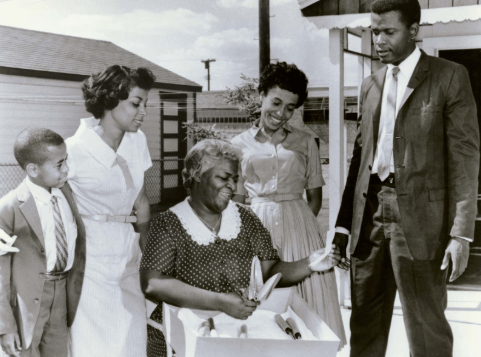
Cast  Sidney Poitier (Walter Lee Younger), Ruby Dee (Ruth Younger), Claudia McNeil (Lena Younger), Diana Sands (Beneatha Younger), Stephen Perry (Travis Younger), John Fiedler (Mark Lindner), Ivan Dixon (Joseph Asagai), Louis Gossett, Jr. (George Murchison), Joel Fluellen (Bobo), Roy Glenn (Willie Harris), Louis Terrel (Herman).

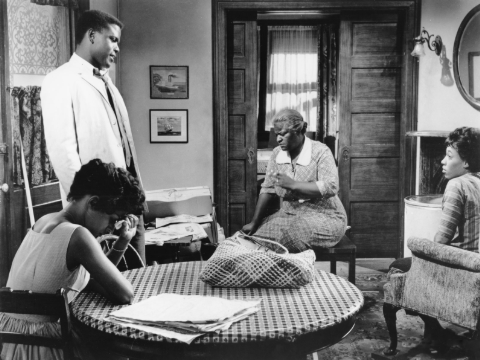
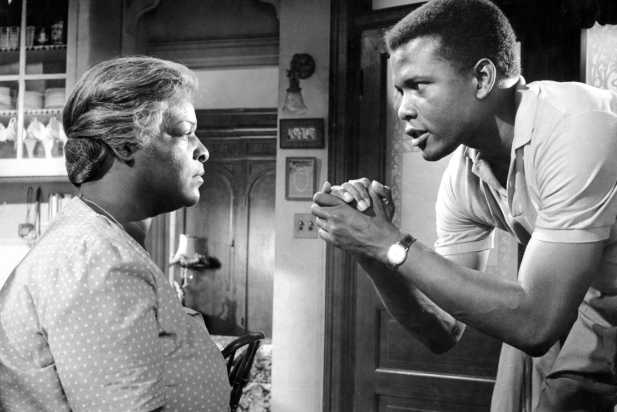
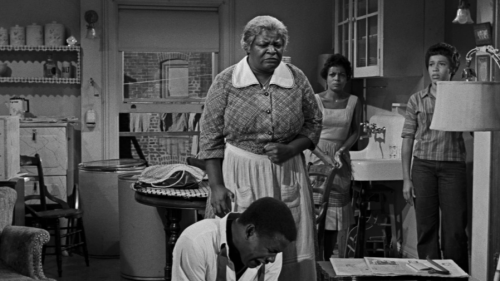
Details:  Adapted from the 1959 play of the same name by Lorraine Hansberry, the film follows members of a poor black family who desire a better life.  Voted One of the Year’s Ten Best Films by the 1961 New York Times Film Critics.  In 2005, the film was selected for preservation in the National Film Registry by the Library of Congress as being “culturally, historically, or aesthetically significant”.  In 2008, a made-for -television version of the film was directed by Kenny Leon and starred Sean Combs, Audra McDonald, Phylicia Rashad, and Sanaa Lathan who reprised their roles from the 2004 revival.  

Story:  The Younger family—Walter Lee, his wife Ruth, younger sister Beneatha, son Travis and mother Lena—live in a small crowded apartment on Chicago’s South Side. They are anticipating a life insurance check for the death of Lena’s husband’s in the amount of $10,000, and each of them has an idea as to what to do with this money. Matriarch Lena wants to buy a house to fulfill the dream she shared with her deceased husband.  Walter Lee would rather use the money to invest in a liquor store so he can rise above his status of chauffeur for a wealthy white man. Ruth, wanting to provide more space and better opportunities for Travis, agrees with Lena. Beneatha would like to use the money to pay her medical school tuition.

Lena spends $3,500 for a down payment on a house in Clybourne Park.  Frustrated and angry, Walter Lee quarrels with his mother and wife, then storms out.  Lena finds him in a bar and, gives him the remaining $6,500.  She tells him to save $3,000 for Beneatha’s medical school and to take the remaining $3,500 for his own investments. Meanwhile, Ruth discovers she is pregnant and, fearing another child will add to the financial pressures, considers having an abortion. Walter voices no objection, but Lena is strongly against it.  Beneatha has her own drama and rejects her suitor George, believing he’s blind to the problems of their race. Her Nigerian classmate proposes to her, wanting to take her to Africa with him after they finish school, but she is unsure what to do.

When their future neighbors find out the Youngers are moving in, they send a hypocritical representative of an “improvement association,” Mark Lindner who offers to buy back the house at a higher price to preserve the community’s all-white character, but they refuse. Meanwhile, Walter loses the insurance money when one of his “partners in the liquor store scheme skips town with the money.

Realizing he has betrayed his mother’s trust, threatened his sister’s future, and thrown away his father’s life savings, Walter Lee desperately decides to take Lindner up on his offer, even while his family begs him not to sell away their dignity.  When Lindner arrives, Walter has a last-minute change of heart realizing that such a move would be a step backwards and rejects the offer once again. The Youngers eventually move out of their apartment, fulfilling their dream, though it means hard work and years of sacrifice for all.  Source(s):  Wikipedia, TCM, britannica.com, MoMA.org, Movingimage.us, mediayifyhdtorrent.net.

Trailer:

29 Days of Black History – Day 13: And The Children Shall Lead

Release Date:  1/14/85; TV Movie
Genre:   Drama/Family
Rating:  NR
Director:  Michael Pressman
Studio(s):   Bonneville Entertainment
Running Time:  58 mins.

Cast:  Danny Glover (William), Pam Potillo (Rachel Henderson), LeVar Burton (Glenn Scott), Denise Nicholas (Mother), Andrew Prine (Sheriff Connelly), Prentiss Jackson (Kevin), Whitman Mayo (Reverend Wilson), Jamilla Perry (Little Girl), Amanda Peterson (Jenny), Beah Richards (Miss Annie), Philip Arthur Ross (Lloyd), Steven Robert Ross (Floyd).

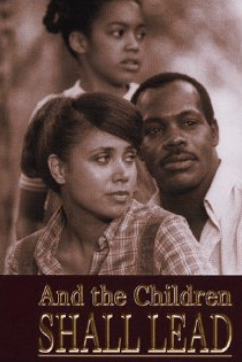
Story:  This drama is a Rainbow Television Workshop production and looks at the effects of political change on children, who often prove wiser than their elders. The story takes place in 1964 and is set in the segregated town of Catesville, Mississippi.  Jenny, the daughter of the white sheriff, is best friends with Rachel, granddaughter of the sheriff’s black housekeeper.  The girls and their young friends get caught up in the firestorm surrounding the civil rights movement.  When a busload of civil rights activists arrive in Catesville determined to assure equal rights for blacks by helping to register voters, tension and distrust between the races grow.  Adults, both black and white, afraid of the inevitable changes that are surely coming, hang onto the old ways of handling their differences.  Rachel, along with her white friends, tries to ease the simmering racial tensions to help the town unite and overcome the barriers that divide them.  Source:  IMDB; Amazon; MSU Libraries; commonsensemedia.org; DAARAC.org.

Preview Clip:

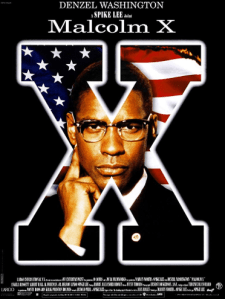
29 Days Of Black History – Day 12: Malcolm X

Release Date:  11/18/92 – Theatrical Release Date
Genre:  Drama/Biography
Rating:  PG-13
Director:  Spike Lee
Studio(s):   Largo International N.V., JVC Entertainment Networks, 40 Acres & A Mule Filmworks, Warner Bros.
Running Time:  202 mins.

Cast:  Denzel Washington (Malcolm X/Malcolm Little), Angela Bassett (Betty Shabazz), Albert Hall (Baines), Al Freeman, Jr. (Elijah Muhammad), Delroy Lindo (West Indian Archie), Spike Lee (Shorty), Theresa Randle (Laura), Kate Vernon (Sophia), Ernest Lee Thomas (Sidney), Christopher Plummer (Chaplain Gill). Lonette McKee (Louise Little), Tommy Hollis (Earl Little) Giancarlo Esposito (Talmadge X Hayer), Wendell Pierce (Ben Thomas), Leonard L. Thomas (Leon Davis), Roger Guenveur Smith (Rudy), James McDaniel (Brother Earl), Steve White (Brother Johnson), Veronica Webb (Sister Lucille Rosary), Jean-Claude La Marre (Benjamin 2X), Debi Mazar (Peg), Karen Allen (Miss Dunne), Peter Boyle (NYPD Captain Green), David Patrick Kelly (Mr. Ostrowski), LaTanya Richardson (Lorraine).

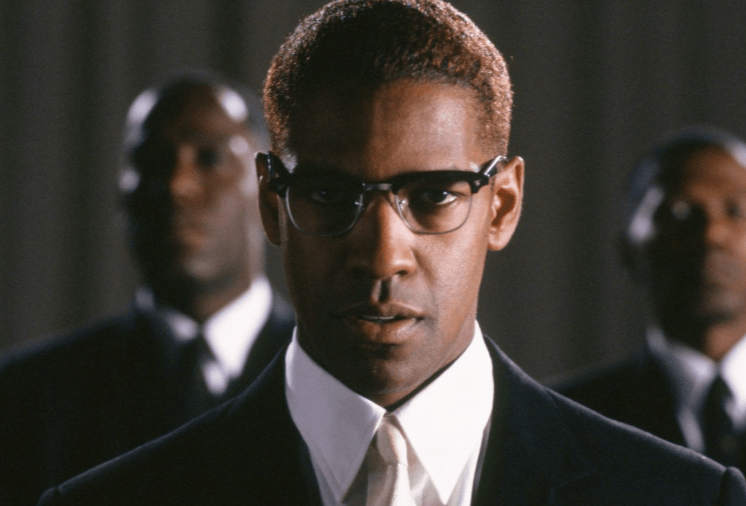
Details:  Directed and co-written by Spike Lee, the film dramatizes key events in Malcolm X’s life including his criminal career, his incarceration, his conversion to Islam, his ministry as a member of the Nation of Islam and his later falling out with the organization, his marriage to Betty X, his pilgrimage to Mecca and reevaluation of his views concerning whites, and finally his assassination on February 21, 1965.  Defining childhood incidents, including his father’s death, his mother’s mental illness, and his experiences with racism are dramatized in flashbacks.

Denzel Washington, in the title role, was nominated for an Academy Award for Best Actor.  Black Panther Party co-founder Bobby Seale, the Rev. Al Sharpton, and future South Africa president Nelson Mandela make cameo appearances.

Malcolm X’s screenplay is based largely on Alex Haley’s 1965 book, The Autobiography of Malcolm X. Haley collaborated with Malcolm X on the book beginning in 1963 and completed it after Malcolm X’s death.  In 2010, the film was selected for preservation in the United States National Film Registry by the Library of Congress as being “culturally, historically, or aesthetically significant”.

Story:   Malcolm Little is born in rural Nebraska to a Caribbean mother and African-American father. When Malcolm is a young boy, their house burns down and his father, an activist for black rights, is killed by a chapter of the Black Legion. His death is falsely registered as a suicide. Malcolm’s mother’s mental state deteriorates and she is admitted to a mental institution. Malcolm and his siblings are put into protective care.  While Malcolm performs well in school and dreams of being a lawyer, he is discriminated against by his teachers.

In 1944, Malcolm, now a teenager, lives in Boston. He goes to a nightclub with his friend Shorty and girlfriend Laura where he meets a white girl named Sophia, and the two begin to date. Malcolm moves to Harlem with Sophia and soon meets “West Indian” Archie, a gangster who runs a local numbers game. The two become friends and start an illegal numbers racket. One night, Malcolm bets on a series of numbers, one of which is a winner, however Archie denies paying him a large sum of money.  A conflict ensues between the two and Malcolm returns to Boston after an attempt on his life. Malcolm reconnects with Shorty and along with some friends decide to start performing robberies to earn money.

By 1946, the group has accrued a large amount of money but are later arrested.  Malcolm is sentenced to 8-10 years in jail. While incarcerated, Malcolm meets Baines, a member of the Nation of Islam, who introduces him to the teachings of the group’s leader Elijah Muhammad. Malcolm is initially cold towards the preachings, but later grows interested in the Muslim religion and lifestyle.  He begins to resent white people for their maltreatment of his race. When Malcolm is paroled from prison after serving six years, he travels to the Nation of Islam’s headquarters in Chicago. There, he meets Muhammad, who instructs Malcolm to remove his “Little” surname and replace it with “X”, which is symbolic of his lost African surname that was taken from him by white people; he is rechristened as “Malcolm X”.

Malcolm returns to Harlem and begins to preach the Nation’s message. Over time, his speeches gather large crowds of onlookers who protest African-American mistreatment.  Malcolm proposes ideas such as African-American separation from white Americans.  In 1958, Malcolm meets nurse Betty Sanders. They marry and eventually become the parents of four daughters.  Several years later, Malcolm is now in a high position as the spokesperson of the Nation of Islam.

This slideshow requires JavaScript.

After President John F. Kennedy is assassinated in November 1963, Malcolm comments that the assassination was the product of the white violence that has been prevalent in America since its founding and compares the killing to “the chickens coming home to roost.”  This statement greatly damages Malcolm’s reputation and he is temporarily suspended by Muhammad as the Nation’s figurehead. Seeing this as a betrayal, Malcolm loses faith in the organization. In early 1964, Malcolm goes on a pilgrimage to Mecca where he finds that Muslims come from all cultures, including white.  Malcolm publicly announces that he will no longer preach African-American separation and begins his own organization, the Organization of Afro-American Unity, which teaches tolerance instead of protest. He also legally changes his name to El-Hajj Malik El-Shabazz. This action publicly exiles him from the Nation of Islam. He is subsequently sent several death threats by members of the Nation and his house is firebombed in early 1965.

On February 21, 1965, Malcolm prepares to speak before a crowd at the Audubon Ballroom in Harlem before he is shot several times by disciples of the Nation of Islam. One of the shooters, Thomas Hagan, is shot in the leg by one of Malcolm’s bodyguards and dragged into a furious crowd, who proceed to beat him. Malcolm is transported to a hospital, but is pronounced dead on arrival.  Source(s):  Wikipedia; commonsensemedia.

Trailer: