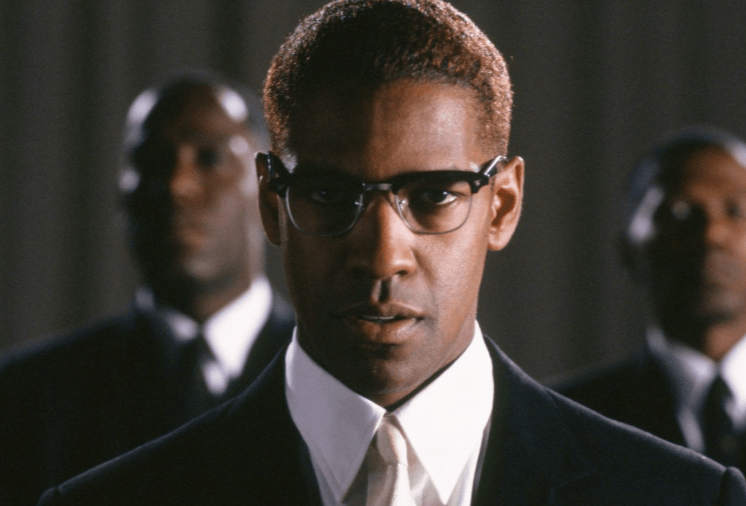
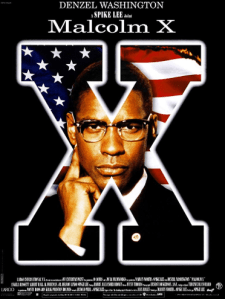
 Release Date: 11/18/92 – Theatrical Release Date
Genre: Drama/Biography
Rating: PG-13
Director: Spike Lee
Studio(s): Largo International N.V., JVC Entertainment Networks, 40 Acres & A Mule Filmworks, Warner Bros.
Running Time: 202 mins.
Cast: Denzel Washington (Malcolm X/Malcolm Little), Angela Bassett (Betty Shabazz), Albert Hall (Baines), Al Freeman, Jr. (Elijah Muhammad), Delroy Lindo (West Indian Archie), Spike Lee (Shorty), Theresa Randle (Laura), Kate Vernon (Sophia), Ernest Lee Thomas (Sidney), Christopher Plummer (Chaplain Gill). Lonette McKee (Louise Little), Tommy Hollis (Earl Little) Giancarlo Esposito (Talmadge X Hayer), Wendell Pierce (Ben Thomas), Leonard L. Thomas (Leon Davis), Roger Guenveur Smith (Rudy), James McDaniel (Brother Earl), Steve White (Brother Johnson), Veronica Webb (Sister Lucille Rosary), Jean-Claude La Marre (Benjamin 2X), Debi Mazar (Peg), Karen Allen (Miss Dunne), Peter Boyle (NYPD Captain Green), David Patrick Kelly (Mr. Ostrowski), LaTanya Richardson (Lorraine).
Details: Directed and co-written by Spike Lee, the film dramatizes key events in Malcolm X’s life including his criminal career, his incarceration, his conversion to Islam, his ministry as a member of the Nation of Islam and his later falling out with the organization, his marriage to Betty X, his pilgrimage to Mecca and reevaluation of his views concerning whites, and finally his assassination on February 21, 1965. Defining childhood incidents, including his father’s death, his mother’s mental illness, and his experiences with racism are dramatized in flashbacks.
Denzel Washington, in the title role, was nominated for an Academy Award for Best Actor. Black Panther Party co-founder Bobby Seale, the Rev. Al Sharpton, and future South Africa president Nelson Mandela make cameo appearances.
Malcolm X’s screenplay is based largely on Alex Haley’s 1965 book, The Autobiography of Malcolm X. Haley collaborated with Malcolm X on the book beginning in 1963 and completed it after Malcolm X’s death. In 2010, the film was selected for preservation in the United States National Film Registry by the Library of Congress as being “culturally, historically, or aesthetically significant”.
Story: Malcolm Little is born in rural Nebraska to a Caribbean mother and African-American father. When Malcolm is a young boy, their house burns down and his father, an activist for black rights, is killed by a chapter of the Black Legion. His death is falsely registered as a suicide. Malcolm’s mother’s mental state deteriorates and she is admitted to a mental institution. Malcolm and his siblings are put into protective care. While Malcolm performs well in school and dreams of being a lawyer, he is discriminated against by his teachers.
In 1944, Malcolm, now a teenager, lives in Boston. He goes to a nightclub with his friend Shorty and girlfriend Laura where he meets a white girl named Sophia, and the two begin to date. Malcolm moves to Harlem with Sophia and soon meets “West Indian” Archie, a gangster who runs a local numbers game. The two become friends and start an illegal numbers racket. One night, Malcolm bets on a series of numbers, one of which is a winner, however Archie denies paying him a large sum of money. A conflict ensues between the two and Malcolm returns to Boston after an attempt on his life. Malcolm reconnects with Shorty and along with some friends decide to start performing robberies to earn money.
By 1946, the group has accrued a large amount of money but are later arrested. Malcolm is sentenced to 8-10 years in jail. While incarcerated, Malcolm meets Baines, a member of the Nation of Islam, who introduces him to the teachings of the group’s leader Elijah Muhammad. Malcolm is initially cold towards the preachings, but later grows interested in the Muslim religion and lifestyle. He begins to resent white people for their maltreatment of his race. When Malcolm is paroled from prison after serving six years, he travels to the Nation of Islam’s headquarters in Chicago. There, he meets Muhammad, who instructs Malcolm to remove his “Little” surname and replace it with “X”, which is symbolic of his lost African surname that was taken from him by white people; he is rechristened as “Malcolm X”.
Malcolm returns to Harlem and begins to preach the Nation’s message. Over time, his speeches gather large crowds of onlookers who protest African-American mistreatment. Malcolm proposes ideas such as African-American separation from white Americans. In 1958, Malcolm meets nurse Betty Sanders. They marry and eventually become the parents of four daughters. Several years later, Malcolm is now in a high position as the spokesperson of the Nation of Islam.
After President John F. Kennedy is assassinated in November 1963, Malcolm comments that the assassination was the product of the white violence that has been prevalent in America since its founding and compares the killing to “the chickens coming home to roost.” This statement greatly damages Malcolm’s reputation and he is temporarily suspended by Muhammad as the Nation’s figurehead. Seeing this as a betrayal, Malcolm loses faith in the organization. In early 1964, Malcolm goes on a pilgrimage to Mecca where he finds that Muslims come from all cultures, including white. Malcolm publicly announces that he will no longer preach African-American separation and begins his own organization, the Organization of Afro-American Unity, which teaches tolerance instead of protest. He also legally changes his name to El-Hajj Malik El-Shabazz. This action publicly exiles him from the Nation of Islam. He is subsequently sent several death threats by members of the Nation and his house is firebombed in early 1965.
On February 21, 1965, Malcolm prepares to speak before a crowd at the Audubon Ballroom in Harlem before he is shot several times by disciples of the Nation of Islam. One of the shooters, Thomas Hagan, is shot in the leg by one of Malcolm’s bodyguards and dragged into a furious crowd, who proceed to beat him. Malcolm is transported to a hospital, but is pronounced dead on arrival. Source(s): Wikipedia; commonsensemedia.
Trailer:




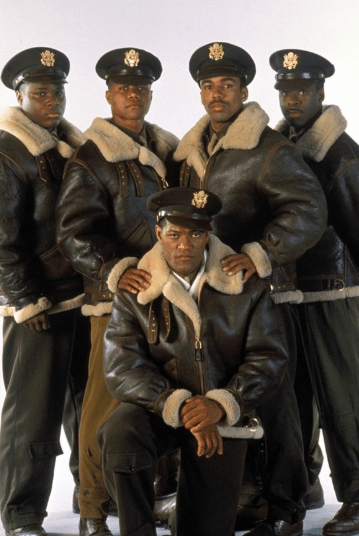
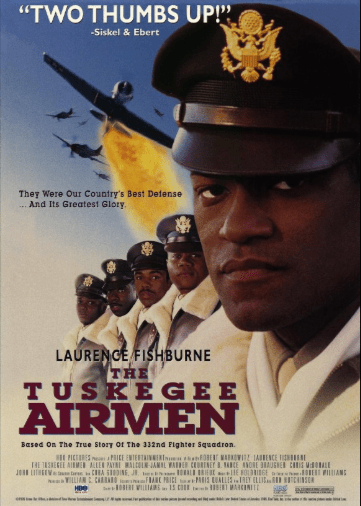
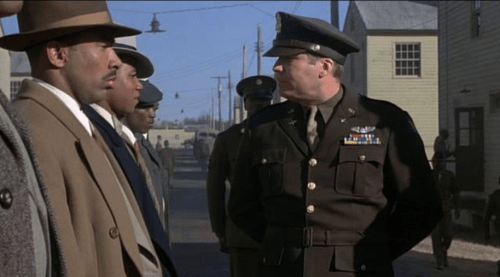 The cadets are briefed by Rogers and Joy, both with their own views that set the tone for what the cadets would later face in training: Rogers has an optimistic view, wanting the cadets to prove the naysayers wrong and letting them know how much of an honor it would be for them to pass the training and earn their wings as aviators. Major Joy, however, reflects the views of most of white America at the time, belittling the cadets and questioning whether they are up to the task.
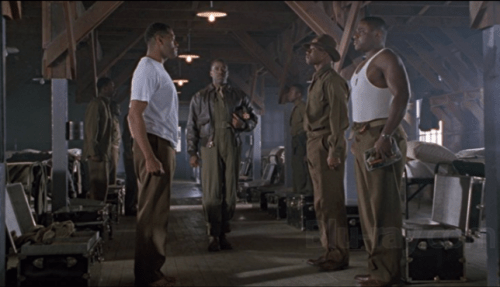 Peoples performs some unauthorized aerobatic maneuvers which catches the attention of Colonel Rogers and Major Joy, and results in him being removed from the training program. Peoples pleads with them not to put him out of the program, but to no avail. To avoid going home in disgrace, an emotionally distraught Peoples commandeers an AT-6 plan and commits suicide by deliberately crashing it.
 The men are eventually deployed to North Africa, as part of the 99th Pursuit Squadron, though they are relegated to ground attack missions. During the campaign, Lee’s flight encounters a group of Messerschmitt Bf 109s. Ignoring Lee’s orders, Cappy breaks formation and attacks, downing one of them. Another Bf 109 hits Cappy’s fighter aircraft numerous times and Cappy is killed when his damaged fighter plane crashes after catching fire.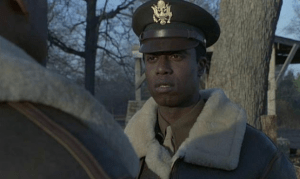

 Release Date:
  Story: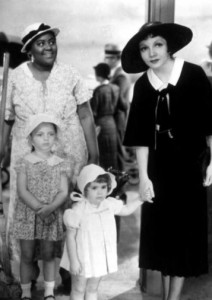
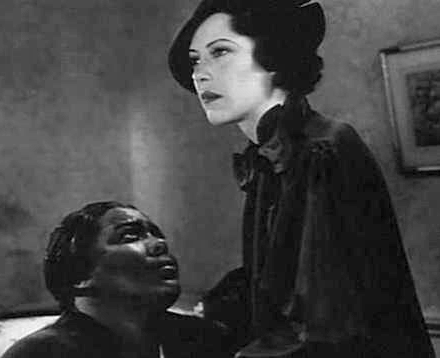
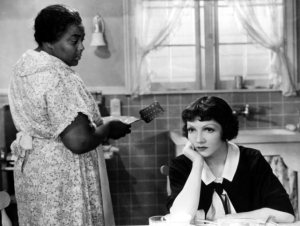
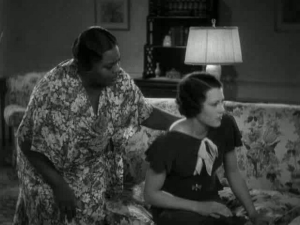 Ten years pass. Both women are wealthy and share a mansion in New York City. Delilah becomes a mainstay of the African-American community, supporting many lodges and charitable organizations and her church. She tries to give Peola every advantage, including sending her to a fine Negro college in the South, but Peola runs away.
 Peola has taken a job in a segregated restaurant in Virginia. When her mother and Bea find her, she denies Delilah. Delilah can give her everything that money can buy, but she can’t change who she is. Peola finally tells her mother that she is going away, never to return, so she can pass as a white woman—and if they meet on the street, her mother must not speak to her. Delilah is heartbroken and takes to her bed, murmuring Peola’s name and forgiving her before eventually dying of a broken heart.
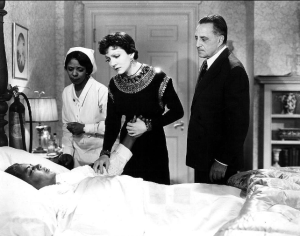 Delilah has the grand funeral she always wanted, with marching bands, a horse-drawn white silk hearse, and all the lodges processing in a slow march. The coffin is carried from the church to the hearse through the saber arch of an honor guard, and a remorseful, sobbing Peola rushes to embrace it, begging her dead mother to forgive her. Bea and Jessie gather her into their arms and take her into the car with them. Peola decides to return to college. Bea asks Stephen to wait, promising to come to him after Jessie is over her infatuation. At the end, Bea starts to tell Jessie about the day they met Delilah.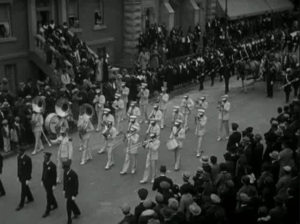




 Black Cinema Connection