Clarence Brooks

(1896-1969)

Clarence Brooks 2

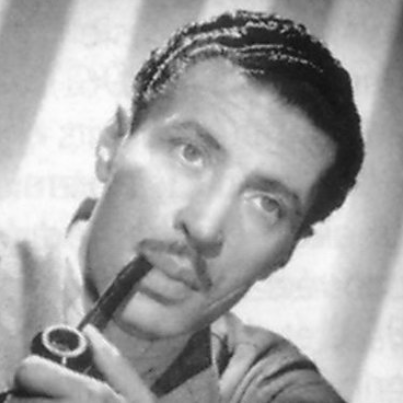
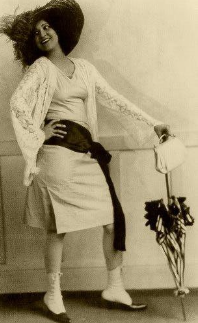
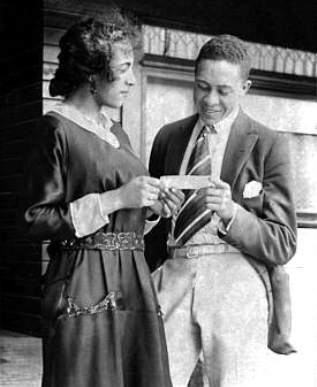
Clarence Brooks was born in San Antonio, Texas in December 1896. In 1915, Brooks along with actor Noble Johnson, Noble’s brother, George Johnson, Dr. James T. Smith, and Dudley A. Brooks formed The Lincoln Motion Picture Company, a company that sought to make films correcting distortions of African American images in motion pictures while also depicting the reality of African American life.  Brooks acted as secretary to the budding company, which quickly built a reputation for showcasing the talent of African American performers in three-dimensional roles. In 1916, Brooks made his acting debut in Lincoln’s short, The Realization of a Negro’s Ambition and in 1919, he played the lead in A Man’s Duty.

By 1921 The Lincoln Company had completed five films, but it proved to be a marginal operation. Noble Johnson, leading man and president of the company who helped support the studio by acting in other companies’ productions, was faced with an ultimatum from Hollywood studio Universal. They had found that when theaters showed a Lincoln film starring Johnson to Black audiences, the audience would not go to a nearby theater showing a Universal film featuring Johnson. He was forced to choose between working for Universal, with a promising career, or casting his lot with Lincoln, with slight chance for financial success. Johnson reluctantly resigned as an active member of the company, but retained his financial interest. Dr. James T. Smith then became president of Lincoln. Without Johnson at the helm, there was much uncertainty.  In addition the increased cost of movie making in the 1920s and the declining economy leading to the Great Depression forced most independent Black film producers out of business. The African American community did not have the financial resources, especially in hard times, to sustain independent Black film enterprises.  In 1923 operations of the Lincoln Motion Picture Company ended and the board of directors disbanded. But Brooks was determined to continue with his acting career as he was still interested in challenging racial stereotypes in film. In 1928, he played George Reed in Absent with Virgil Owens and Rosalie Lincoln.
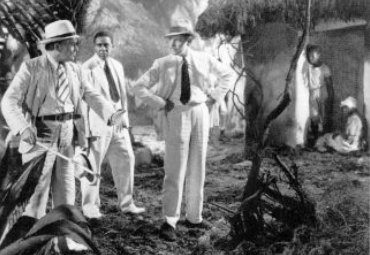
Clarence Brooks 2In 1930 Brooks appeared in Georgia Rose with Irene Wilson, Evelyn Preer, and Spencer Williams and in 1931, he co-starred in Arrowsmith in which he portrayed a Howard University-educated doctor who Ronald Colman’s character encounters while testing a serum in an effort to find a cure for the bubonic plague. The film was nominated for Best Picture, and Brooks’s co-star was nominated for Best Actor, however Brooks was not nominated for his portrayal of an important supporting character vital to the story.  Afterwards, Brooks left acting behind until he was coaxed out of semi-retirement by director and independent film producer Oscar Micheaux. In 1935, he starred in Micheaux’s Murder In Harlem and found that he could continue his acting career in the films which gave him his start.  In race films he could at least play positive roles. In 1937, he played Larry Lee in Dark Manhattan and in 1938, he appeared in Spirit of Youth and Two-Gun Man from Harlem. In 1939, Brooks continued to work in independent films that supported his career philosophy with roles in The Bronze Buckaroo and Harlem Rides The Range.

Brooks continued working the race movie circuit, although the popularity of the genre was fading and the ability to challenge convention through film was becoming more difficult to achieve, as mainstream studios bought out the independent companies and made their own race films that appealed to prejudiced masses and sold out movie houses. In 1941, he appeared in one of the last race movies of the time, Up Jumped the Devil. Once the race movie era ended, Brooks did not work in films until 1946, when he reluctantly decided to turn back to acting to sustain himself and appeared as an uncredited valet in Blue Skies with Bing Crosby and Fred Astaire. In 1947, Brooks appeared as an uncredited Porter in Welcome Stranger.

The 1950s saw the end of Brooks’ film career. In 1951, he appeared in his last movie, portraying Sunga in Bowanga Bowanga. Brooks walked away from show business entirely after that and in March 1969 died of natural causes in Pasadena, California.

Filmography
Wild Women a/k/a Bowanga Bowanga (1951)
Rock Island Trail (1950)
Welcome Stranger (1947)
Blue Skies (1946)
Up Jumped the Devil (1941)
Broken Strings (1940)
Am I Guilty? (1940)
Bad Boy (1939)
Harlem Rides the Range (1939)
The Bronze Buckaroo (1939)
Two-Gun Man from Harlem (1938)
Spirit of Youth (1938)
Dark Manhattan (1937)
Murder in Harlem (1935)
Arrowsmith (1931)
Georgia Rose (1930)
Absent (1928)
By Right of Birth (1921)
A Man’s Duty (1919)
The Law of Nature (1917)

Source: TCM Classic Film Union Blog; Hollywood Heritage.  Photo source(s):  Hollywood Heritage, Modern Times.
Sidney P. Dones

(1888-1947)

Sidney P. Dones

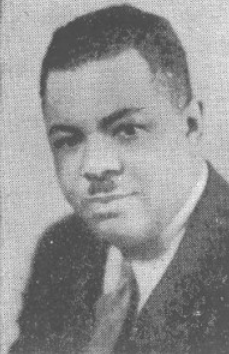
Sidney Preston Dones was born in Marshall, Texas in 1888. After graduating from Wiley College in 1905 he moved to Los Angeles. In 1906, Dones moved to El Paso, Texas where he unsuccessfully tried to establish an African-American colony in Mexico.   Returning to California, he began to prosper by buying and selling real estate.  He was also a money lender, an insurance agent, a music dealer, and ultimately, a filmmaker and actor. His primary clientele was African American, but he was also able to win the confidence and respect of whites.

When W.E.B. Du Bois visited Los Angeles in 1913 he trumpeted the “snap and ambition” of the city’s “new blood.”  Dones had the most snap, and was largely responsible for solidifying Black enterprise on Central Avenue. In 1914, he organized the Sidney P. Dones Company and set up shop at 8th and Central, next door to the Black owned newspaper, The California Eagle. Dones’s company dealt mainly in real estate but also offered insurance and legal services, courtesy of the black attorney C.A. Jones.  In 1915 The New Age reported that Dones won the title of Los Angeles’ most popular young businessman and “[He] is enjoying the greatest real estate and insurance business of any race man in the West.”

In early 1916, Dones opened the Booker T. Washington Building at 10th Street and Central Avenue. The Washington Building was a handsome three-story affair, with shops on the sidewalk level and offices and apartments above. The Eagle, called it the “Largest and Best Appointed Edifice on Central Avenue” and added that it was “Procured for Colored Business Men.”

In 1924 Dones along with other prominent African Americans, including Norman O. Houston, Joe and Charlotta Bass, Hattie S. Baldwin, bought 1,000 acres in Santa Clarita Valley, forty miles north of Los Angeles, to build a vacation resort for African Americans. These investors, who called their proposed community Eureka Villa, envisioned a resort area of cabins located on half-acre lots, free from the prejudices and restrictions of the city. The resort featured a community house, tennis courts, baseball fields, hiking trails and a nine-hole golf course. It was an immediate success with buyers from nearby states, and as far away as Chicago and Cleveland. While Eureka Villa was never exclusively African American, they were the predominant owners of the restaurants, inns and stores in the area.

As an actor and director, Dones is known for the films Injustice (1919), Reformation (1920), and The Ten Thousand Dollar Trail (1921). He was married to Lavinia H. Relerford and later to Bessie Williams. Sidney P. Dones died on August 2, 1947 in Los Angeles, California.

Source(s): Bound for Freedom: Black Los Angeles in Jim Crow America; Blackpast.org; IMDB. Photo Source: Pragmatic Obots Unite.

Nina Mae McKinney

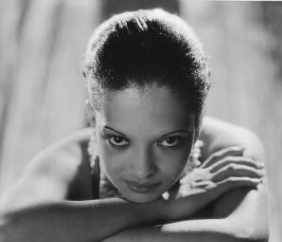
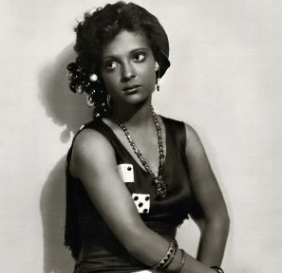
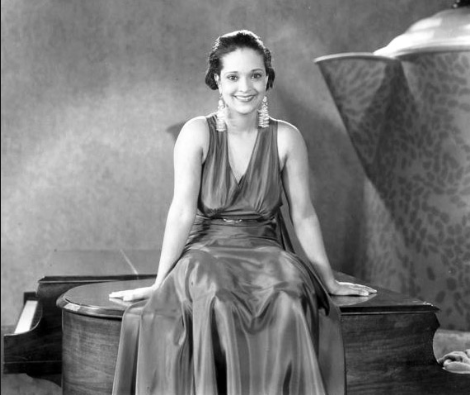
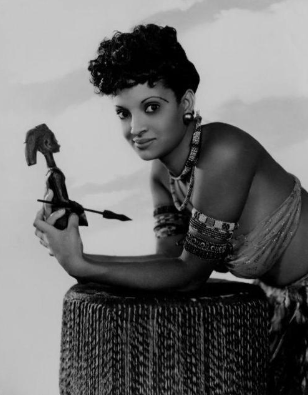
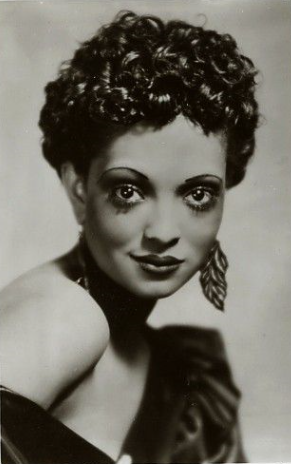
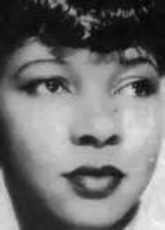
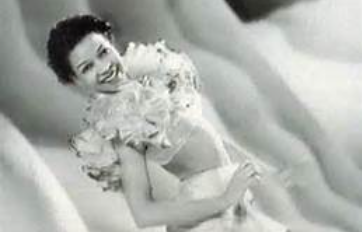
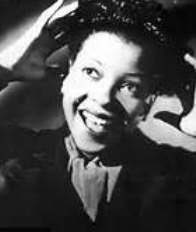
Nina Mae McKinney 4Born Nannie Mayme McKinney to Hal and Georgia McKinney on June 12, 1912 in Lancaster, South Carolina, McKinney was brought up by a great-aunt, Carrie Sanders, in Lancaster when her parents moved to New York in search of better opportunities. Stage struck at an early age, she appeared in plays at the black Lancaster Industrial School and taught herself to dance. At the age of 13, she joined her parents in New York and by the age of sixteen Nannie Mayme chose the stage name Nina Mae and managed to land a role in the chorus line of the hit Broadway show ‘Blackbirds’ starring Bill ‘Bojangles’ Robinson and Adelaide Hall. Her performance caught the attention of one of Hollywood’s leading directors, MGM’s King Vidor and he cast her as bad girl, Chick, in his film Hallelujah (1929). Hallelujah was billed as “a story of murder and redemption in the Deep South”, and was the first sound feature film with an all-black cast.

Nina Mae McKinney 2Critics heaped praise upon the young star, and Vidor described her as ‘beautiful and talented and glowing with personality’. However, McKinney soon realized that there was no place in Hollywood at that time for a black leading lady. Nina’s performance netted her a five-year contract with MGM. She was the first African-American actor to sign a long-term contract with a major Hollywood studio. The studio seemed reluctant to star her in feature films. She was a leading lady in an industry that had no leading roles for black women and fell into a round of minor support roles such as a specialty singer or dancer, a vamp or the domestic in films like They Learn About Women (1930), Safe in Hell (1931), and Reckless (1935) for which most of her scenes were cut. Frustrated with career limitations and unable to fulfil her potential in America, she followed in the footsteps of Josephine Baker and left the United States for Europe.

Nina Mae McKinneyMcKinney arrived in London with her accompanist, pianist Garland Wilson, to star in Chocolate and Cream, a revue at the Leicester Square Theatre. McKinney also participated in one of John Logie Baird’s experimental television programs, transmitted live on February 17, 1933 and became the first black artist to be seen on British television. Cabaret engagements followed and, in May 1933, a Pathe newsreel captured her on stage at the Trocadero restaurant in Charles B. Cochran’s revue Revels in Rhythm.

McKinney’s career in British cinema continued with a low-budget comedy, Kentucky Minstrels (1934), starring Harry Scott and Eddie Whaley, the African-American stars of the British variety stage and radio. McKinney made a guest appearance with Debroy Somers and his band. Film Weekly’s reviewer noted, “As the star of the final spectacular revue, [she] is the best thing in the picture” (Film Weekly, May 24, 1934). The following year, in a cast that also included H. G. Wells and George Bernard Shaw, she sang the jazz classic ‘Dinah’ during the broadcast of a radio show called Music Hall in BBC: the Voice of Britain, John Grierson and the GPO film unit’s ‘official’ documentary about the BBC. In Sanders of the River (1935), produced by Alexander Korda, she co-starred with Paul Robeson. As Robeson’s African ‘native’ wife, McKinney was suitably exotic and decorative, but Film Weekly (April 12, 1935) noted that she was miscast, “as much at home in the jungle as, say, a Harlem night-club entertainer”.

Nina Mae McKinney 6

McKinney’s appeal to the British public broadened as she undertook several lengthy and successful variety tours. Known by now as ‘the Black Garbo’, from 1933 to 1937 she topped the bill in many of the country’s popular music halls in variety shows. At the Belfast Ritz in 1936 she was featured on the bill with Ken ‘Snakehips’ Johnson and his Jamaican Emperors of Jazz. She was among the first African-Americans to perform at the London Palladium and was part of a Royal Command Performance for King George V.

Shortly after the BBC launched its regular high-definition television service from Alexandra Palace on November 2, 1936, McKinney was contracted to star in her own variety shows, Ebony and Dark Laughter (both 1937). She also appeared on the BBC’s Television Demonstration Film (1937), a survey of BBC television during its first six months of operation (and one of the few surviving records of pre-war television).
In her private life McKinney led a troubled, self-destructive existence. In 1936 an opportunity to star opposite Paul Robeson in another film, Song of Freedom, fell through. The actress who replaced her was another African-American expatriate, Elisabeth Welch, who said, “Nina thought that being a star meant that you must be temperamental. She made herself unpopular and ruined her career.”

Nina Mae McKinney 3When WWII broke out in Europe McKinney returned to the United States to join bandleader Pancho Diggs and his orchestra on tour. Some sources state that in 1940 she married the jazz musician Jimmy Monroe, with whom she put together a band and toured the USA (other sources state they married in 1935 and divorced in 1938). She later returned to Hollywood and tried to resurrect her film career, but the only roles that were available to her were stereotypical maids to stars like Irene Dunne, Merle Oberon, and Hedy Lamarr. However, while Hollywood could not accept a young, beautiful black actress, she did appear in a number of all-Black-themed or race films, Gang Smashers/Gun Moll (1938), The Devil’s Daughter (1939), and Mantan Messes Up (1946). In 1949 she appeared in what many considered her finest film role, as Rozelia in director Elia Kazan’s Pinky. The film revolved around a light-skinned southern Black woman passing for white in the North, in which McKinney was ironically cast in the supporting role, with the lead going to a white actress.

Her last film appearance was an uncredited bit part in the 1950 western, Copper Canyon. In 1951, McKinney made her last stage appearance, playing Sadie Thompson in a summer stock production of Rain. McKinney returned to Europe in the 1950s, living in Athens, Greece where she reprised her role as the ‘Queen of the Night Life’ performing in cabarets.

Nina Mae McKinney 7Nina Mae McKinney returned to New York in 1960. Sadly, when she succumbed to a heart attack on May 3, 1967 at the age of 54, her death went unnoticed in the entertainment industry and by the media, except for a small notice in a local paper. Trade papers such as Variety and Black publications such as Jet and Ebony didn’t even print an obituary. On her death certificate she was described as a widow and her occupation recorded as “domestic for private families.” There was no mention that she had been an actress and singer. Nevertheless her contribution to cinema was recognized in 1978 with a posthumous award from America’s Black Filmmakers Hall of Fame.

Filmography
Hallelujah! (1929)
They Learned About Women – Uncredited (1930)
Safe in Hell Leonie (1931)
Pie, Pie Blackbird (1932)
Passing the Buck (1932)
Kentucky Minstrels – Uncredited (1932)
Sanders of the River (1935)
Reckless (1935)
The Lonely Trail Dancer – Uncredited (1936)
Gang Smashers (1938)
The Devil’s Daughter (1939)
Straight to Heaven (1939)
Dark Waters (1944)
Together Again (1944)
The Power of the Whistler – Uncredited (1945)
Mantan Messes Up (1946)
Night Train to Memphis (1946)
Danger Street (1947)
Pinky (1949)
Copper Canyon (1950)

Source(s): Find a Grave, Brit Movie, Black History Now, Screenonline, IMDB.

Herb Jeffries

a/k/a Herbert Jeffery
a/k/a The Bronze Buckaroo

Herb Jeffries 1

Update:  On May 26, 2014, Variety reported that a pioneer in African American-targeted Western movies and jazz singer Herb Jeffries, a/k/a the “Bronze Buckaroo,” died. He was 100.  Jeffries died of heart failure in West Hills, California on Sunday, May 25, 2014, according to the LA Times.  His health had been declining for some time.  His survivors include his wife Savannah and his five children.

Herb Jeffries (billed as Herbert Jeffrey) was born Umberto Alejandro Ballentino in Detroit, Michigan in 1913 (some modern sources cite the year as 1911) to an Irish mother and mixed-race father. He grew up watching silent screen cowboys at local movie theatres and learning to ride on his grandfather’s dairy farm in Northern Michigan. Herb fell in love with music at a young age, and sang in a church choir, but he was especially attracted to jazz and blues. He attended school during the Depression and since money was scarce, decided to quit high school and go to work. Years later, he would go back, graduate, and even get several degrees, but at that time, the goal was to earn enough money to help his family. Blessed with an excellent singing voice, he began performing locally in Detroit.

Herb Jeffries 2One night in 1933, Jeffries was singing in a small nightclub when jazz icon Louis Armstrong walked through the door. In an interview by amateur jazz historian Tad Calcara, Jeffries says Armstrong heard him sing, pulled him aside, and changed his life. Jeffries took the Armstrong’s advice and headed for Chicago where he joined a band led by Erskine Tate and was soon spotted by Earl ‘Fatha’ Hines. Hines featured Jeffries in concerts and recordings, and on a national radio broadcast from the Chicago World’s Fair in 1933 that brought him national attention.

While in his twenties, Jeffries pitched the idea for an all-black Western to producer Jed Buell, leading to one of the most enduring genres of the race movie movement. Jeffries traveled to Buell’s offices in Gower Gulch, California, and convinced him to take a chance on Harlem on the Prairie (1937), the first sound Western with an all-black cast. Harlem on the Prairie was a rarity in that it also secured bookings in white theatres on both East and West Coasts, thanks largely to Gene Autry, who helped Jeffries and Buell get a distribution deal with Sack Amusement.

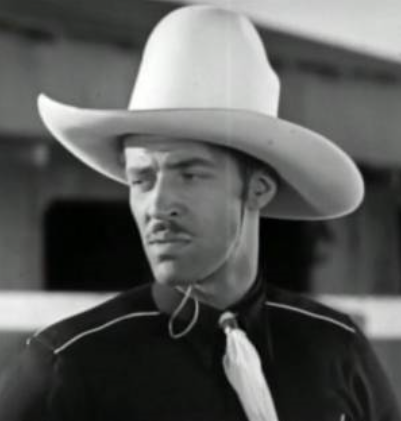
With the film’s success, producer Richard C. Kahn approached Jeffries about making follow-up films. With Two-Gun Man from Harlem (1938), Jeffries introduced the character of Bob Blake, whom he would play in two other films, The Bronze Buckaroo (1939) and Harlem Rides the Range (1939). With his long frame, rakish mustache and exotic good looks, Jeffries was able to capitalize on two unique styles of films at the time race films and singing cowboy pictures. And although he only made four films in that era, he helped to change the way African-Americans were portrayed in the movies.Herb Jeffries 4

Because of his mixed racial heritage, Jeffries had to use make-up to darken his complexion. He rarely took off his white Stetson, which he wore with an otherwise all-black outfit, so as not to reveal his lighter brown hair. The success of Jeffries’ Westerns did not escape Hollywood’s notice, but he turned down offers to join the major studios, not wanting to play stereotyped domestic roles.

Other films were in the planning stages, but never made because any chances to continue the series ended when Jeffries decided to accept a prestigious singing engagement with Duke Ellington. This led to his greatest recording success. In 1941, when another singer was unavailable, Jeffries stepped into the studio at the last minute to record “Flamingo,” which would become his signature song.

In the ’50s, Jeffries headlined in Europe and ran his own nightclub in Paris. He also starred in one more film, Calypso Joe (1957). He made several television guest appearances, including playing a black cowboy on The Virginian and had multiple guest roles on “Hawaii Five-O” as well as a run on the animated sitcom “Where’s Huddles?”  Jeffries also wrote and directed the nudie classic Mundo Depravados (1967), starring his wife at the time, stripper Tempest Storm.

Herb Jeffries 3Through the years Herb remained active on the lecture circuit and performed benefits for autism and music education. In 1995, he recorded an album of Western songs entitled “The Bronze Buckaroo Rides Again,” which was well received by critics.  In 1999, at 88, he released The Duke and I, a CD of songs he performed with Ellington in tribute to Ellington’s 100th birthday. Jeffries was a recipient of a Golden Boot award in 1996 and was inducted into the Cowboy Hall of Fame in 2003.


Herb Jeffries Filmography
Calypso Joe (1957)
Harlem Rides the Range (1939)
The Bronze Buckaroo (1939)
Rhythm Rodeo (1938)
Two-Gun Man from Harlem (1938)
Harlem on the Prairie (1937)

Source(s): Turner Classic Movies, B-Westerns.com, Voice of America, classicimages.com, IMDB, Variety.

Jeni LeGon

Also known as:  Jennie May Ligon, Jennie Le Gon, Jenny Le Gon, Jeni Le Gon, Jeni LegonJeni LeGon 2

DOB:  August 14, 1916
DOD:  December 7, 2012

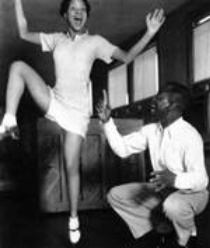
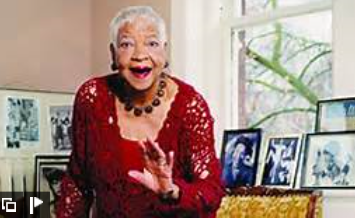
Ms. LeGon was a rare female tapper who distinguished herself as a solo performer in the first half of the 20th century. She wore pants rather than skirts when she performed, and as a result, she developed an athletic, acrobatic style, employing mule kicks and flying splits, more like the male dancers of the time.

Jeni LeGonIn 1935 Ms. LeGon appeared in Hooray for Love, a musical starring Ann Sothern in which she was featured with Bill Robinson and Waller in an effervescent song-and-dance number, “I’m Livin’ in a Great Big Way.”  For a time she performed in London, and went on to dance, sing and act in some 20 movies, including Ali Baba Goes to Town (1937), with Eddie Cantor;  Stormy Weather (1943), with Lena Horne and Bill Robinson; and Hi-De-Ho (1947), in which she died in Calloway’s arms.

Jeni LeGon 4LeGon also danced on Broadway in “Early to Bed,” a 1943 musical comedy concerning a brothel masquerading as a girls’ school on the island of Martinique, that was raised to distinction by Waller’s score and the choreography of Robert Alton.

On television in the early 1950s, Ms. LeGon appeared several times on Amos ’n’ Andy, but her career was stymied by the racial bias that governed Hollywood for much of its history.  She remained angry for decades at Fred Astaire, with whom she shared rehearsal space in 1935 but who she said refused to acknowledge her on the set of Easter Parade (1948), one of many films in which she played a maid.

“I played every kind of maid, that’s all I ever did,” she said in an interview with the Web site tapheritage.org. “I was an East Indian, West Indian, African, Arabic, Caribbean and black American. Eventually there weren’t that many roles. They were too few and far between.”

Jennie Ligon was born in Chicago on August 14, 1916 (her name was later altered forever when Louella Parsons misspelled it in her Hollywood gossip column.)

Jeni LeGon5As a girl Ms. LeGon sang and danced with neighborhood bands, and at 13 she got her first job as a chorus-line dancer for a performance by the Count Basie Orchestra.  She was so slender, however, that there were no costumes to fit her, so she wore pants and was assigned to mug flirtatiously in front of the chorus.

Later she toured with the vaudeville dance troupe the Whitman Sisters, a job that took her to Los Angeles and the movies. She also toured as a dancer, performing on military bases and in clubs. In the 1950s and ’60s she taught dance in Los Angeles and founded a touring troupe, Jazz Caribe.  Ms. LeGon continued teaching after she moved to Vancouver in 1969.Jeni LeGon 3

Her brief early marriage to the composer and arranger Phil Moore ended in divorce.  Jeni LeGon met her longtime companion Frank Clavin, a jazz drummer, in 1977 and it was Mr. Clavin who confirmed her death on December 7, 2012 in Vancouver, British Columbia.  Ms. LeGon was 96.

Jeni LeGon Filmography

Bright Road (1953)
Somebody Loves Me (1952)
Shot Jesse James (1949)
Easter Parade (1948)
Hi-De-Ho (1947)
Stormy Weather (1943)
I Walked with a Zombie (1943)
My Son, the Hero (1943)
Arabian Nights (1942)
Take My Life (1942)
This Was Paris (1942)
Bahama Passage (1941)
Birth of the Blues (1941)
Sundown (1941)
Glamour for Sale (1940)
While Thousands Cheer (1940)
I Can’t Give You Anything But Love, Baby (1940)
Double Deal (1939)
Fools for Scandal (1938)
Ali Baba Goes to Town (1937)
Café Metropole (1937)
Dishonour Bright (1936)

Source(s):  Obituary, The New York Times; IMDB.

Evelyn Preer

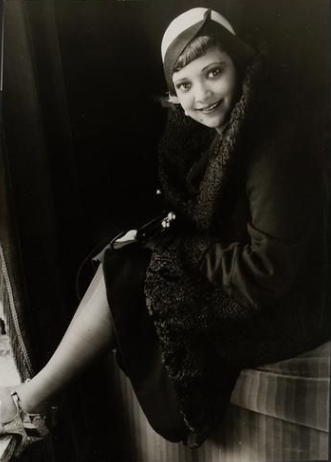
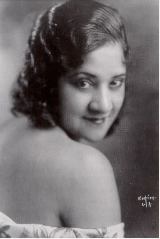
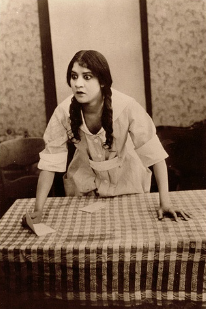
Evelyn Preer 1Evelyn Jarvis was born July 26, 1896 in Vicksburg, MS. She was the oldest of three children born to Frank and Blanche Jarvis. After the death of Frank Jarvis, the family migrated to Chicago where Evelyn completed grammar and high school. She was brought up in a stern, religious household but Evelyn convinced her mother to allow her to pursue a career in acting. Vaudeville provided her early training as a performer. Evelyn changed her surname to Preer and in 1919, she landed a role in filmmaker Oscar Micheaux’s debut film The Homesteader. As his premier leading lady, Micheaux promoted her with personal appearance tours and star-making publicity. Impressed with Evelyn’s talent, Micheaux cast her in several more films, including the controversial Within Our Gates (1920), The Brute (1920), The Gunsaulus Mystery (1921), Deceit (1923), Birthright (1924), The Devil’s Disciple (1925), The Conjure Woman (1926), and The Spider’s Web (1926).

Evelyn Preer 2Ms. Preer joined the esteemed Lafayette Players, the first professional Black theatrical stock company and in 1924, married fellow Lafayette Player, Edward Thompson*. Preer and Thompson became a formidable leading duo, frequently headlining productions for the traveling faction of the Lafayette Players. Along with the staging of Shakespearean and Broadway legitimate dramas, Ms. Preer starred in such mainstream classics as Oscar Wilde’s Salomé, Within the Law, The Yellow Ticket, The Cat and The Canary, and Anna Christie. In 1926, she had a successful stint on Broadway in famous director-producer David Belasco’s production of Lulu Belle. In 1928 Preer won further acclaim as Sadie Thompson in a revival of Somerset Maugham’s Rain.

Through friendship with filmmaker and actor Spencer Williams, Jr., Evelyn went on to star in four black cast shorts: The Framing of the Shrew, Melancholy Dame, Oft in the Silly Night and George Rose. It wasn’t long before White Hollywood jumped on Evelyn’s bandwagon, but many times she was either turned down for roles or her scenes were cut because of her fair complexion. Often Evelyn and her husband, Edward had to wear make-up on screen to darken their skin so the audience wouldn’t think they were white.

In addition to her stage and screen work, Preer also recorded backup vocals with Duke Evelyn Preer 3Ellington and Red Nichols and hers was often the voice of many songs white actresses lip synced to on screen. Evelyn also performed at prestigious nightclubs like the Cotton Club and the Sebastian’s Cotton Club in California. She worked with many important figures in the world of show business such as Eubie Blake, Paul Robeson, Bill Robinson, Ethel Waters, Mildred Washington, Florence Mills, Lottie Gee and Clarence Muse. The Black Press was proud of Evelyn and ran articles on her consistently. She was known within the Black community as “The First Lady of the Screen.”

In April 1932, Preer gave birth to her only child, Edeve. Sadly, only months after her daughter was born, at the age of 36, Evelyn Preer died from double pneumonia. The African American Registry reported, had she not died prematurely, Evelyn Preer might have been the much-needed Black “crossover” leading lady and icon on Broadway and in Hollywood. Given the racial climate and restrictions on Black actors, the light-complexioned Evelyn Preer still emerged as a pioneer Black female performer in race film and dramatic theater.

Evelyn Preer Filmography
Blonde Venus (1932)
Ladies of the Big House (1931)
Georgia Rose (1930)
The Widow’s Bite (1929)
Brown Gravy (1929)
The Lady Fare (1929)
Oft in the Silly Night (1929)
The Framing of the Shrew (1929)
Melancholy Dame (1929)
The Spider’s Web (1927)
The Conjure Woman (1926)
The Devil’s Disciple (1926)
Birthright (1924)
Deceit (1923)
The Gunsaulus Mystery (1921)
The Brute (1920)
Within Our Gates (1920)
The Homesteader (1919)

*Note: some modern sources indicate that Evelyn Preer was married to Lawrence Chenault rather than Edward Thompson.

Source(s): Kennedy Center – Faces of the Harlem Renaissance; Find A Grave; African American Registry; Angelfire.com