Studio(s):Tiny Giant Entertainment, Sterling Light Productions, Eagle Pictures,
Vertical Entertainment
Running Time:89 mins.
Cast: Nate Parker, Omari Hardwick, Theo Rossi, Vanessa Bell Calloway, Beau Knapp,
Shane Paul McGhie, Milauna Jackson, Larry Sullivan
Story: After witnessing his son murdered by a white police officer who goes uncharged, Marine veteran, Lincoln ‘Linc’ Jefferson, takes justice into his own hands in a series of events he hopes will finally lead to justice for his son. Source(s): Amazon Prime; IMDB. Photo Source(s): boxofficebuz.com; IMDB.
Release Date:8/1/1936 Black & White Genre: Drama/Inspirational Director(S): Marc Connelly, William Keighley Studio(s):Warner Bros. Running Time:93 mins.
Cast: Rex Ingram, Oscar Polk, Eddie ‘Rochester’ Anderson, Frank H. Wilson, George Reed, Abraham Gleaves , Edna Mae Harris, James Fuller.
Details: The Green Pastures depicts stories from the Bible as visualized by black characters. The story, set in a small black church in the deep South, relates incidents from the Bible — seen in a series of vignettes — as a preacher teaches his Sunday school class. Based on Roark Bradford’s 1928 novel, “Ol’ Man Adam an’ His Chillun'” and the 1930 play of the same name by Marc Connelly.
Synopsis: One fine Sunday in the Louisiana delta, a black preacher, Mr. Deshee, tells Bible stories to his Sunday school class. In order to help the children, visualize God and heaven, he describes them in terms of a Southern fish fry: De Lawd looks exactly like their preacher, and except for their wings, the angels look exactly like members of the congregation. De Lawd creates too much firmament one day, so he creates the sun and earth to drain it away. After realizing what good farmland he has made, De Lawd creates Adam and Eve to live on it. Sadly, De Lawd is disappointed by Adam and Eve’s descendants. After punishing Cain for Abel’s murder, De Lawd leaves the Earth alone for a while, but the next time he returns, he again finds a wicked world. Because he believes that a small-town preacher, named Noah is an exception, De Lawd orders him to build an ark and then sends the rains down to destroy the rest of humanity.
Soon, however, things have gotten bad again and De Lawd decides that man does not have enough to do, so he gives Abraham’s descendants the land of Canaan and sends Moses to lead them out of Egypt. Moses and Aaron secure the release of the Hebrew slaves only after confounding the Egyptian pharaoh with their magic tricks and killing his son. The Israelites reach the promised land, but De Lawd gets so disgusted with his children that he renounces them. Not even a delegation of angels can convince him to take them back. Yet a soft voice from Earth reaches De Lawd, and he realizes that mercy can be earned through suffering. De Lawd then wonders if this means that even God must suffer, and his question is answered by the life of Jesus Christ. Sunday school is over, and the children file out into the countryside that looks so much like heaven.
Notes: The Green Pastures was one of only six feature films in the Hollywood Studio era to feature an all-black cast, though elements of it were criticized by civil rights activists. A review of the film in The Spectator gave the film a generally good review but stated that one may feel uneasy at the film’s “humor” and the depiction of “the negro mind”. The review went on to say that the result is occasionally patronizing, too often quaint, and at the close of the film definitely false. Despite criticisms about its racial stereotyping, The Green Pastures proved to be an enormously popular film. It remained the highest-grossing all-black-cast film until the release of Carmen Jones in 1954. Source(s): youtube; tcm.com; Wikipedia. Photo Sources: Daarac.org; IMDB.
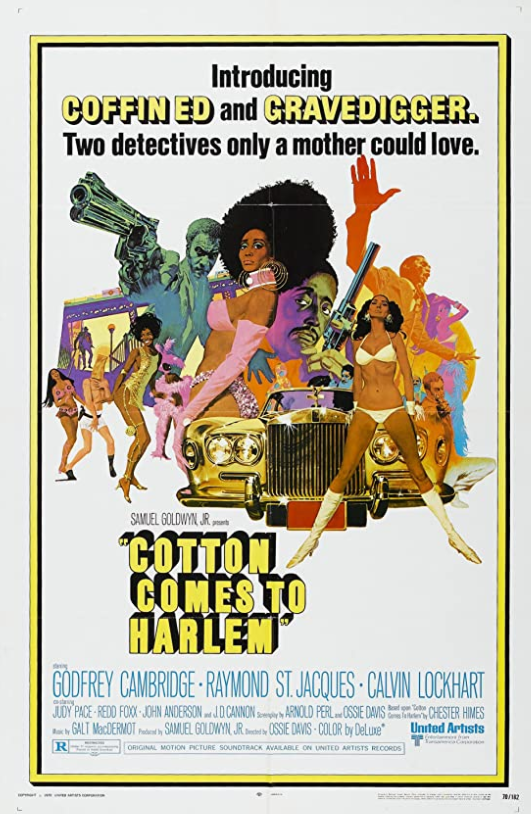
Original Release Date: 5/27/1970 Genre: Action Rating:R Director:Ossie Davis Studio(s):Formosa Productions, United Artists Running Time: 97 mins.
Cast: Godfrey Cambridge as Gravedigger Jones
Raymond St. Jacques as Coffin Ed Johnson
Calvin Lockhart as Deke O’Malley
Judy Pace as Iris Brown
Redd Foxx as Uncle Budd/Booker Washington Sims
Emily Yancy as Mabel
John Anderson as Bryce
Lou Jacobi as Goodman
Eugene Roche as Anderson
J.D. Cannon as Calhoun
Mabel Robinson as Billie
Dick Sabol as Jarema
Cleavon Little as Lo Boy
Theodore Wilson as Barry
Leonardo Cimino as Tom
Details: Two black police detectives suspect a preacher’s “Back to Africa” movement is a scam. The film is based on Chester Himes’ novel of the same name. It was followed two years later by the sequel Come Back, Charleston Blue.
*Spoilers Ahead*
Story: Cotton Comes to Harlem opens with a Back-to-Africa rally, led by the charismatic conman Reverend Deke O’Malley. O’Malley persuades hardworking families to pay $1,000 for the chance to return to Africa and escape white oppression. Deke raises $87,000, but before he can pocket the money, a group of masked white men hijack the money and flee the scene in a meat truck. O’Malley follows in an armored car, himself pursued by black police detectives Coffin Ed Johnson and Grave Digger Jones. During the pursuit, a bale of cotton, in which the hijackers hid the money, falls off the back of the truck and disappears onto the streets of Harlem. A junkman named Uncle Bud finds the cotton and stacks it onto his cart.
Back-to-the-Southland opens its headquarters in Harlem. The business is run by Colonel Calhoun, a Southerner who wants to convince black people to return to the South and pick cotton. Calhoun believes blacks need the steadying hand and guidance of whites to show them the way. The headquarters advertises for a bale of cotton as Calhoun was behind the theft of the money during the rally.
Grave Digger and Ed take on the case. Unaware of the missing bale of cotton or its significance, the detectives pursue Deke, who is in hiding, suspecting that he may have staged the hijacking to take off with the $87,000. They pursue leads that might led them to either the conman or the missing money with the help of “pigeons” (police informants), prostitutes, drug runners, and conmen.
Eventually the cotton ends up with Billie, an exotic dancer who intends to use it as a prop in her show. As she begins her act in Harlem’s Apollo Theater, Calhoun in blackface and O’Malley appear onstage in an effort to get to the cotton and the money. In doing so, the two are exposed and arrested by Coffin Ed and Grave Digger.
The detectives subsequently coerce a Mafia Don to compensate O’Malley’s disgruntled congregation for the elusive $87,000. Grave Digger and Coffin Ed learn that Uncle Bud absconded to Africa with the money, where he is enjoying a new lifestyle.
Notes: Cotton Comes to Harlem saw the film debut of Judy Pace, and Cleavon Little. It was also the credited debut of Redd Foxx, who was already well-known as a veteran night club comic, leading him to be considered for the TV Show Sanford and Son. Cambridge also starred as a white man who turns black in the motion picture comedy Watermelon Man, which opened the same day as Cotton Comes to Harlem. The film’s inspirational opening theme song, “Ain’t Now But It’s Gonna Be,” was written by Ossie Davis and performed by Melba Moore. Source(s): supersummary.com; tcm.com; blaxploitationpl.blogspot; daarac.org. Photo Sources/gifs: IMDB; daarac.org; tumbler; youtube.
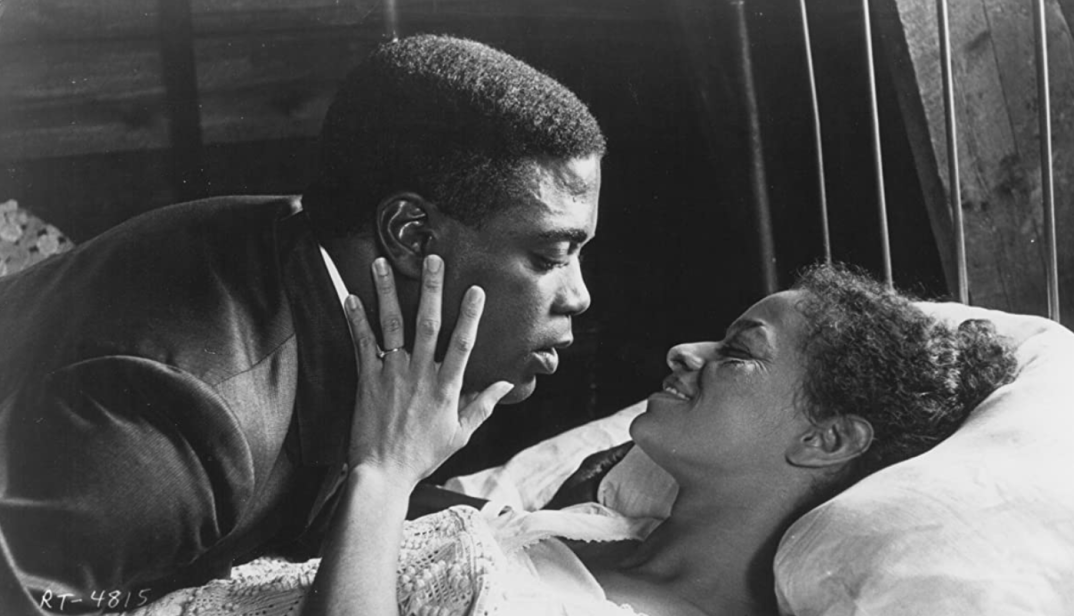
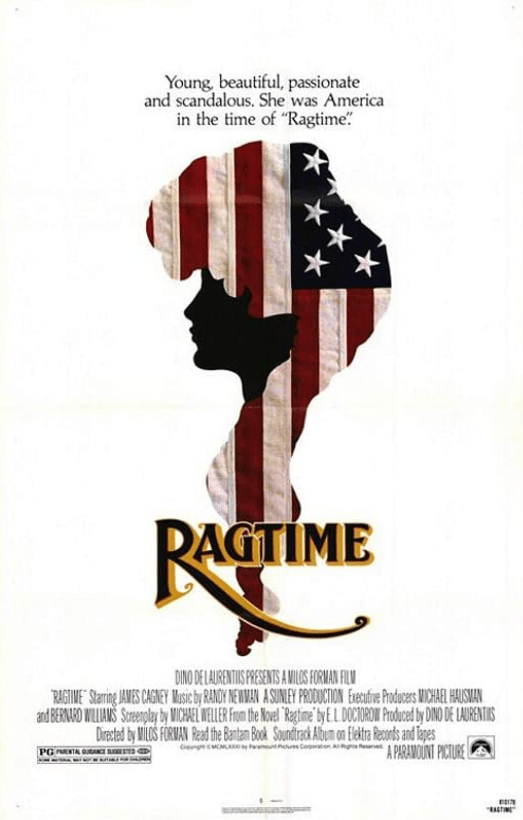
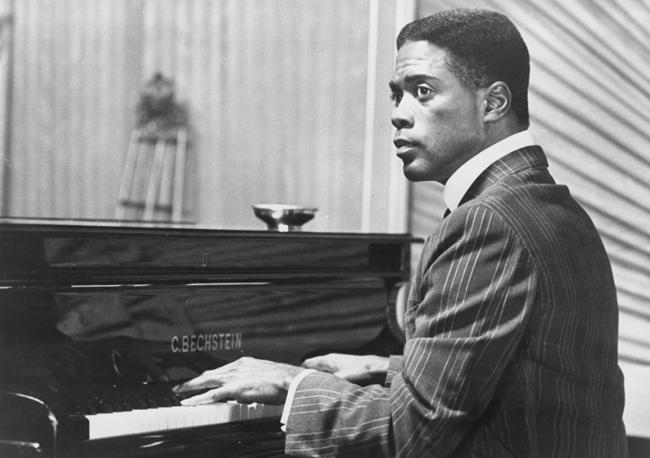
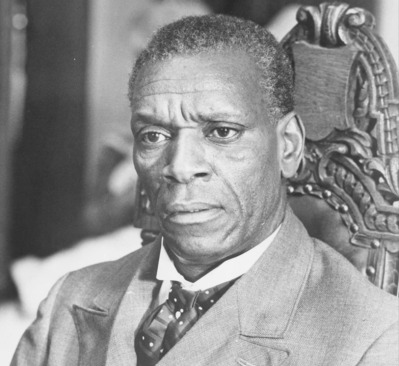
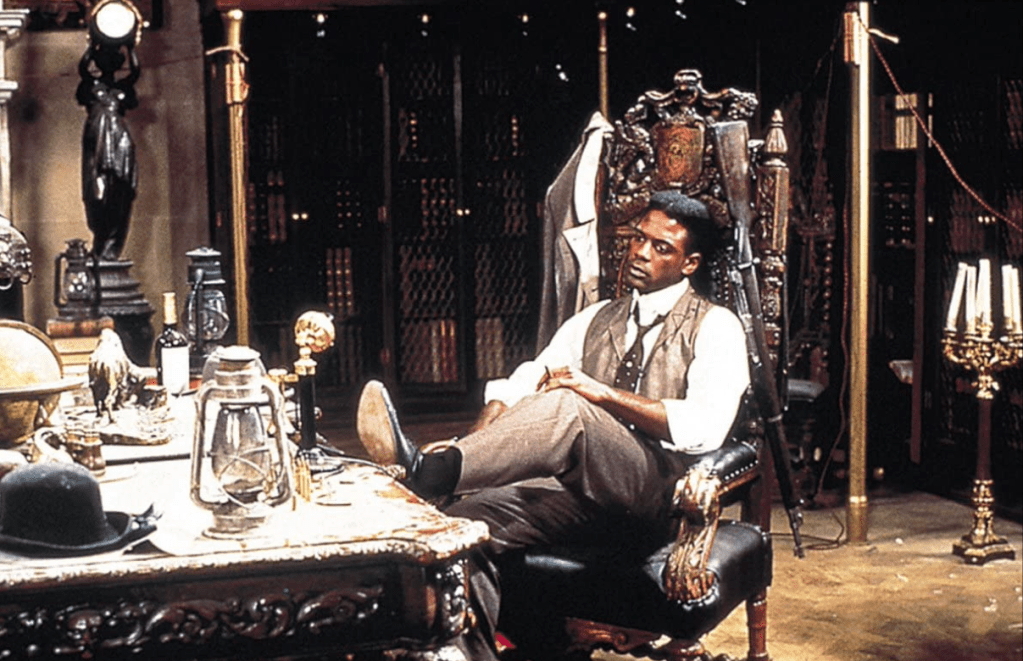
Cast: Howard E. Rollins, Jr. (Coalhouse Walker, Jr.), James Cagney (Commissioner Rhinelander Waldo), Moses Gunn (Booker T. Washington), Debbie Allen (Sarah), Brad Dourif (Younger Brother), James Olson (Father), Mary Steenburgen (Mother), Elizabeth McGovern (Evelyn Nesbit), Kenneth McMillan (Fire Chief Willie Conklin).
Details:Based on the 1975 historical novel Ragtime by E. L. Doctorow about a proud black musician who rebels against racism in turn-of-the-century New York. The movie includes fictionalized references to actual people and events of the time and features the final film appearance of James Cagney as well as early appearances by Samuel L. Jackson, Debbie Allen, Jeff Daniels, Fran Drescher, Ethan Phillips, and John Ratzenberger. The film was nominated for eight Oscars, including Harold E. Rolllins, Jr. for Best Actor in a Supporting Role.
Story:Pianist Coalhouse Walker, Jr. plays ragtime tunes to a silent newsreel montage depicting turn-of-the-20th-century celebrities including Harry Houdini, Theodore Roosevelt, and architect Stanford White. Millionaire industrialist Harry Kendall Thaw makes a scene when White reveals a nude statue atop Madison Square Garden which is modeled after former chorus girl Evelyn Nesbit who is now Thaw’s wife. Convinced White has corrupted Evelyn, Thaw publicly shoots him dead.
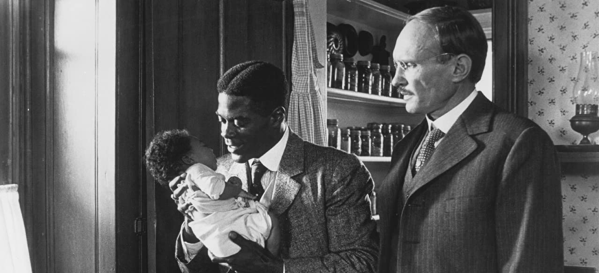
An upper-class family resides in New Rochelle, New York, where Father owns a factory and his wife’s Younger Brother makes fireworks. An African American baby is abandoned in their garden, and upon learning the police intend to charge the child’s mother, Sarah, with child abandonment and attempted murder, Mother takes Sarah and her child in, despite Father’s objections. Coalhouse arrives in search of Sarah, realizes he is the baby’s father, announces his intention to marry Sarah.
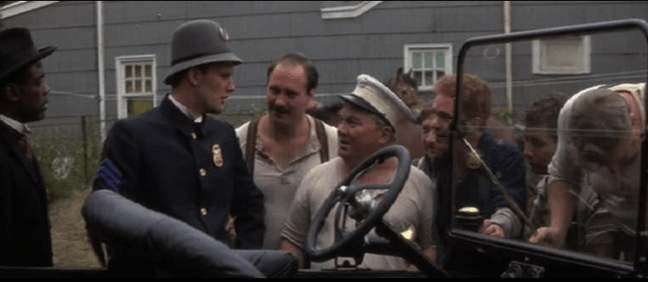
Later Coalhouse is targeted by bigoted volunteer firemen led by Willie Conklin, who refuse to allow Coalhouse’s Model T- Ford to pass. Coalhouse finds a policeman and returns to find his car soiled with horse manure.
The policeman insists that Colehouse clean the manure off his car and move on, giving him the choice to do so or be arrested. Colehouse refuses, and is hauled in to the local precinct. After Father arranges for Coalhouse’s release, they discover his car has been further vandalized. Coalhouse pursues legal action, but can find no lawyer willing to represent him. Father and Younger Brother argue over Coalhouse’s legal recourse. At a presidential rally, Sarah attempts to tell President Roosevelt about Coalhouse’s case but is beaten by guards and dies of her injuries.
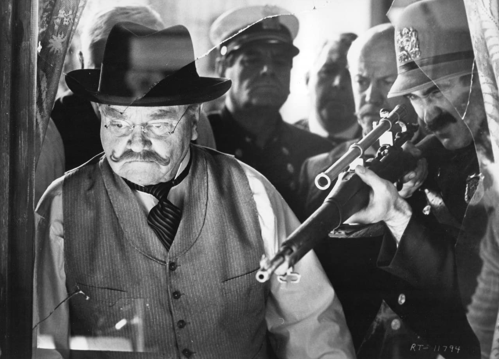
After Sarah’s funeral, Coalhouse and his supporters kill several firemen. He threatens to attack other firehouses, demanding his car be restored and Conklin be turned over to him. Father is disgusted at the violence but Younger Brother joins Coalhouse’s gang with his knowledge of explosives. Coalhouse’s gang hold the Pierpont Morgan Library’s collection hostage. Police Commissioner Rhinelander Waldo sends for Walker’s child as a bargaining chip but Mother refuses to give him up.
Booker T. Washington fails to persuade Walker to surrender, as does Father. Conklin is captured by police and forced to apologize to Coalhouse. Police Commissioner Waldo is disgusted by Conklin’s bigotry but cannot submit to terrorist demands and has him arrested. Coalhouse agrees to surrender if Waldo permits his supporters to depart in his restored car and Waldo agrees after Father volunteers to stay as a hostage. Coalhouse’s supporters escape and he drives Father out of the library. Ready to blow himself up, Coalhouse instead surrenders but is shot dead on Waldo’s orders.
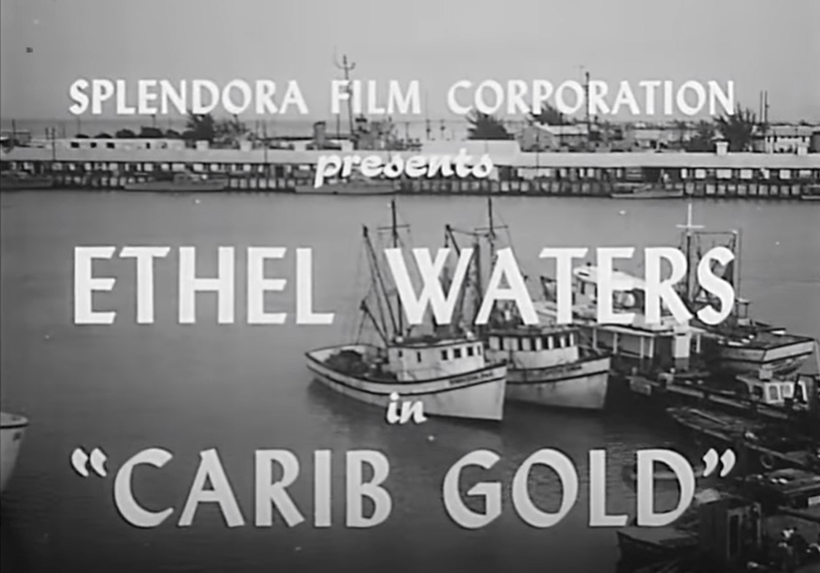
Release Date:9/30/1956 Black & White Genre:Drama Director:Harold Young Studio(s):Splendora International, Onyx Pictures Running Time: 71 mins./62 mins.
Cast/Role:
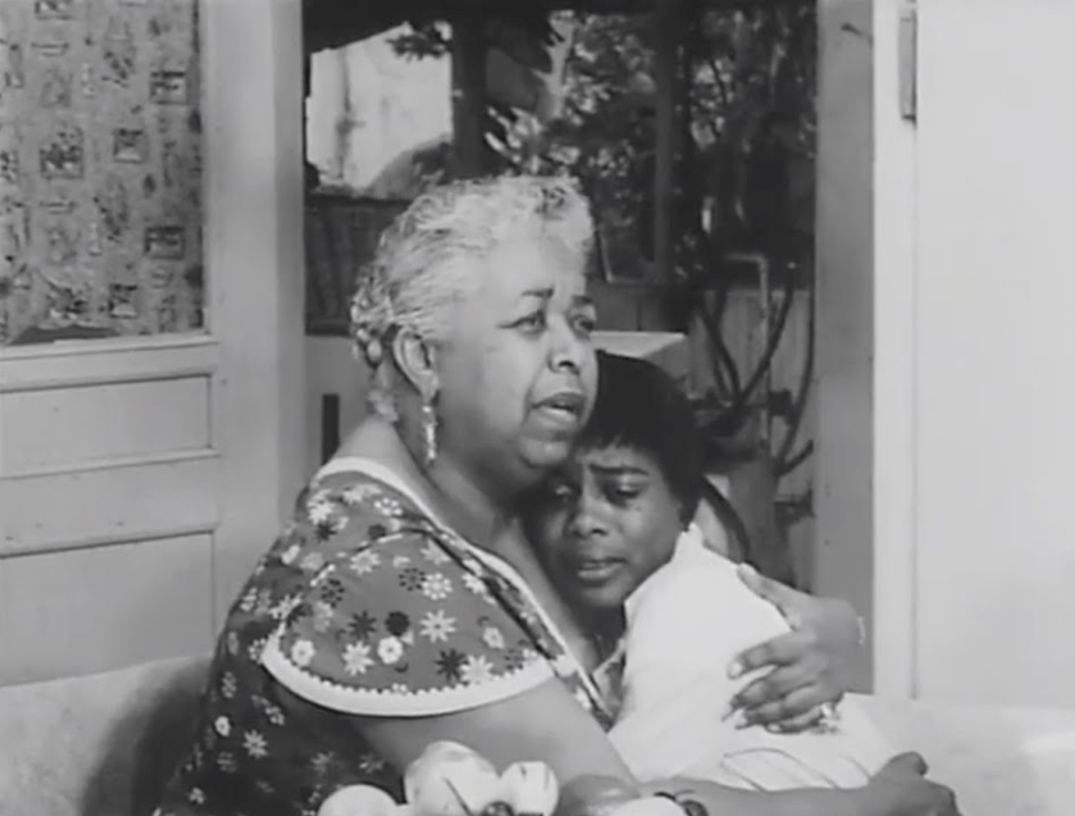
Ethel Waters as “Mom” Ryan: Ryan’s mother, owner of Duffy’s bar and restaurant.
Coley Wallace as Ryan: a diver who discovers sunken treasure.
Peter Dawson as Neely: skipper of the shrimping boat, the Capt. Geech.
Richard Ward as Lechock: a diver hired to help salvage the shipwreck, but who steals some of the treasure and murders Barb.
Cecil Cunningham as Barb: Mate/deckhand on the Capt. Geech.
William T. Hill as Cap: Owner & manager of the Capt. Geech. Cicely Tyson as Dottie: Barb’s wife.
George Renna as Bartender.
Diana Sands as Bar Girl.
Henry Hayward as Willie: a deckhand on the Capt. Geech.
Ruth Sawyer as Baby: Ryan’s wife. Geoffrey Holderas Voodoo Dancer.
Synopsis: When Ryan, a sailor on a shrimp boat fishing off the Florida Keys, finds a sunken treasure of gold while diving to repair some nets, the demeanor of the boat’s crew changes. A diver hired to help salvage the wreck kills a crew member, then escapes with part of the treasure and is pursued through the Keys by the harbor police. After hijacking a car, the killer continues his escape, but when he hears a radio news broadcast report that a roadblock has been set up to prevent his going to the mainland, he returns to Key West. Ryan tracks the killer by searching the local bars. He eventually finds the killer and turns him over to the police.
Notes: Carib Gold was filmed almost entirely in Key West, Florida, with locally-cast musicians and extras. It is most notable for its largely African-American cast headlined by Ethel Waters, and was the feature-film debut of actresses Cicely Tyson and Diana Sands. It also marked the debut of dancer-actor Geoffrey Holder. According to the LA Mirror-News review, Holder performed a voodoo dance in the film.
The film premiered on Sunday, September 30, 1956, exclusively at the Strand and Monroe Theaters on Duval Street in Key West. The film’s premiere was segregated, with the Strand screening the film for whites and the Monroe screening it for blacks. Following its premiere, the film had a very short run, being shown in both theaters for only two more days. No national release date for the picture has been located.
According to documents in the Department of Defense [DOD] Collection the footage was shot for the Navy Diving School in Washington, D.C. for “a series of navy productions concerning diving equipment and procedures.” Permission was granted to the production company to look at the requested footage and copy portions of it at the company’s expense. Although reviews of the film mention the inclusion of extensive underwater footage, it has not been determined if those sequences consisted partially or exclusively of the Navy footage. Modern sources state that the underwater sequences, were shot at the then newly constructed Miami Seaquarium.
Thought lost for decades, the film is now in the public domain and was digitized in early 2012 and released online for free public viewing by Southern Methodist University. Sources: tcm.com; Wikipedia; youtube.com. Photo Sources: moma.org; youtube.
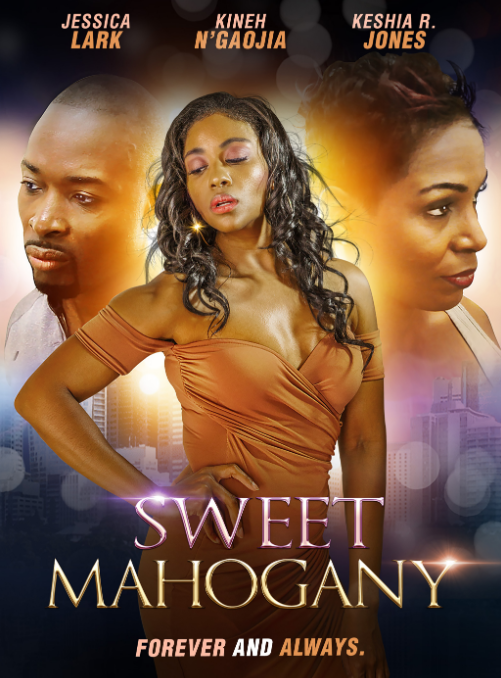
Release Date:4/14/20; DVD (Original Release – 2018) Genre: Drama Rating: NR Director: Karlton T. Clay Studio(s): Victory Productions, L.L.C., YouTube, Maverick Entertainment Running Time: 86 mins. Cast: Jessica Lark, Kineh N’Gaojia, Keshia R. Jones, Ronza Bee Story: Mahogany Andrews finds herself in what appears to be an unconventional relationship with Khalil Pearson and his wife, Cassie. While they are working through the complications of being a “trouple”, they also have to endure the questions from their children and the judgments from outside forces which include family and friends while trying to maintain the family unity inside their own home. Source: Maverick Entertainment.




 Original Release Date: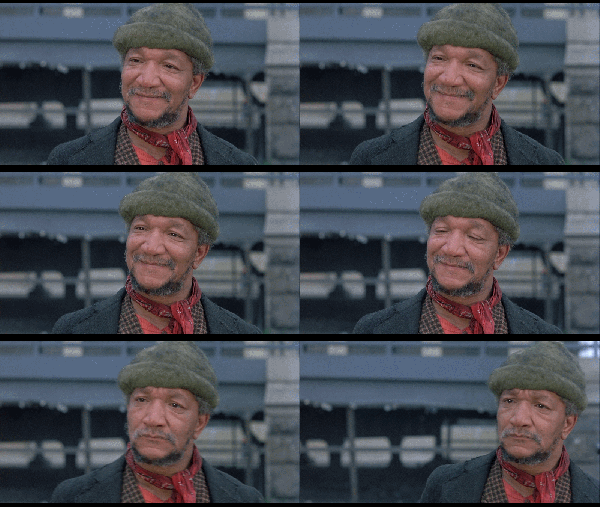






 Black Cinema Connection