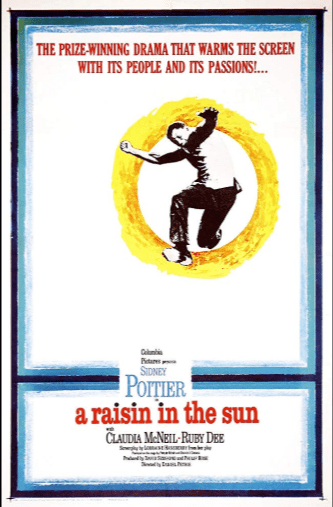
29 Days Of Black History – Day 14: A Raisin In The Sun

Release Date:  3/29/61 – New York City premiere
Genre:  Drama
Black & White
Rating:  NR
Director:  Daniel Petrie
Studio(s):  Columbia Pictures
Running Time:  128 mins.

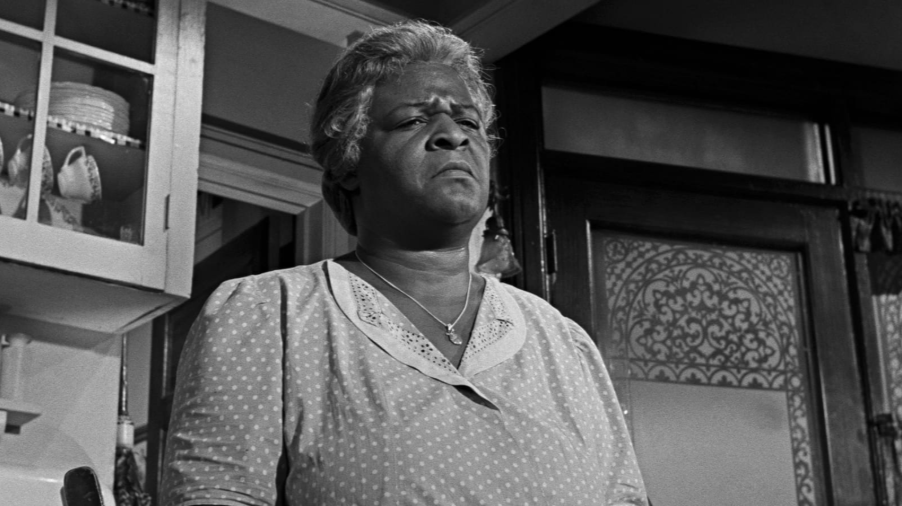
Cast  Sidney Poitier (Walter Lee Younger), Ruby Dee (Ruth Younger), Claudia McNeil (Lena Younger), Diana Sands (Beneatha Younger), Stephen Perry (Travis Younger), John Fiedler (Mark Lindner), Ivan Dixon (Joseph Asagai), Louis Gossett, Jr. (George Murchison), Joel Fluellen (Bobo), Roy Glenn (Willie Harris), Louis Terrel (Herman).

Details:  Adapted from the 1959 play of the same name by Lorraine Hansberry, the film follows members of a poor black family who desire a better life.  Voted One of the Year’s Ten Best Films by the 1961 New York Times Film Critics.  In 2005, the film was selected for preservation in the National Film Registry by the Library of Congress as being “culturally, historically, or aesthetically significant”.  In 2008, a made-for -television version of the film was directed by Kenny Leon and starred Sean Combs, Audra McDonald, Phylicia Rashad, and Sanaa Lathan who reprised their roles from the 2004 revival.  
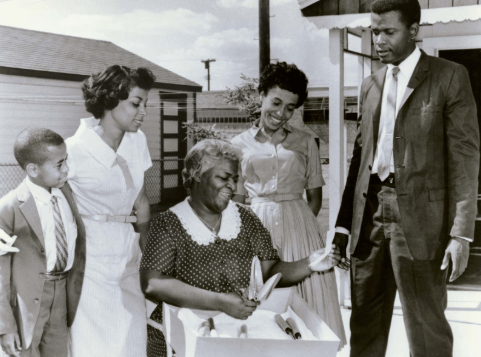
Story:  The Younger family—Walter Lee, his wife Ruth, younger sister Beneatha, son Travis and mother Lena—live in a small crowded apartment on Chicago’s South Side. They are anticipating a life insurance check for the death of Lena’s husband’s in the amount of $10,000, and each of them has an idea as to what to do with this money. Matriarch Lena wants to buy a house to fulfill the dream she shared with her deceased husband.  Walter Lee would rather use the money to invest in a liquor store so he can rise above his status of chauffeur for a wealthy white man. Ruth, wanting to provide more space and better opportunities for Travis, agrees with Lena. Beneatha would like to use the money to pay her medical school tuition.
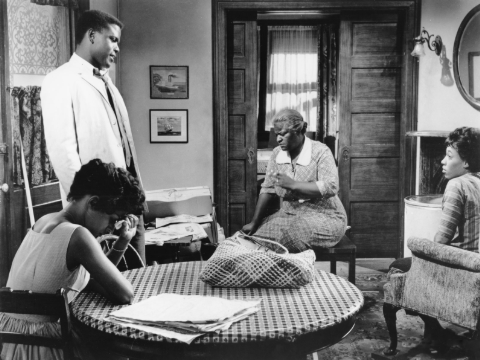
Lena spends $3,500 for a down payment on a house in Clybourne Park.  Frustrated and angry, Walter Lee quarrels with his mother and wife, then storms out.  Lena finds him in a bar and, gives him the remaining $6,500.  She tells him to save $3,000 for Beneatha’s medical school and to take the remaining $3,500 for his own investments. Meanwhile, Ruth discovers she is pregnant and, fearing another child will add to the financial pressures, considers having an abortion. Walter voices no objection, but Lena is strongly against it.  Beneatha has her own drama and rejects her suitor George, believing he’s blind to the problems of their race. Her Nigerian classmate proposes to her, wanting to take her to Africa with him after they finish school, but she is unsure what to do.
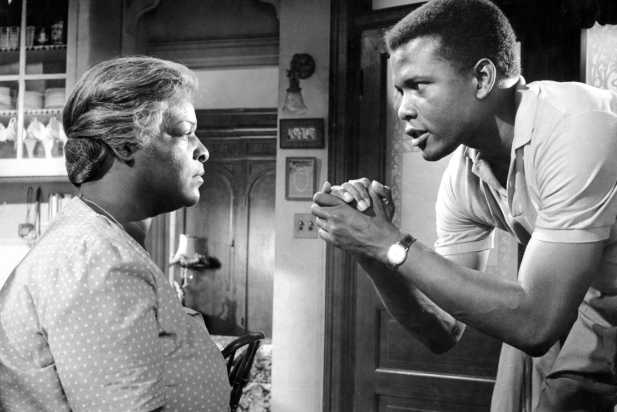
When their future neighbors find out the Youngers are moving in, they send a hypocritical representative of an “improvement association,” Mark Lindner who offers to buy back the house at a higher price to preserve the community’s all-white character, but they refuse. Meanwhile, Walter loses the insurance money when one of his “partners in the liquor store scheme skips town with the money.
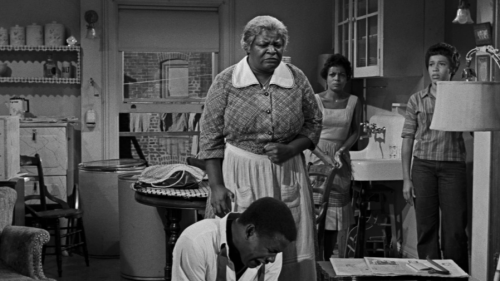
Realizing he has betrayed his mother’s trust, threatened his sister’s future, and thrown away his father’s life savings, Walter Lee desperately decides to take Lindner up on his offer, even while his family begs him not to sell away their dignity.  When Lindner arrives, Walter has a last-minute change of heart realizing that such a move would be a step backwards and rejects the offer once again. The Youngers eventually move out of their apartment, fulfilling their dream, though it means hard work and years of sacrifice for all.  Source(s):  Wikipedia, TCM, britannica.com, MoMA.org, Movingimage.us, mediayifyhdtorrent.net.

Trailer:
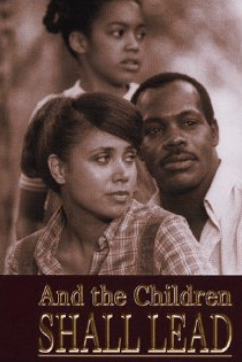
29 Days of Black History – Day 13: And The Children Shall Lead

Release Date:  1/14/85; TV Movie
Genre:   Drama/Family
Rating:  NR
Director:  Michael Pressman
Studio(s):   Bonneville Entertainment
Running Time:  58 mins.

Cast:  Danny Glover (William), Pam Potillo (Rachel Henderson), LeVar Burton (Glenn Scott), Denise Nicholas (Mother), Andrew Prine (Sheriff Connelly), Prentiss Jackson (Kevin), Whitman Mayo (Reverend Wilson), Jamilla Perry (Little Girl), Amanda Peterson (Jenny), Beah Richards (Miss Annie), Philip Arthur Ross (Lloyd), Steven Robert Ross (Floyd).

Story:  This drama is a Rainbow Television Workshop production and looks at the effects of political change on children, who often prove wiser than their elders. The story takes place in 1964 and is set in the segregated town of Catesville, Mississippi.  Jenny, the daughter of the white sheriff, is best friends with Rachel, granddaughter of the sheriff’s black housekeeper.  The girls and their young friends get caught up in the firestorm surrounding the civil rights movement.  When a busload of civil rights activists arrive in Catesville determined to assure equal rights for blacks by helping to register voters, tension and distrust between the races grow.  Adults, both black and white, afraid of the inevitable changes that are surely coming, hang onto the old ways of handling their differences.  Rachel, along with her white friends, tries to ease the simmering racial tensions to help the town unite and overcome the barriers that divide them.  Source:  IMDB; Amazon; MSU Libraries; commonsensemedia.org; DAARAC.org.

Preview Clip:

29 Days Of Black History – Day 12: Malcolm X

Release Date:  11/18/92 – Theatrical Release Date
Genre:  Drama/Biography
Rating:  PG-13
Director:  Spike Lee
Studio(s):   Largo International N.V., JVC Entertainment Networks, 40 Acres & A Mule Filmworks, Warner Bros.
Running Time:  202 mins.

Cast:  Denzel Washington (Malcolm X/Malcolm Little), Angela Bassett (Betty Shabazz), Albert Hall (Baines), Al Freeman, Jr. (Elijah Muhammad), Delroy Lindo (West Indian Archie), Spike Lee (Shorty), Theresa Randle (Laura), Kate Vernon (Sophia), Ernest Lee Thomas (Sidney), Christopher Plummer (Chaplain Gill). Lonette McKee (Louise Little), Tommy Hollis (Earl Little) Giancarlo Esposito (Talmadge X Hayer), Wendell Pierce (Ben Thomas), Leonard L. Thomas (Leon Davis), Roger Guenveur Smith (Rudy), James McDaniel (Brother Earl), Steve White (Brother Johnson), Veronica Webb (Sister Lucille Rosary), Jean-Claude La Marre (Benjamin 2X), Debi Mazar (Peg), Karen Allen (Miss Dunne), Peter Boyle (NYPD Captain Green), David Patrick Kelly (Mr. Ostrowski), LaTanya Richardson (Lorraine).

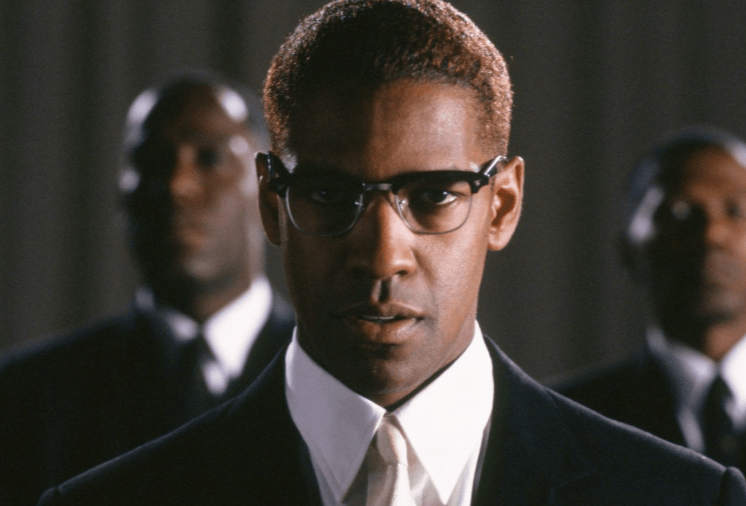
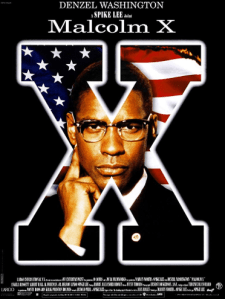
Details:  Directed and co-written by Spike Lee, the film dramatizes key events in Malcolm X’s life including his criminal career, his incarceration, his conversion to Islam, his ministry as a member of the Nation of Islam and his later falling out with the organization, his marriage to Betty X, his pilgrimage to Mecca and reevaluation of his views concerning whites, and finally his assassination on February 21, 1965.  Defining childhood incidents, including his father’s death, his mother’s mental illness, and his experiences with racism are dramatized in flashbacks.

Denzel Washington, in the title role, was nominated for an Academy Award for Best Actor.  Black Panther Party co-founder Bobby Seale, the Rev. Al Sharpton, and future South Africa president Nelson Mandela make cameo appearances.

Malcolm X’s screenplay is based largely on Alex Haley’s 1965 book, The Autobiography of Malcolm X. Haley collaborated with Malcolm X on the book beginning in 1963 and completed it after Malcolm X’s death.  In 2010, the film was selected for preservation in the United States National Film Registry by the Library of Congress as being “culturally, historically, or aesthetically significant”.

Story:   Malcolm Little is born in rural Nebraska to a Caribbean mother and African-American father. When Malcolm is a young boy, their house burns down and his father, an activist for black rights, is killed by a chapter of the Black Legion. His death is falsely registered as a suicide. Malcolm’s mother’s mental state deteriorates and she is admitted to a mental institution. Malcolm and his siblings are put into protective care.  While Malcolm performs well in school and dreams of being a lawyer, he is discriminated against by his teachers.

In 1944, Malcolm, now a teenager, lives in Boston. He goes to a nightclub with his friend Shorty and girlfriend Laura where he meets a white girl named Sophia, and the two begin to date. Malcolm moves to Harlem with Sophia and soon meets “West Indian” Archie, a gangster who runs a local numbers game. The two become friends and start an illegal numbers racket. One night, Malcolm bets on a series of numbers, one of which is a winner, however Archie denies paying him a large sum of money.  A conflict ensues between the two and Malcolm returns to Boston after an attempt on his life. Malcolm reconnects with Shorty and along with some friends decide to start performing robberies to earn money.

By 1946, the group has accrued a large amount of money but are later arrested.  Malcolm is sentenced to 8-10 years in jail. While incarcerated, Malcolm meets Baines, a member of the Nation of Islam, who introduces him to the teachings of the group’s leader Elijah Muhammad. Malcolm is initially cold towards the preachings, but later grows interested in the Muslim religion and lifestyle.  He begins to resent white people for their maltreatment of his race. When Malcolm is paroled from prison after serving six years, he travels to the Nation of Islam’s headquarters in Chicago. There, he meets Muhammad, who instructs Malcolm to remove his “Little” surname and replace it with “X”, which is symbolic of his lost African surname that was taken from him by white people; he is rechristened as “Malcolm X”.

Malcolm returns to Harlem and begins to preach the Nation’s message. Over time, his speeches gather large crowds of onlookers who protest African-American mistreatment.  Malcolm proposes ideas such as African-American separation from white Americans.  In 1958, Malcolm meets nurse Betty Sanders. They marry and eventually become the parents of four daughters.  Several years later, Malcolm is now in a high position as the spokesperson of the Nation of Islam.

This slideshow requires JavaScript.

After President John F. Kennedy is assassinated in November 1963, Malcolm comments that the assassination was the product of the white violence that has been prevalent in America since its founding and compares the killing to “the chickens coming home to roost.”  This statement greatly damages Malcolm’s reputation and he is temporarily suspended by Muhammad as the Nation’s figurehead. Seeing this as a betrayal, Malcolm loses faith in the organization. In early 1964, Malcolm goes on a pilgrimage to Mecca where he finds that Muslims come from all cultures, including white.  Malcolm publicly announces that he will no longer preach African-American separation and begins his own organization, the Organization of Afro-American Unity, which teaches tolerance instead of protest. He also legally changes his name to El-Hajj Malik El-Shabazz. This action publicly exiles him from the Nation of Islam. He is subsequently sent several death threats by members of the Nation and his house is firebombed in early 1965.

On February 21, 1965, Malcolm prepares to speak before a crowd at the Audubon Ballroom in Harlem before he is shot several times by disciples of the Nation of Islam. One of the shooters, Thomas Hagan, is shot in the leg by one of Malcolm’s bodyguards and dragged into a furious crowd, who proceed to beat him. Malcolm is transported to a hospital, but is pronounced dead on arrival.  Source(s):  Wikipedia; commonsensemedia.

Trailer:

29 Days Of Black History – Day 11: Boycott

Release Date:  2/20/01; TV Movie (HBO)
Genre:  Drama/Based on Actual Events
Rating:  PG
Director:  Clark Johnson
Studio(s):   HBO Films, Norman Twain Productions, Shelby Stone Productions
Running Time:   113 mins.

Cast:  Jeffrey Wright (Dr. Martin Luther King, Jr.), Terrence Howard (Ralph Abernathy), CCH Pounder (Jo Ann Robinson), Carmen Ejogo (Coretta Scott King), Reg E. Cathey (E.D. Nixon), Brent Jennings (Rufus Lewis), Iris Little Thomas (Rosa Parks), Shawn Michael Howard (Fred Gray), Erik Dellums (Bayard Rustin), Mike Hodge (Daddy King), Whitman Mayo (Reverend Banyon), Walter Franks (Reverend Fields).

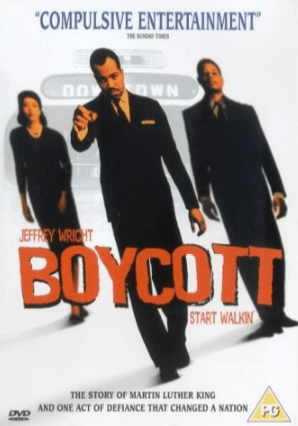
Story:   Boycott is a behind-the-scenes look at the famous Montgomery Bus Boycott of 1955. When Rosa Parks, a black, upstanding citizen of the community, defiantly refuses to give up her seat on the bus to a white man, she sets in motion a tumultuous string of events.  Her arrest is the catalyst for a one-day bus boycott to protest segregation. A young preacher, Dr. Martin Luther King, Jr., is selected as head of the newly formed Montgomery Improvement Association, the organization that will lead the boycott.

Using archival footage to establish the strained atmosphere of the era, the film is a dramatization of the one-day event which turned into a standoff that lasted well over a year and gave rise to some of the greatest leaders of the nonviolent civil rights movement.  Source(s):  commonsensemedia.org; Google; readthespirit.com; Shadow & Act; Cos’ Blog.

Clip:

29 Days Of Black History – Day 10: Mudbound

Release Date:   1/21/17 – Sundance Film Festival; 11/17/17 – Netflix
Genre:   Drama
Rating:  R
Director:  Dee Rees
Studio(s):   Armory Films, ArtImage Entertainment, Black Bear Pictures, Elevated Films (II), MACRO, MMC Joule Films, Zeal Media, Netflix.
Running Time:  134 mins.

Cast:  Jason Mitchell as Ronsel Jackson, Mary J. Blige as Florence Jackson, Jason Clarke as Henry McAllan, Rob Morgan as Hap Jackson, Carey Mulligan as Laura McAllan, Garrett Hedlund as Jamie McAllan, Jonathan Banks as Pappy McAllan, Frankie Smith as Marlon Jackson, Kennedy Derosin as Lilly May Jackson, Elizabeth Windley as Amanda Leigh McAllan, Piper Blaire as Isabelle McAllan, Jason Kirkpatrick as Orris Stokes, Kerry Cahill as Rose Tricklebank, Oyeleke Oluwafolakanmi as Cleve, Kelvin Harrison, Jr. as Weeks, Lucy Faust as Vera Atwood, Dylan Arnold as Carl Atwood, Samantha Höefer as Resl, Geraldine Singer as Mrs. Chappell, Henry Frost as Teddy Chappell., Claudio Laniado as Dr. Pearlman, Charley Vance as Sheriff Thacker.

Details:  Based on the novel of the same name by Hillary Jordan, the film depicts the story of two men, one black, the other white, who return home from World War II to work on a farm in rural Mississippi, where they struggle to deal with racism and adjusting to life after war.

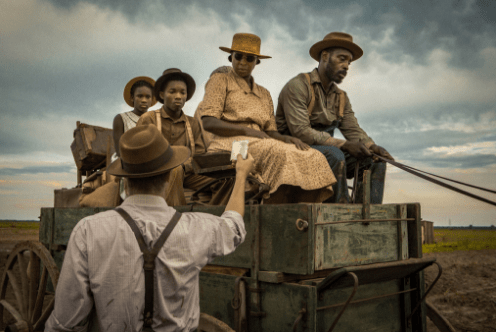
Story:   During a rain storm in Mississippi delta farm country, foolish and heartless Henry McAllan and his younger brother Jamie struggle to lower their deceased Pappy’s coffin into the grave they’d just dug.  The Jacksons, a black share-cropper family they know, are passing by in a wagon.  Henry asks the father, Hap, for help but seems uncomfortably asking while Hap hesitates to reply.

Flash back to 1939, Henry buys a farm outside the fictional town of Marietta, Mississippi and moves there with his wife Laura, their daughters and his racist father, Pappy.  The Jackson family, led by tenant farmer Hap and his wife Florence, work the farm’s cotton field and dream of owning their own land one day.

As World War II begins, Jamie and the Jacksons’ eldest son, Ronsel, join the military and both experience severe combat trauma.  When the war ends, Ronsel and Jamie return home. They’ve changed, but the local society hasn’t. Both men suffer from PTSD while Jamie becomes an alcoholic, Ronsel who appreciated the relative lack of racism in Europe struggles with racism back home. They become aware of one anothers’ difficulties, and bond over them.

Later, Ronsel receives a letter telling him that a German woman with whom he’d been romantically involved during the war has a child and wants him to join them. Pappy finds the letter and rounds up several Ku Klux Klan pals, who find Ronsel, beat him, and prepare to lynch him.  Pappy who disapproves of Jamie’s friendship with Ronsel, brings Jamie to the lynching site, where Jamie iss beaten and tied up. Pappy and the Kluxers tell Jamie to choose Ronsel’s punishment for his “crime” — to lose his eyes, tongue or testicles — and if refuses to choose he must watch Ronsel be put to death. Jamie chooses tongue and Ronsel’s tongue is cut out. Later that night, Jamie smothers Pappy to death.

The film returns to the opening scene. Hap helps with the coffin and after the coffin is lowered we Hap says a prayer over the grave, reciting from the Book of Job, verses 14:2-12 in criticism of Pappy. Before the wagon pulls away, Jamie gives the German woman’s envelope to Ronsel’s mother, and asks that she give it to Ronsel.

The Jacksons have their meager belongings in the wagon because they are leaving. Jamie moves to Los Angeles and Ronsel makes his way back to Europe where he reunites with the German woman, and their son.  Source:  IMDB; Wikipedia.

Trailer:

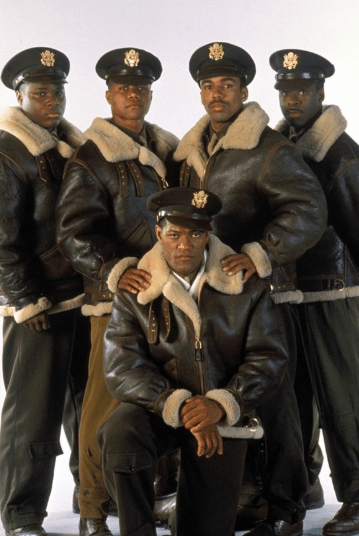
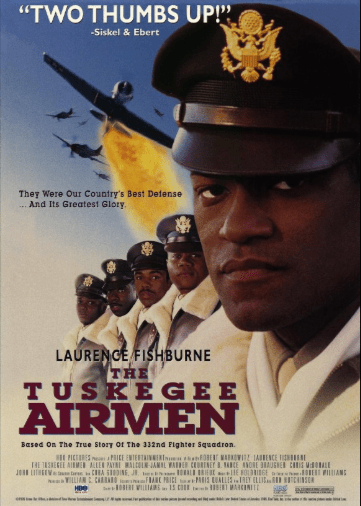
29 Days Of Black History-Day 9: The Tuskegee Airmen

Release Date:   8/26/95; TV Movie (HBO)
Genre:  Drama/Historical
Rating:  PG-13
Director:  Robert Markowitz
Studio(s):  HBO Films, Price Entertainment
Running Time:  106 mins.

Cast:  Laurence Fishburne (Capt. Hannibal “Iowa” Lee, Jr.), Allen Payne (Cadet Walter Peoples), Malcolm-Jamal Warner (Lt. Leroy Cappy), Courtney B. Vance (2ndLt. Glenn), Andre Braugher (Col. Benjamin O. Davis Jr.), Christopher McDonald (Maj. Sherman Joy), Daniel Hugh Kelly (Col. Rogers), John Lithgow (Sen. Conyers), Cuba Gooding, Jr. (Lt. Billy “A-Train” Roberts), Mekhi Phifer (Cdt. Lewis Johns), Rosemary Murphy (Eleanor Roosevelt).

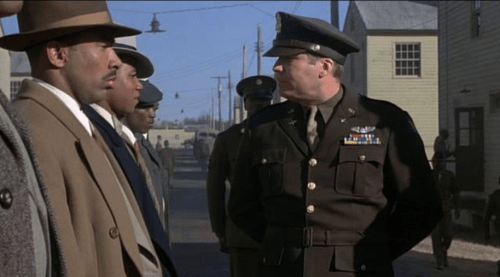
Story:   The Tuskegee Airmen is a 1995 HBO television movie based on the first African-American combat pilots in the United States Army Air Corps that fought in World War II.  During World War II, Hannibal Lee (Laurence Fishburne), traveling by train to Tuskegee, Alabama, is joined by fellow flight cadet candidates Billy “Train” Roberts (Cuba Gooding, Jr.), Walter Peoples III (Allen Payne), and Lewis Johns (Mekhi Phifer). At the start of their training, they are met by Colonel Noel Rogers, the commander of the base; Major Sherman Joy, director of training; and Second Lieutenant Glenn (Courtney B. Vance), liaison officer. The cadets are briefed by Rogers and Joy, both with their own views that set the tone for what the cadets would later face in training: Rogers has an optimistic view, wanting the cadets to prove the naysayers wrong and letting them know how much of an honor it would be for them to pass the training and earn their wings as aviators. Major Joy, however, reflects the views of most of white America at the time, belittling the cadets and questioning whether they are up to the task.
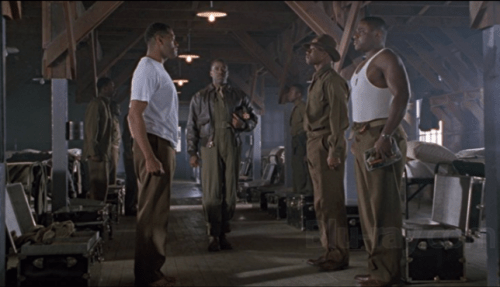
While the cadets begin their classes, Major Joy begins his ploy to discredit the cadets. During a classroom session, Joy has them retake the same flight exam they had to take to get into the program. Later, he takes Peoples on a flight after it is revealed that Peoples has a commercial pilot license. Joy takes the training aircraft through tricky and dangerous moves to try and break People’s will, but the tactic doesn’t work.  Afterwards, Joy explains to Colonel Rogers that some of the cadets may have cheated to get into the program. Rogers informs Joy that no one scored less than a 95 on the retest, and scorns Joy about his tactics.

After a briefing with the cadets, Major Joy sends each cadet on flights in their training aircraft with an instructor pilot. Cadet Johns, struggles to get his aircraft out of a stall. The instructor also tries to regain control but the plane crashes into a building, killing both Johns and his instructor.  The cadets continue their training, flying with their instructor pilots and controlling the planes on their own. Major Joy even lets Cadet Lee make several solo flights around the Base.

Peoples performs some unauthorized aerobatic maneuvers which catches the attention of Colonel Rogers and Major Joy, and results in him being removed from the training program. Peoples pleads with them not to put him out of the program, but to no avail.  To avoid going home in disgrace, an emotionally distraught Peoples commandeers an AT-6 plan and commits suicide by deliberately crashing it.
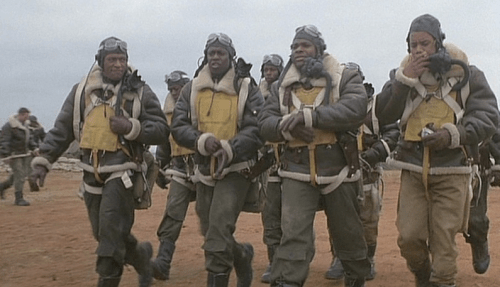
Back at the cadets’ barracks, tensions and emotions following Peoples’ death begin to reach the boiling point. Cadet Cappy doesn’t see any reason to continue if Major Joy is going to stick with his attempts to break them but Lee fires back, that Major Joy’s game plan was to make them quit, and that he wasn’t falling for it.

Lt. Glen and Cadets Lee, Roberts and Cappy are on a routine training mission when Cappy’s plane begins to experience trouble. Cappy and Lee land on a country road where a prison chain gang are working in a roadside field. As the planes are coming in to land, the prison guards force the prisoners out of the way to make room for the planes to land. The guards are shocked when Lee and Cappy take their flight masks off, revealing themselves as black aviators. The cadets go on to successfully “earn their wings” and are commissioned as 2nd Lieutenants in the Army Air Corps.

The men are eventually deployed to North Africa, as part of the 99th Pursuit Squadron, though they are relegated to ground attack missions. During the campaign, Lee’s flight encounters a group of Messerschmitt Bf 109s. Ignoring Lee’s orders, Cappy breaks formation and attacks, downing one of them. Another Bf 109 hits Cappy’s fighter aircraft numerous times and Cappy is killed when his damaged fighter plane crashes after catching fire.
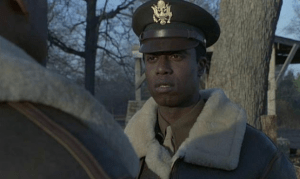
A congressional hearing of the House Armed Services Committee is convened to determine whether the Tuskegee Airmen experiment should continue. The men are charged with inherent incompetence.  A medical study is used to claim that Negroes are incapable of handling complex machinery.  The hearing results in a decision in the Tuskegee Airmen’s favor, due to testimony by their commanding officer, Lt. Col. Davis (Andre Braugher), and the 99th Pursuit Squadron joins two new squadrons out of Tuskegee to form the all-black 332nd Fighter Group.

The 332nd is deployed to Italy to provide escort for Boeing B-17 Flying Fortress heavy bombers, which are experiencing heavy losses. During this deployment, Lee and Billy Roberts (Cuba Gooding Jr.) sink a destroyer. They also rescue a straggling B-17 which is being attacked by two German fighters, shooting down both of the enemy aircrafts.  The B-17 pilot refuses to believe that black pilots saved him.

Later, Lee is awarded the Distinguished Flying Cross for sinking a destroyer and promoted to captain. Having by then earned the respect and admiration of the white bomber pilots, the Tuskegee Airmen are specifically requested as escort for a raid on Berlin.  Source:  Wikipedia; IMDB; Imdbf.org; popsugar; appliedmoviereference.blogspot.

Clip:

Trailer: