 Jack Johnson, nicknamed “the Galveston Giant,” was the first African American world heavyweight boxing champion. John Arthur “Jack” Johnson was born on March 31, 1878, in Galveston, Texas. The son of ex-slaves and the third of nine children, Johnson possessed an air of confidence and drive to exceed beyond the impoverished life his parents had known. After a few years of school, Johnson went to work as a laborer to help support his family.
By the age of 16, Johnson was on his own, travelling to New York and later Boston before returning to his hometown. Johnson’s first fight came around this time. His opponent was a fellow longshoreman, and while the purse wasn’t much—just $1.50—Johnson jumped at the chance and won the fight. By the early 1900s, the 6’2″ Johnson, had made a name for himself in the black boxing circuit and had his sights set on the world heavyweight title, which was held by white boxer Jim Jeffries. But Jeffries refused to fight Johnson and he wasn’t alone for white boxers would not spar with their black counterparts.
 But Johnson’s talents and bravado were too hard to ignore. Finally, on December 26, 1908, the flamboyant Johnson, who often taunted his opponents as he beat them, got his shot at the title when champion Tommy Burns agreed to fight Johnson after promoters guaranteed him $30,000. The fight took place in Australia and lasted until the 14th round, when police stepped in and ended it. Johnson was named the winner. The victory came five years after Johnson had won the World Colored Heavyweight Championship.
From there, Johnson continued his calls for Jeffries to step into the ring with him. On July 4, 1910, Jeffries finally did. Dubbed the “Fight of the Century,” more than 22,000 eager fans turned out for the bout, held in Reno, Nevada. After 15 rounds, Johnson came away victorious, affirming his domain over boxing and further angering white boxing fans.
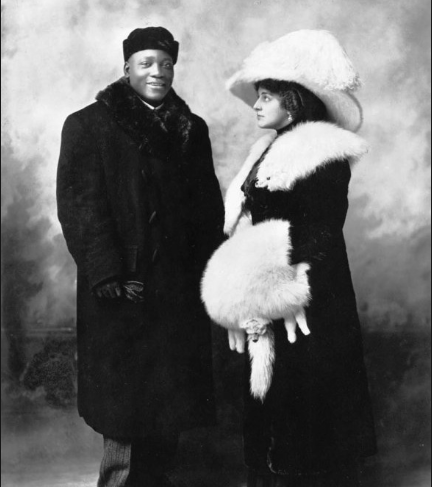 For the fight, Johnson earned a purse of $117,000. After whipping Jeffries, Johnson didn’t fight for two years, but he made waves out of the ring. He married three white women and consorted with many others. Six months after the Jeffries fight, he married Etta Terry Duryea, a white divorced Brooklyn socialite whom it was alleged, he physically abused and who killed herself in a fit of depression.
It would be five years after fighting Jeffries before Johnson relinquished the heavyweight title, when he fell to Jess Willard in a 26-round bout in Havana, Cuba. “The Galveston Giant,” was among the greatest of heavyweights and had an astonishing career. The Ring Record Book lists his record as 79-8 with 46 knockouts, 12 draws and 14 no-decisions.
As Johnson became a bigger name in the sport of boxing, he also became a bigger target for a white America that longed to see him ruined. He had transformed himself from the docks of Galveston, Texas, into early 20th-century glitterati. He had his own jazz band, owned a Chicago nightclub, acted on stage and in movies (see filmography below), drove flashy sports cars, reputedly walked his pet leopard while sipping champagne, flaunted gold teeth that went with his gold-handled walking stick and boasted of his conquests of whites — both in and out of the ring. Johnson loved to brandish his wealth and his disdain for racial rules. 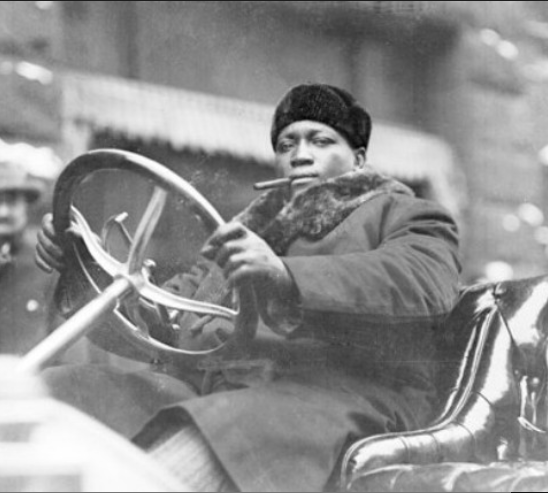 But trouble was always lurking. In 1912, he was convicted of violating the Mann Act for bringing his white girlfriend across state lines before their marriage. Sentenced to prison, he fled to Europe, remaining there as a fugitive for seven years. In Paris, he took on a series of matches against wrestlers and fought exhibitions in Buenos Aires for measly purses. Johnson returned to the United States in 1920 and ultimately served out his sentence.
If Johnson lived in the fast lane, he died there literally — in an automobile accident in Raleigh, N.C., on June 10, 1946. He was 68. Eight years later, he became a charter member of the Boxing Hall of Fame.
The play “The Great White Hope” and the subsequent film The Great White Hope (1970) are based on Johnson’s life and the brutal racism he faced as both the first African-American heavyweight boxing champion of the world and as a black man with a white wife.
Filmography
The Black Thunderbolt (1922)
For His Mother’s Sake (1922)
As the World Rolls On (1921)
Sources: Biography, ESPN.com, IMDB. Photo Source(s): Biography; Documentary.org; sjgsports.com; 40acresandacubicle.
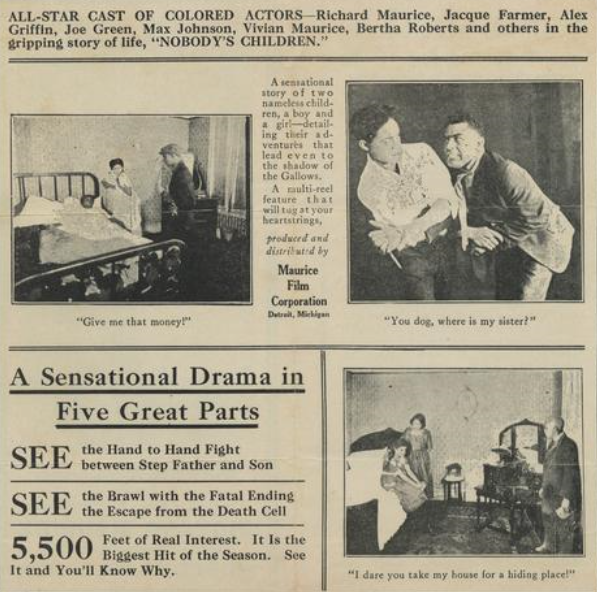
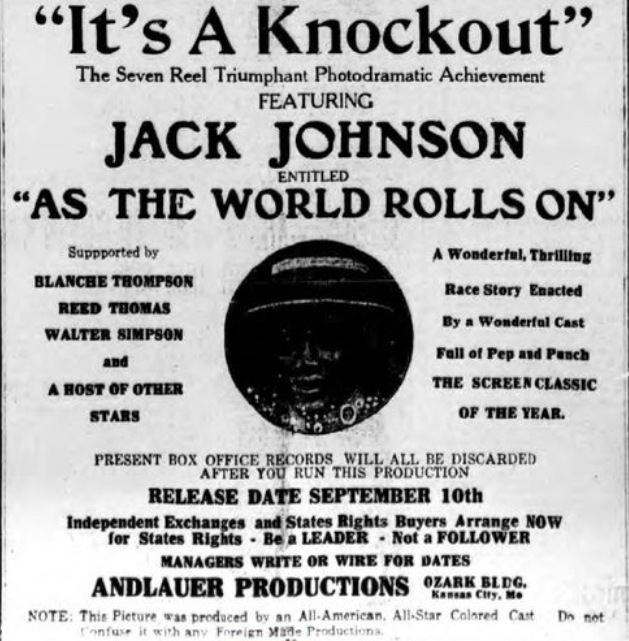


 Black Cinema Connection