Cast: Kelley Kali as Danny, Wesley Moss as Wes, Deon Cole as Chad, Brooklynn Marie as Brooklynn, Ira Scipio as Bobby, Jackie Holmes as Nyla, Xing-Mai Deng as Mr. Yu, Angelique Molina as Christina, Julia Kennedy as Charlotte, Roma Kong as Rebecca, Brian Brooks as Gus, Lamar Usher as Lamar.
Story:When a recently widowed mother becomes houseless, she convinces her 8-year-old daughter that they are only camping for fun while working to get them off of the streets.
Trailer:
Source(s): Official site, imfinethanksforasking.com, IMDB.
Release Date:6/7/1982 Genre:Drama Rating:NR Director: John Berry Studio(s):National Broadcasting Company (NBC), 20th Century Fox Television, Running Time: 98 mins.
Cast:Diahann Carroll (Carolyne Lovejoy), Rosalind Cash (Freida Lovejoy-Burton), Irene Cara (Sisina ‘Sissy’ Lovejoy), Paul Winfield (Eddie Craven), Dick Anthony Williams (Reverend Richard Henderson), Robert Hooks (Harry Burton), Kristoff St. John (Danny Burton).
Details:Television movie written by Maya Angelou, tells the story of three sisters who come together to decide the fate of their family home after the death of their revered father.
Story: The story starts out in a small town in North Carolina with Carolyne Lovejoy, a schoolteacher, singing in the choir at the local church. It is later revealed that she is having an intense affair with the pastor, Reverend Henderson who is also the state senator-elect. Carolyne later comes home to find her younger sister (who she raised after the death of their parents), 20-year-old Sissy, with her boyfriend, Johnny. It is expressed that Sissy is an aspiring ice skater, but Carolyne wants her to follow in her footsteps and become a schoolteacher.
Their battle continues throughout the movie. Later their estranged sister, Frieda, who has been living 13 years in the slums of Detroit, shows up with her 12-year-old son, Danny. They decide to stay for a while because Danny has had some trouble with the law and Frieda wants to give him a fresh start. While trying to co-exist in the same house, the sisters’ lives turn upside down. Frieda suggests they sell their childhood home.
Frieda is the troubled black sheep, while Carolyne is knocked off her pedestal when her minister lover succumbs to Frieda’s seduction. Sissy learns that their father never wanted another daughter, but had hoped she would be a boy ad that their mother had tried to abort her. After a physical altercation with Frieda and Carolyne, Frieda and Sissy decided to leave. The movie ends with Sissy leaving for New York and Frieda deciding to stay and work things out with Carolyne.
Notes: Although the movie was filmed in February 1979, NBC chose to withhold it until June 1982, when it aired during primetime. According to JET, Fred Silverman, who was the head executive of the network at the time, decided not to air the film because it did not match his preferred formats of “action-packed or comedy shows,” and that the film’s focus on the intense personal dramas of middle-class blacks would not appeal to white sensibilities of the late 1970s.
The film won the NAACP Image Award for Outstanding Television Movie, Mini-Series or Dramatic Special. Cara won the NAACP Image Award for Outstanding Actress in a Television Movie, Mini-Series or Dramatic Special for her role. Sources: IMDB; Wikipedia. Photo Sources: hornsection.blogspot.com; pintrest.com; daarac.org.
Studio(s):Tiny Giant Entertainment, Sterling Light Productions, Eagle Pictures,
Vertical Entertainment
Running Time:89 mins.
Cast: Nate Parker, Omari Hardwick, Theo Rossi, Vanessa Bell Calloway, Beau Knapp,
Shane Paul McGhie, Milauna Jackson, Larry Sullivan
Story: After witnessing his son murdered by a white police officer who goes uncharged, Marine veteran, Lincoln ‘Linc’ Jefferson, takes justice into his own hands in a series of events he hopes will finally lead to justice for his son. Source(s): Amazon Prime; IMDB. Photo Source(s): boxofficebuz.com; IMDB.
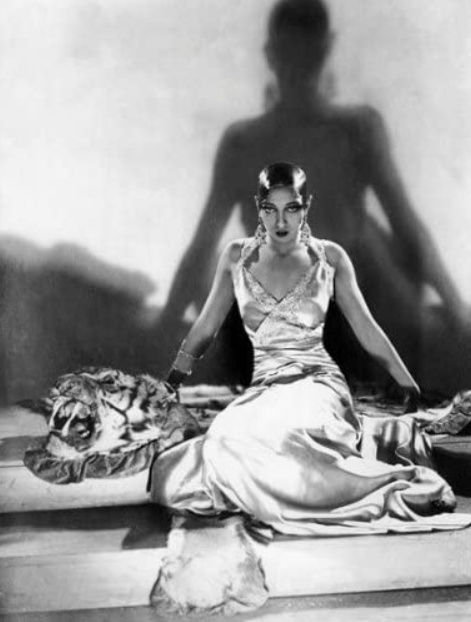
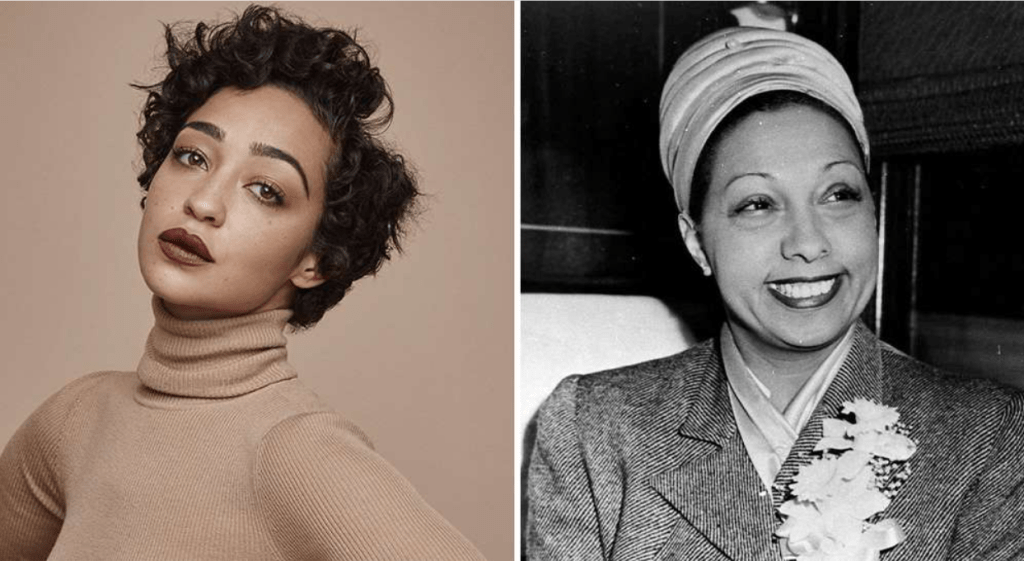
On February 12, 2020, it was reported that the remarkable story of Josephine Baker, one of the most influential female entertainers of the 20th century, will be the subject of Josephine, a limited drama series in development at ABC Signature, with Ruth Negga attached to star as the legendary Jazz Age performer and civil rights activist. The series will take a raw and unflinching look at the force of nature that was Josephine Baker. From international superstar and decorated WWII spy, to civil rights activist and flawed mother, Josephine delves into the raw talent, sexual fluidity, struggles and bold life of an icon. In addition to playing the leading role, Negga will also serve as an executive producer. Written by Dee Harris-Lawrence (All Rise) the series will also be executive produced by Harris-Lawrence, and LeBron James’ The Springhill Company. Millicent Shelton is directing.
Another biopic about the life of Josephine Baker was previously announced. On December 16 2019, Deadline reported that Paula Patton had optioned film and television rights to Josephine Baker’s Last Dance, a novel by Sherry Jones, with the intention of starring in and producing an adaptation. There have been no updates regarding the status of this project.
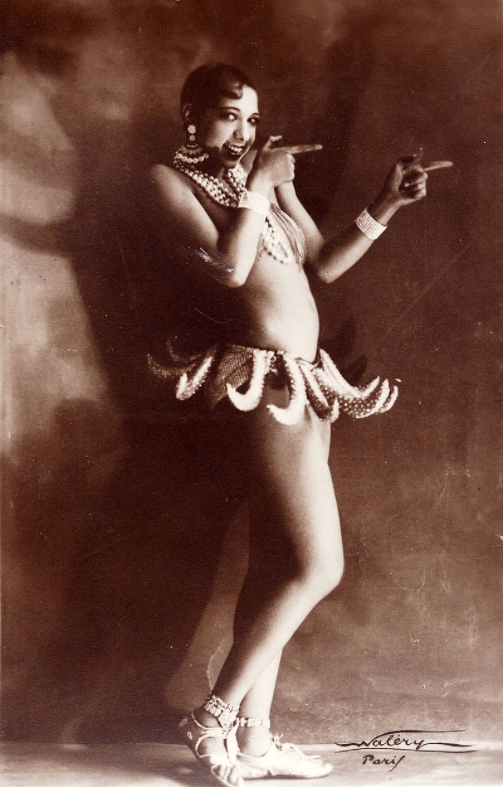
Born in Missouri in 1906 and started performing at the age of 15 appearing in vaudeville shows and chorus lines. At 19, she moved to France and immediately found success as one of Europe’s most popular and highest-paid performers. Early on, she was renowned as a dancer, and was among the most celebrated performers to headline the revues of the Folies Bergère in Paris. She earned nicknames like “Black Venus” and “Black Pearl.”
Baker worked for the French Resistance during World War II, and during the 1950s and ’60s devoted herself to fighting segregation and racism in the United States. She refused to perform in front of segregated audiences and had an active role in the civil rights movement. Just two years after making a comeback to the stage, Baker died of a cerebral hemorrhage on April 12, 1975, and was buried with military honors.
In 1991 Lynn Whitfield portrayed Baker in the HBO biopic, The Josephine Baker Story for which she won an Emmy Award for Outstanding Lead Actress in a Miniseries or a Special, becoming the first Black actress to win the category. Source(s): MSN; mxdwn.com. Photo Sources: MSN; blackculturenews.com; IMDB; Wikipedia.
Release Date:8/1/1936 Black & White Genre: Drama/Inspirational Director(S): Marc Connelly, William Keighley Studio(s):Warner Bros. Running Time:93 mins.
Cast: Rex Ingram, Oscar Polk, Eddie ‘Rochester’ Anderson, Frank H. Wilson, George Reed, Abraham Gleaves , Edna Mae Harris, James Fuller.
Details: The Green Pastures depicts stories from the Bible as visualized by black characters. The story, set in a small black church in the deep South, relates incidents from the Bible — seen in a series of vignettes — as a preacher teaches his Sunday school class. Based on Roark Bradford’s 1928 novel, “Ol’ Man Adam an’ His Chillun'” and the 1930 play of the same name by Marc Connelly.
Synopsis: One fine Sunday in the Louisiana delta, a black preacher, Mr. Deshee, tells Bible stories to his Sunday school class. In order to help the children, visualize God and heaven, he describes them in terms of a Southern fish fry: De Lawd looks exactly like their preacher, and except for their wings, the angels look exactly like members of the congregation. De Lawd creates too much firmament one day, so he creates the sun and earth to drain it away. After realizing what good farmland he has made, De Lawd creates Adam and Eve to live on it. Sadly, De Lawd is disappointed by Adam and Eve’s descendants. After punishing Cain for Abel’s murder, De Lawd leaves the Earth alone for a while, but the next time he returns, he again finds a wicked world. Because he believes that a small-town preacher, named Noah is an exception, De Lawd orders him to build an ark and then sends the rains down to destroy the rest of humanity.
Soon, however, things have gotten bad again and De Lawd decides that man does not have enough to do, so he gives Abraham’s descendants the land of Canaan and sends Moses to lead them out of Egypt. Moses and Aaron secure the release of the Hebrew slaves only after confounding the Egyptian pharaoh with their magic tricks and killing his son. The Israelites reach the promised land, but De Lawd gets so disgusted with his children that he renounces them. Not even a delegation of angels can convince him to take them back. Yet a soft voice from Earth reaches De Lawd, and he realizes that mercy can be earned through suffering. De Lawd then wonders if this means that even God must suffer, and his question is answered by the life of Jesus Christ. Sunday school is over, and the children file out into the countryside that looks so much like heaven.
Notes: The Green Pastures was one of only six feature films in the Hollywood Studio era to feature an all-black cast, though elements of it were criticized by civil rights activists. A review of the film in The Spectator gave the film a generally good review but stated that one may feel uneasy at the film’s “humor” and the depiction of “the negro mind”. The review went on to say that the result is occasionally patronizing, too often quaint, and at the close of the film definitely false. Despite criticisms about its racial stereotyping, The Green Pastures proved to be an enormously popular film. It remained the highest-grossing all-black-cast film until the release of Carmen Jones in 1954. Source(s): youtube; tcm.com; Wikipedia. Photo Sources: Daarac.org; IMDB.
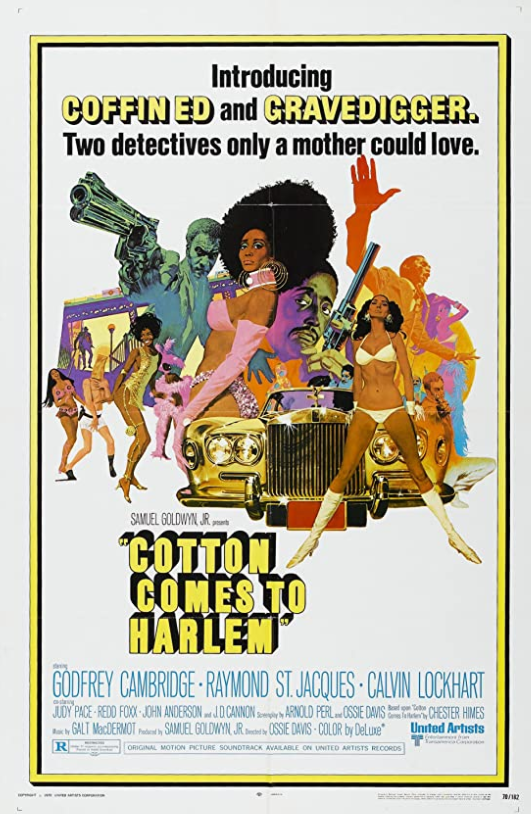
Original Release Date: 5/27/1970 Genre: Action Rating:R Director:Ossie Davis Studio(s):Formosa Productions, United Artists Running Time: 97 mins.
Cast: Godfrey Cambridge as Gravedigger Jones
Raymond St. Jacques as Coffin Ed Johnson
Calvin Lockhart as Deke O’Malley
Judy Pace as Iris Brown
Redd Foxx as Uncle Budd/Booker Washington Sims
Emily Yancy as Mabel
John Anderson as Bryce
Lou Jacobi as Goodman
Eugene Roche as Anderson
J.D. Cannon as Calhoun
Mabel Robinson as Billie
Dick Sabol as Jarema
Cleavon Little as Lo Boy
Theodore Wilson as Barry
Leonardo Cimino as Tom
Details: Two black police detectives suspect a preacher’s “Back to Africa” movement is a scam. The film is based on Chester Himes’ novel of the same name. It was followed two years later by the sequel Come Back, Charleston Blue.
*Spoilers Ahead*
Story: Cotton Comes to Harlem opens with a Back-to-Africa rally, led by the charismatic conman Reverend Deke O’Malley. O’Malley persuades hardworking families to pay $1,000 for the chance to return to Africa and escape white oppression. Deke raises $87,000, but before he can pocket the money, a group of masked white men hijack the money and flee the scene in a meat truck. O’Malley follows in an armored car, himself pursued by black police detectives Coffin Ed Johnson and Grave Digger Jones. During the pursuit, a bale of cotton, in which the hijackers hid the money, falls off the back of the truck and disappears onto the streets of Harlem. A junkman named Uncle Bud finds the cotton and stacks it onto his cart.
Back-to-the-Southland opens its headquarters in Harlem. The business is run by Colonel Calhoun, a Southerner who wants to convince black people to return to the South and pick cotton. Calhoun believes blacks need the steadying hand and guidance of whites to show them the way. The headquarters advertises for a bale of cotton as Calhoun was behind the theft of the money during the rally.
Grave Digger and Ed take on the case. Unaware of the missing bale of cotton or its significance, the detectives pursue Deke, who is in hiding, suspecting that he may have staged the hijacking to take off with the $87,000. They pursue leads that might led them to either the conman or the missing money with the help of “pigeons” (police informants), prostitutes, drug runners, and conmen.
Eventually the cotton ends up with Billie, an exotic dancer who intends to use it as a prop in her show. As she begins her act in Harlem’s Apollo Theater, Calhoun in blackface and O’Malley appear onstage in an effort to get to the cotton and the money. In doing so, the two are exposed and arrested by Coffin Ed and Grave Digger.
The detectives subsequently coerce a Mafia Don to compensate O’Malley’s disgruntled congregation for the elusive $87,000. Grave Digger and Coffin Ed learn that Uncle Bud absconded to Africa with the money, where he is enjoying a new lifestyle.
Notes: Cotton Comes to Harlem saw the film debut of Judy Pace, and Cleavon Little. It was also the credited debut of Redd Foxx, who was already well-known as a veteran night club comic, leading him to be considered for the TV Show Sanford and Son. Cambridge also starred as a white man who turns black in the motion picture comedy Watermelon Man, which opened the same day as Cotton Comes to Harlem. The film’s inspirational opening theme song, “Ain’t Now But It’s Gonna Be,” was written by Ossie Davis and performed by Melba Moore. Source(s): supersummary.com; tcm.com; blaxploitationpl.blogspot; daarac.org. Photo Sources/gifs: IMDB; daarac.org; tumbler; youtube.

 Release Date: 3/16/21; SXSW







 Original Release Date: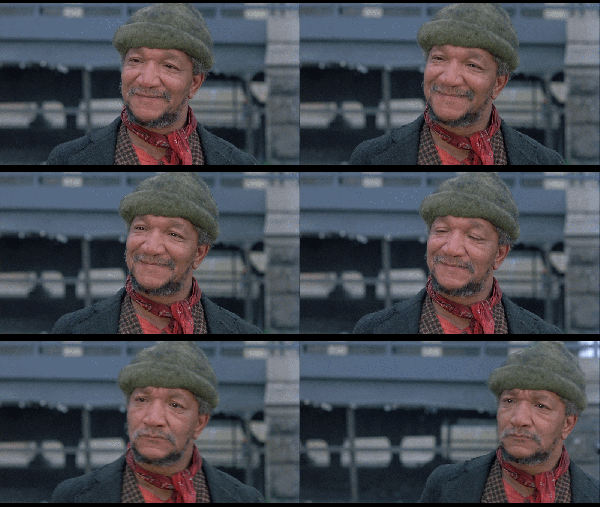



 Black Cinema Connection